
Month two is where a credit repair programme leaks clients. The first round of disputes went out in week two or three, the bureaus have thirty days to answer, and the second monthly charge has hit the card. The client who texted back within minutes during onboarding has been quiet for twelve days. Then one of three things happens: the silence continues, the card declines, or a message arrives that says "I want to cancel."
This is the playbook for that month. It follows the onboarding playbook and the dispute cycle update playbook, and assumes you hold signed authorisation and texting consent for every client in it.
Why month two is the dangerous one
The gap is structural. Under the Fair Credit Reporting Act a bureau has 30 days to complete a reinvestigation, extendable by 15 more if the consumer sends additional information, then up to five business days to mail the results. A client who signed on the first usually sees nothing concrete until week five or six. Their enthusiasm peaked the day they signed.
Billing makes it worse. Credit repair organisations are barred from charging before a service is fully performed, so most bill monthly for the prior month's work, and the first charge the client really notices lands in month two, before any bureau letter has arrived. From their seat, they have paid twice and seen nothing. Your job is to make sure that is not true in their inbox, even while it is still true on their credit report.
Who owns the channel and what the week looks like
One person owns the client messages: the case manager working the files, not the sales rep who closed them. The client should recognise the number by week two. Where several case managers share a floor, each works from their own paired handset and every thread lands in one shared inbox, so a colleague can cover a sick day on the same number.
From the client's side, a healthy month two looks like this:
- Week 5, Monday: a status text naming the disputes in flight and when the bureau clocks run out. No action required.
- Week 6: one text per bureau result, sent the day it is logged.
- Week 7: a "next round" message: what gets disputed next and what you need from them.
- Week 8: the monthly summary, scheduled for the same day each month.
Every one goes out whether or not the client has replied. Silence from you should never be the reason for silence from them.
The silence ladder: when the client stops replying
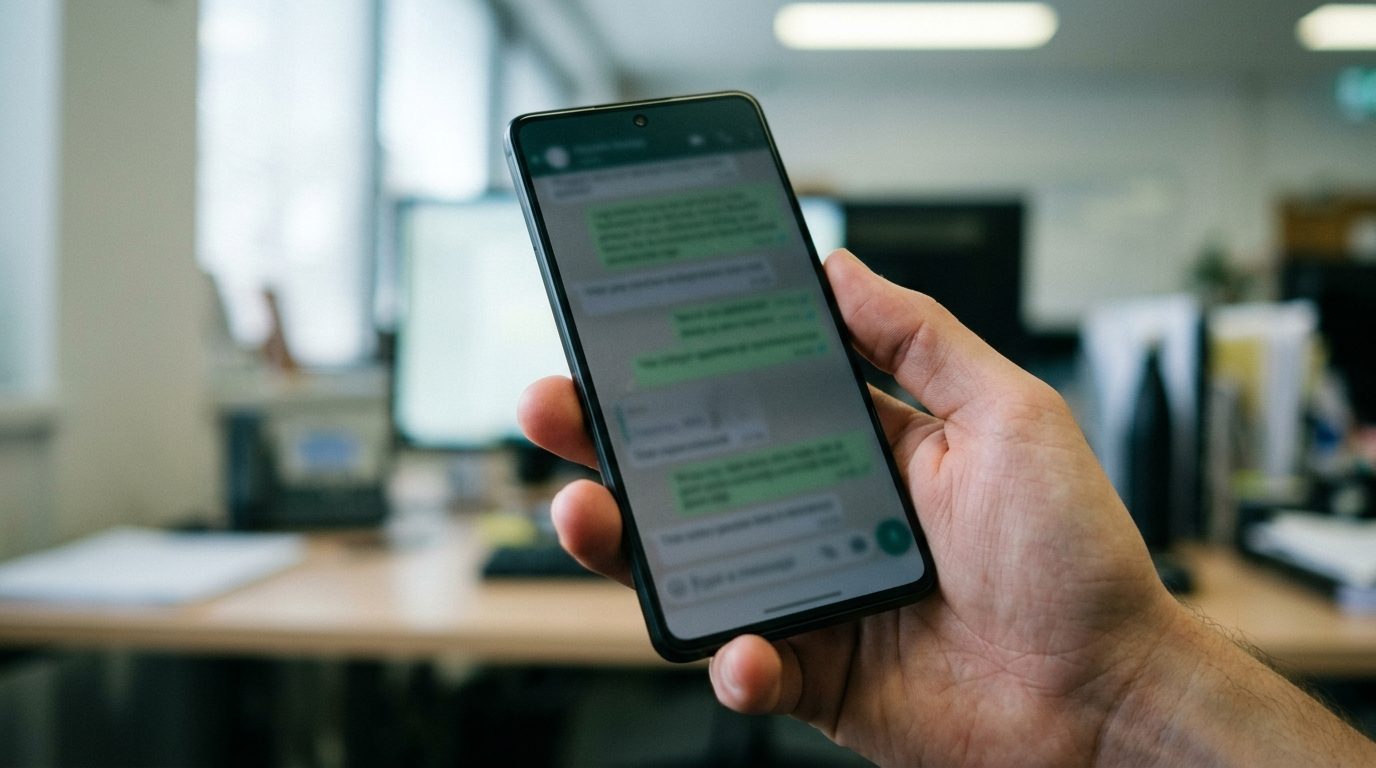 A client who has not replied in ten days is at risk. The usual mistake is to keep sending status updates and hope. Status updates ask for nothing, so they tell you nothing. The ladder below asks, in three steps a week apart, each a smaller question than the last. Stop after three. A fourth text is nagging, and nagging earns a STOP reply or a chargeback.
Step 1, day 10 of silence. Trigger: no inbound reply in ten days.
Hi Dana, it's Marcus at Northside Credit. Quick check: the Equifax and TransUnion disputes from Oct 28 are still inside their 30-day window, so no result yet. Nothing you need to do. Are you still receiving mail at the address on file? Reply Y or N.
A yes-or-no question is the whole trick: two seconds to answer, and you genuinely need it, because bureau results go to their address.
Step 2, day 17 of silence. Trigger: no reply to step 1 in seven days.
Dana, one of your TransUnion items came back verified, which means we move it to round two with a different approach. I'd like five minutes on the phone this week to walk you through it. Does Tuesday or Thursday after 5 work better?
A client who picks a slot is back in the programme. A client who replies "neither" is still talking to you.
Step 3, day 24 of silence. Trigger: no reply to step 2 in seven days.
Dana, I don't want to keep texting if the timing isn't right. Your file stays active and your next bureau results are due around Dec 12. If you'd rather pause the programme, reply PAUSE and I'll stop the next charge. If you want to keep going, reply GO and I'll send the round-two plan.
This is the message shops are afraid to send, and it saves the most clients. A clean way to pause removes the pressure that pushes a quiet client into a card dispute, and many replies are "GO". The client was never unhappy, only busy.
On no reply to step 3: one phone call, one email, then mark the file at-risk and stop texting beyond the scheduled monthly summary. If the next charge declines, the sequence below takes over.
The declined-payment sequence
 A month-two decline is frequently a dead card, not a decision. Say so, and leave room for the client to tell you otherwise.
Decline day 0. Trigger: payment processor reports a failed charge.
Hi Dana, Marcus at Northside Credit. The card on file for last month's work came back declined this morning. Happens all the time with reissued cards. Can you update it here when you get a minute: [secure link]. If something's changed and you want to talk first, just reply here.
The message names what the charge is for, last month's work, asks for nothing in advance and makes no threat.
Decline day 3. Trigger: card still not updated, no reply.
Dana, quick follow-up on the card. If it isn't updated by Friday I'll pause the next round of disputes so you aren't charged for work you haven't approved. Nothing is lost, the file just waits. Reply if you'd like to keep it moving.
Pausing work is the honest consequence. You should not run another month of disputes you cannot bill, and the client should know that is the trade. Once the card is updated, confirm in one line and send the round-two plan.
The cancellation reply
Someone will text "I want to cancel." Your first reply decides whether that is an ending or a pause. Shops that fight it lose the client and the review. Every client has a three-business-day right to cancel without penalty after signing. After that window the contract governs, and most agreements let the client stop at any time. The CFPB's 2023 consumer advisory on Lexington Law and CreditRepair.com quoted exactly that any-time language, and a sceptical client has read it before texting you.
Cancellation reply. Trigger: inbound message containing cancel, stop the service, or similar. Reply the same business day.
Understood, Dana, and no hard feelings. I've stopped future charges as of today and you'll get a written confirmation by email within the hour. Your file shows two items removed from Experian and three disputes still open with TransUnion, which the bureau has to answer by Dec 12. Would you like me to forward those results to you when they arrive, no charge? And if the timing is better in a few months, your file will be here.
Then do exactly what you said. A client leaving over a cash squeeze often comes back, and a client who leaves well refers people. One who had to text "cancel" three times does neither.
The expectation-reset message
Some month-two silence is a client staring at an unchanged score. The message that pre-empts it feels like admitting slowness, so most shops never send it. Send it in week five, before they ask.
Dana, a note on timing so nothing surprises you. Each bureau has 30 days to answer a dispute, and can take 15 more if they ask for documents. Results arrive by mail to you first. Scores usually don't move until the bureau updates the file, so round one is about getting answers, not points. I'll text you the day each result lands.
Say what the process is, not what the score will do. The Credit Repair Organizations Act prohibits untrue or misleading representations about your services, and a text promising a score or a guaranteed deletion is exactly that, in writing, on the client's phone.
Running it from one phone
 Everything above is person-to-person conversation from a case manager's line. Credit repair sits in the soft-restricted group under A2P 10DLC, next to debt settlement, and aggregators routinely decline or throttle the campaign. Android Texter routes messages through an Android handset you own, so each text leaves as ordinary P2P SMS from a real 10-digit number and there is no campaign to classify.
The sequences are mostly timers. The web dashboard schedules a message for a future date and time, so the week-five status text, the expectation-reset message and the monthly summary can be queued the day a client signs, then edited or cancelled from the scheduled list if things change. Quick replies turn the ladder messages into slash shortcuts the case manager completes with a name and a date. From a CRM, the REST API accepts a scheduled time on the send call and the Zapier app's Send SMS action has a schedule field, so a new-client event can queue the whole month in one step.
Consent, STOP and the rules that shape these texts
Consent comes from the texting authorisation collected at onboarding, which the TCPA requires before you send. Keep the record. A STOP reply revokes that consent and must be honoured within a reasonable time not to exceed ten business days under the FCC's rules, which list stop, quit, end, revoke, opt out, cancel and unsubscribe as reasonable methods. "Cancel" is on that list, so a client who texts it may be revoking texting consent as well as ending the contract. Send the written confirmation by email and treat the number as opted out unless they say otherwise.
Android Texter does not keep a suppression list for you. An auto-reply rule can acknowledge the STOP keyword, but removing the number from your sequences and CRM is your job, every time. The opt-out rules post covers what counts as a STOP, and the credit repair compliance post covers CROA and the Telemarketing Sales Rule, which is stricter again about when you may charge if you sell by phone. None of it changes with the channel.
Frequently Asked Questions
How many times should I text a credit repair client who has gone quiet?
Three asks over two weeks, each smaller than the last, then stop texting beyond the scheduled monthly summary. The third message should offer a clean way to pause. More than three unanswered asks reads as pressure, which produces STOP replies and chargebacks.
What should I reply when a client texts that they want to cancel?
Confirm it, stop future charges that day, say what is still open on their file and offer to forward pending bureau results at no charge. Follow with written confirmation by email. Treat the word "cancel" as a possible texting opt-out and do not keep messaging the number.
Does sending from a personal handset change my compliance obligations?
No. The TCPA, the Credit Repair Organizations Act and any state credit services law apply exactly as they would through an aggregator. What changes is the carrier layer: P2P SMS from your own phone is not subject to A2P 10DLC campaign vetting, which is what blocks or throttles credit repair brands.
Run month two from the phone in your pocket
If your case managers text clients from their own phones and lose the threads, Android Texter puts every conversation in one inbox, schedules the status and summary messages the day a client signs, and sends them as ordinary SMS from a number the client already recognises. Pair a handset at androidtexter.com and queue your first month-two sequence this week.