
Your SMS provider just flagged your account. Maybe it's an email that says "under review," maybe the outbound queue is just silently not moving. Either way, the tickets are still coming in, a listing is still going live this week, and right now you have no way to tell your users any of that by text. This happens to crypto businesses more than almost any other legal industry, and it's rarely about anything the business actually did wrong.
The fix isn't a compliance argument with your provider. It's a plan for the week you don't have SMS, and the plan is operational: get a channel back online today, route it to where your support team already lives, and have the first messages ready to send before you need them.
Why crypto loses the SMS channel first
Aggregators like Twilio route business texting through A2P 10DLC, the carrier system that classifies traffic by industry before it's allowed to send. Twilio's own SMS guidelines list "High Risk Financial" as a restricted use case category, and crypto messaging routinely gets caught in it, promotions and account alerts included, regardless of whether the business is licensed, compliant, and doing nothing wrong. This isn't a hypothetical: carriers have already blocked crypto-related SMS content outright in past waves, and providers have had to cut crypto alert traffic to US and Canadian numbers because of it, routing users to email, push, or chat instead.
It also isn't getting quieter. The CFTC just submitted a new crypto market regulation plan for White House review after the CLARITY Act failed a Senate cloture vote, and analysts at Bernstein are predicting aggressive, swift rulemaking from both the SEC and CFTC to fill the gap. Australia's ASIC has told unlicensed digital asset firms they have until September 30 to get licensed or face fines up to 10% of annual turnover. None of that changes what a compliant crypto business is allowed to send. What it does is keep the industry's risk profile elevated in the eyes of the aggregators that decide whether to carry your traffic at all, and a "high risk" classification doesn't care whether your specific business has ever had a problem.
The aggregator's decision is a content-risk call, not a legality call. That's the whole reason a channel that doesn't depend on their classification is worth having in place before you need it.
Day one: get a line back that doesn't need approval
Android Texter routes SMS through a phone your business actually owns, sending as person-to-person SMS from a real 10-digit number instead of through a registered brand and campaign. There's no TCR registration, no campaign vetting, and no aggregator content review sitting between you and your users, because the message leaves the same way a text from your own phone always has. That's the mechanism, not a workaround: sending from your own handset was never something that needed carrier permission in the first place.
The practical move on day one is a single broadcast to your existing opted-in list: a new number, sent once, telling people where support now lives. Something like:
Template: the migration notice Trigger: the day you move off (or lose) your aggregator line. Send: one broadcast to the full opted-in list, timed for business hours so replies land while staff are watching. Text: "This is [Business] on a new support line, this number. Save it, we're still here, and nothing else about your account changed. Reply if you need anything." Wait: none, it's a one-way notice, but staff should watch the inbox live for the first 48 hours since some recipients will reply immediately, confused. No reply: nothing to chase. The point was re-anchoring the number in their contacts, not starting a conversation.
Route inbound to where your team already lives
 Crypto support teams don't live in a ticketing queue, they live in Telegram and Discord. Making the SMS inbox a second place staff has to babysit is how tickets go stale. Android Texter's forwarding rules solve the actual problem: route inbound SMS by match pattern to another number or straight into a Telegram channel, so a text lands in the same place your team is already watching. It's the same mechanism you'd use to mirror customer support inbound into a shared team channel, just pointed at the channel your team never left.
Set the rule to catch everything on the support line and forward it into the Telegram channel your team monitors. Replies still go out as SMS from the paired phone, so the customer never sees the seam.
The first week of messages
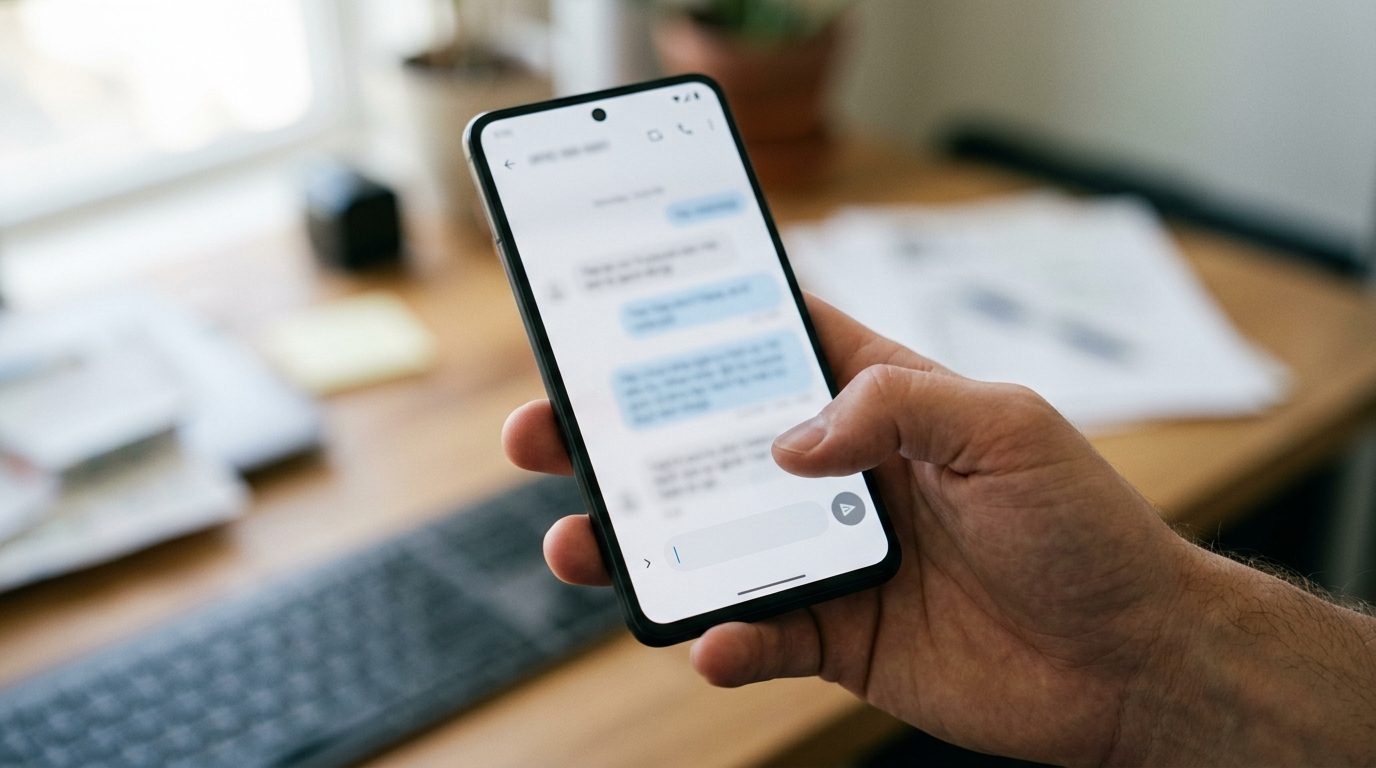 Beyond the migration notice, three more templates cover most of what a crypto support and comms desk sends in a normal week.
Template: the ticket-received acknowledgment Trigger: any inbound text to the support line. Text: "Got your message. A person on the team will reply here, this isn't a bot loop. If it's urgent, say so and we'll bump you up." Wait: staff clears it during their normal shift; this message exists so the customer isn't wondering if it went through. No reply from the customer after your reply: the ticket just sits open until they answer. Don't chase it.
Template: the launch or listing broadcast Trigger: a new asset, feature, or listing going live. Send: scheduled to the exact go-live moment, not "sometime that morning," to the opted-in list segment that cares about that asset. Text: "[Asset] is live on [Exchange] now. [One detail that matters]. [Link]. Reply STOP to opt out." Wait: none, it's a broadcast. The replies worth tracking are STOPs and support questions, which land in the same inbox as everything else. No reply: expected and fine. Silence on a broadcast isn't a signal.
Template: the dormant list check-in Trigger: 60 to 90 days since a contact last engaged. Text: "Still there? This line reaches a real person on the team, not a script. If you need help with your account or just want to check in, reply here." Wait: send once, watch replies for a week, don't resend the same message if it's quiet. No reply: leave them on the list for the next real announcement. A dormant contact isn't a dead one, and re-pinging the same message reads as spam fast.
Splitting the desk so a broadcast doesn't bury a conversation
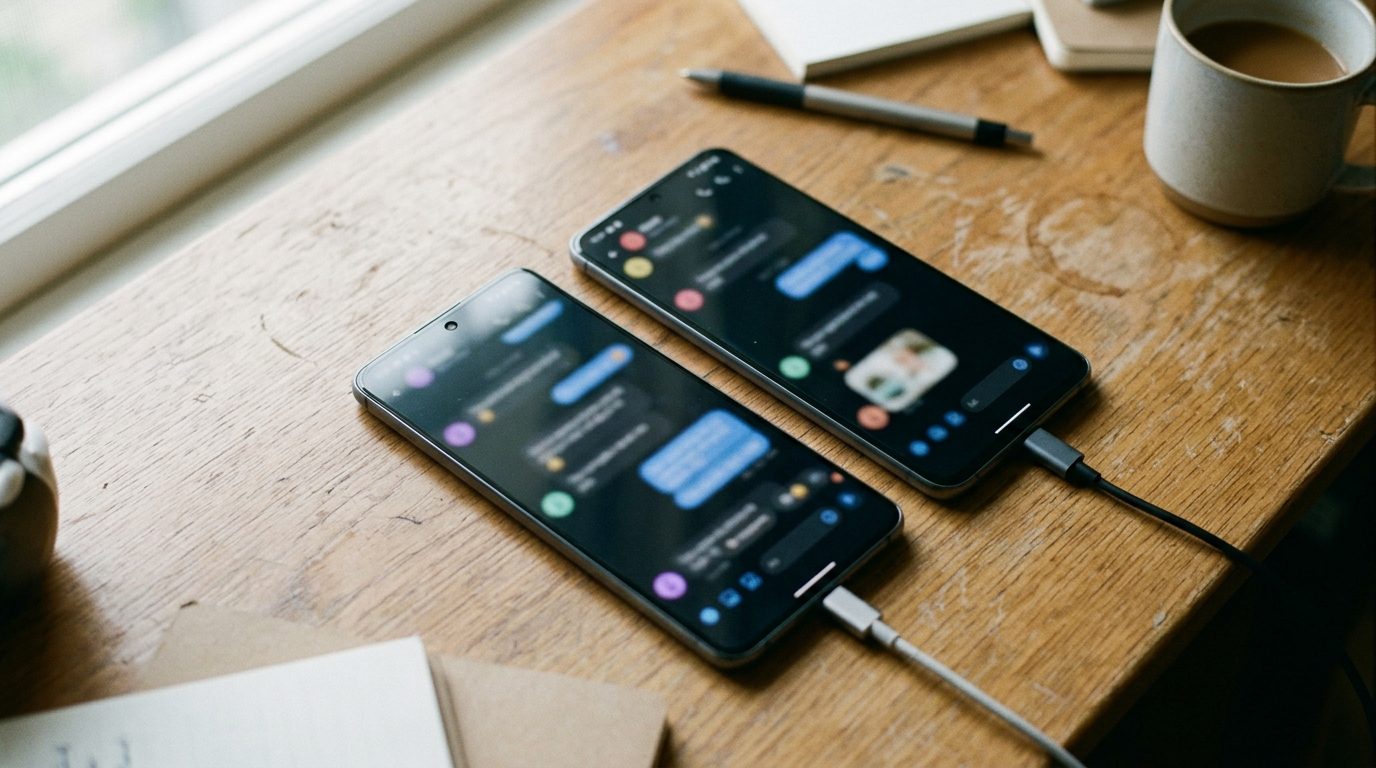 A listing announcement sent to a few thousand contacts and a live one-on-one support thread do not belong on the same line at the same time, because the broadcast's replies will bury the conversation that was already in progress. Multi-device pairing handles this by letting one account run more than one phone: put support on one paired device and broadcasts on another, and route sends to the right one with device targeting so a launch blast never lands in the middle of a ticket thread. It's the same setup a VIP desk would use to keep a high-touch relationship on its own line.
What doesn't change
None of this touches the TCPA. Consent for marketing and account-alert texts is still the operator's responsibility, and it doesn't get lighter because the message routes as P2P instead of through a registered campaign. Keep records of how each contact opted in, and honor STOP the moment it comes in, whatever the exact wording. We've written up what actually counts as a valid opt-out and how to handle it in the inbox, worth reading before your first broadcast: TCPA SMS Opt-Out Rules: What Actually Counts as STOP. Securities, money-transmission, and any state-level licensing obligations your business already carries are also unchanged. A channel that doesn't depend on an aggregator's risk review is not a compliance strategy, it's a way to keep talking to your users while the review happens.
Frequently Asked Questions
Is it legal for a crypto business to text customers using a personal phone number?
Yes. Sending SMS from a phone you own is ordinary person-to-person texting and isn't subject to A2P 10DLC's brand and campaign requirements. The TCPA still applies to what you send and who you send it to, same as any channel, so consent and opt-out handling are still on you.
Why did my SMS provider suspend my account without explaining why?
Most aggregators classify crypto under high-risk financial content categories and review or suspend accounts based on that classification alone, not on anything specific your business did. Twilio's public guidelines list this as a restricted use case, which is why the review can happen even to a fully compliant operator.
Can I keep using Telegram and Discord for support if I add SMS?
Yes, and you should. Forwarding rules can route inbound SMS straight into the Telegram channel your team already watches, so SMS becomes another way in rather than a second inbox someone has to check separately.
Do I need a new phone number every time an aggregator drops me?
No. The number lives on a phone you control, so it doesn't get revoked by a provider's policy review the way a registered campaign can. The migration scenario in this article applies once, when you're moving off an aggregator line for good, not on a recurring basis.
What happens to my opted-in list if I switch SMS channels?
Nothing changes about their consent status. Send the migration notice to the same list you already had permission to text, and keep honoring every STOP the same way you did before, regardless of which line the message came in on.
Getting your support line back online
Losing an SMS channel mid-week is a support and communications problem before it's anything else, and it's one crypto businesses run into more than most. Android Texter gives you a line that runs on a phone you own, so the next policy review at some other provider doesn't take your ability to text your own users with it.