You started texting customers from a Google Voice number because it was free and already sitting on your Gmail account. It worked fine for the first few dozen messages. Then, partway through a batch of appointment reminders or lead follow-ups, a text failed to send with an error about sending too many messages, and there was no way to tell in advance why, or how long the lockout would last. That is not a bug. Google Voice was built for one person having a conversation with another person, and it starts behaving differently the moment your usage looks like a business running an outbound queue.
Here is what Google's own policy actually says, what tends to trigger it, and where the ceiling really comes from before you decide whether to keep pushing volume through a personal Google account.
Why Operators Reach for Google Voice First
It is the obvious first move for a solo operator or small team: no signup beyond a Google account, a free number in a few minutes, an app on the phone you already carry, and a way to keep a business line separate from a personal one without buying a second SIM. For operators already frozen out of Twilio-style providers on industry classification grounds (payday lending, cannabis, debt collection, credit repair), it can feel like a shortcut around the whole registration problem, since there is no campaign to register and no brand to vet.
That shortcut has a ceiling, and it is written down.
What Google's Policy Actually Prohibits
 Google publishes a Voice Acceptable Use Policy that governs every account. Under "Spam and Commercial Use," it prohibits:
"sending commercial or promotional messages to a large number of users, or sending messages in bulk; sending messages via an automated process, such as a script; sending unwanted or mass solicitation."
That covers most of what a business does with SMS: appointment reminders sent to a list, a promotional drop to past customers, anything triggered by a script or a CRM instead of typed by hand one conversation at a time. The policy does not carve out an exception for paid Google Workspace accounts. It addresses "users" generally, and the enforcement language is the same regardless of which Voice tier you are on: Google "may review and take action, including limiting or terminating a user's access to Google Voice."
What Happens When You Cross the Line
In practice, sending volume or a pattern Google's systems read as bulk or automated produces a "message not delivered" error citing the acceptable use policy, and further outbound sending gets locked while calls and inbound texts keep working. Accounts typically regain the ability to send again after a period Google does not publish or guarantee. Repeated or more serious violations, per the policy's own language, can mean the account itself gets limited or terminated, not just paused.
There is no appeal queue for this and no account rep to call. You find out you crossed a line by hitting it.
Why This Isn't a 10DLC Problem
It is worth being precise about which obstacle you are actually hitting, because they get confused constantly. A2P 10DLC is a carrier-level gate: Verizon, T-Mobile, and AT&T require businesses sending through aggregators like Twilio to register a brand, get a campaign approved, and pay ongoing fees before traffic is allowed through at scale. Google Voice's restriction is not that. It is Google's own product terms, enforced by Google against Google's own platform, and it applies whether or not your traffic would ever qualify for A2P routing in the first place. Fixing one does nothing for the other. A Google Voice number that gets flagged is not a 10DLC problem to register your way out of; it is a personal-use product being used past its intended pattern.
Where Android Texter Fits
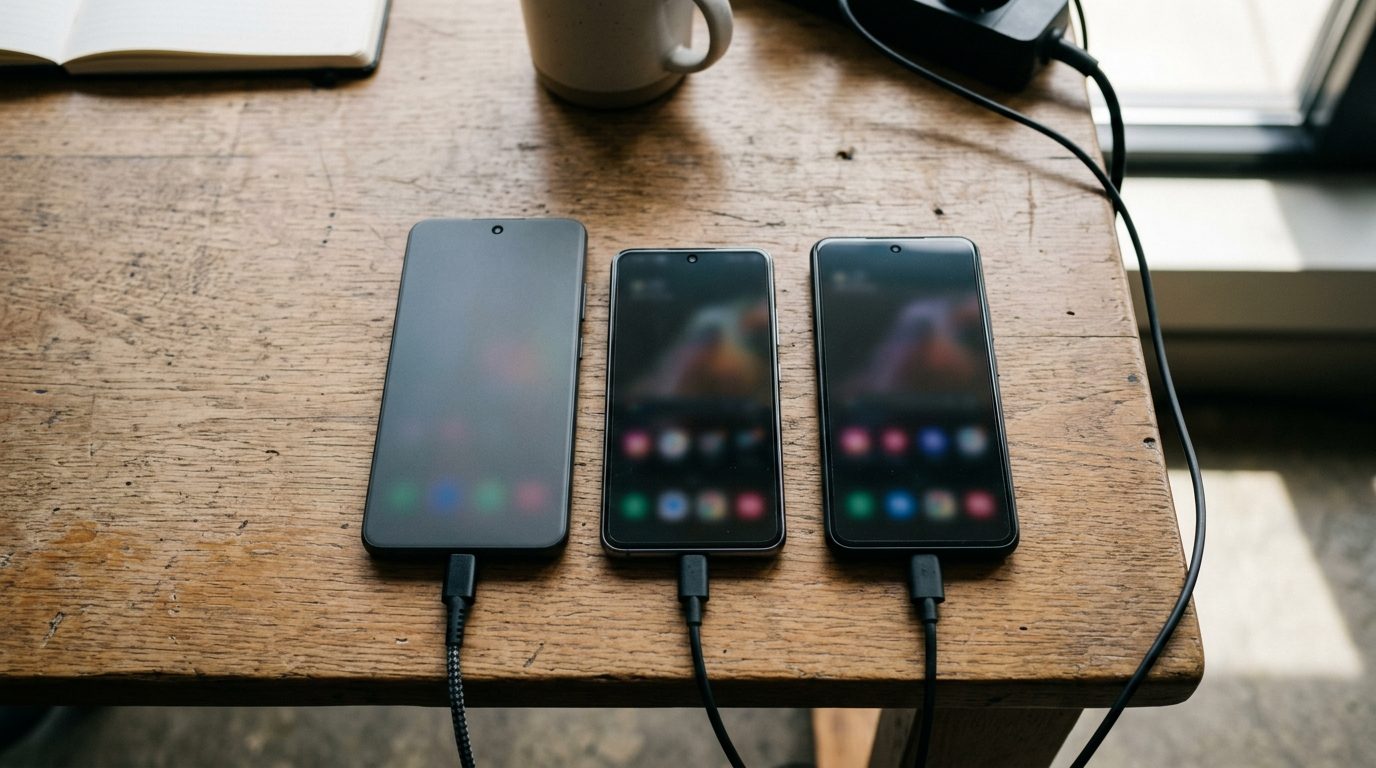 Android Texter routes messages through a real Android handset on a real carrier line, the same way a text sends when you message a friend. That is genuine person-to-person SMS, which sits outside A2P 10DLC entirely, and it is a different product than a free consumer app with a bulk-messaging clause in its terms. The distinction is not just legal, it is technical: carriers see traffic differently depending on where it originates. A message sent from an aggregator's SIP trunk or short code looks like business traffic at the network level, which is why it gets filtered against a registered campaign profile. A message sent from a handset's own SMS radio looks like any other person texting, because that is what it is. There is no separate category for it to fall into.
Multi-device pairing lets you spread outbound across several paired phones instead of pushing all of it through one number, which is the direct answer to the volume ceiling that trips a Google Voice account: distribute the load across lines built to carry it, rather than concentrate it on one number governed by a one-to-one usage policy. The web dashboard keeps the inbox, contacts, and automations in one place even when the sends themselves are spread across several devices, so distributing volume does not mean juggling several separate phones and apps by hand.
None of that changes your obligations under the TCPA. Consent to text someone, and the record proving you have it, is the operator's responsibility no matter which product sends the message. Android Texter opens the channel; it does not review your list or vouch for your consent, and its own free tier carries a daily sending quota too, with the cap lifted on paid plans. The difference is what the ceiling is for: a platform-terms restriction on business use of a free personal product, versus a channel built for the traffic in the first place.
Where Google Voice Still Wins
 Be honest about this part. If you are answering a handful of inbound texts a day from existing customers and occasionally replying by hand, Google Voice is a perfectly reasonable, free choice, and there is no reason to add a dashboard, an API, or a second product to solve a problem you do not have. The policy exists for bulk, automated, and promotional sending. A real one-to-one conversation, typed by a person, at low volume, is exactly what Google Voice was built for and it will keep working for that. Switch when your usage pattern stops looking like that, not before.
What to Check Before You Move Off Google Voice
- How many outbound texts a day are you actually sending, and is that number growing
- Are messages typed one at a time in reply to something, or queued and sent as a batch
- Do you have documented consent for each contact on the list, separate from which tool sends the message
- Is any of the content promotional or commercial rather than a direct reply
If you answered "batch" and "promotional" to more than one of those, the Google Voice acceptable use policy already covers your traffic, whether or not you have been flagged yet.
Frequently Asked Questions
Is texting customers from Google Voice illegal?
No. Using Google Voice for business texting is not illegal by itself. It can violate Google's own Acceptable Use Policy, which is a platform terms issue that can get your account limited, separate from the TCPA consent requirements that apply no matter which number or platform you send from.
How many texts can I send from Google Voice before I get flagged?
Google does not publish a specific daily number. The policy targets bulk, automated, and commercial or promotional messaging as categories, so a pattern that looks automated or promotional can get flagged well before you hit any particular message count.
Does paying for Google Voice through Google Workspace remove the restriction?
No. The published Acceptable Use Policy does not carve out an exception for paid Workspace accounts. The same restrictions on bulk, automated, and commercial messaging apply regardless of which Voice tier the number is on.
What's the actual difference between this and A2P 10DLC filtering?
A2P 10DLC is a carrier gate that applies to business SMS sent through aggregators like Twilio and requires brand and campaign registration. Google Voice's limit is a separate product-terms restriction enforced by Google itself. They are different obstacles at different layers, and neither one is the same rule as the TCPA, which governs consent regardless of which channel you use.
Will switching to a real carrier-line SMS gateway make my texting TCPA-compliant?
No product does that for you. Android Texter opens a P2P sending channel that isn't subject to A2P 10DLC's registration and content gating, but consent, opt-out handling, and TCPA compliance stay the operator's responsibility on any platform, including this one.
If your outbound volume or content has already outgrown what a free, one-to-one product like Google Voice is built for, Android Texter routes your messages through a real handset on a real carrier line instead, with multi-device support built for spreading that volume across more than one number.