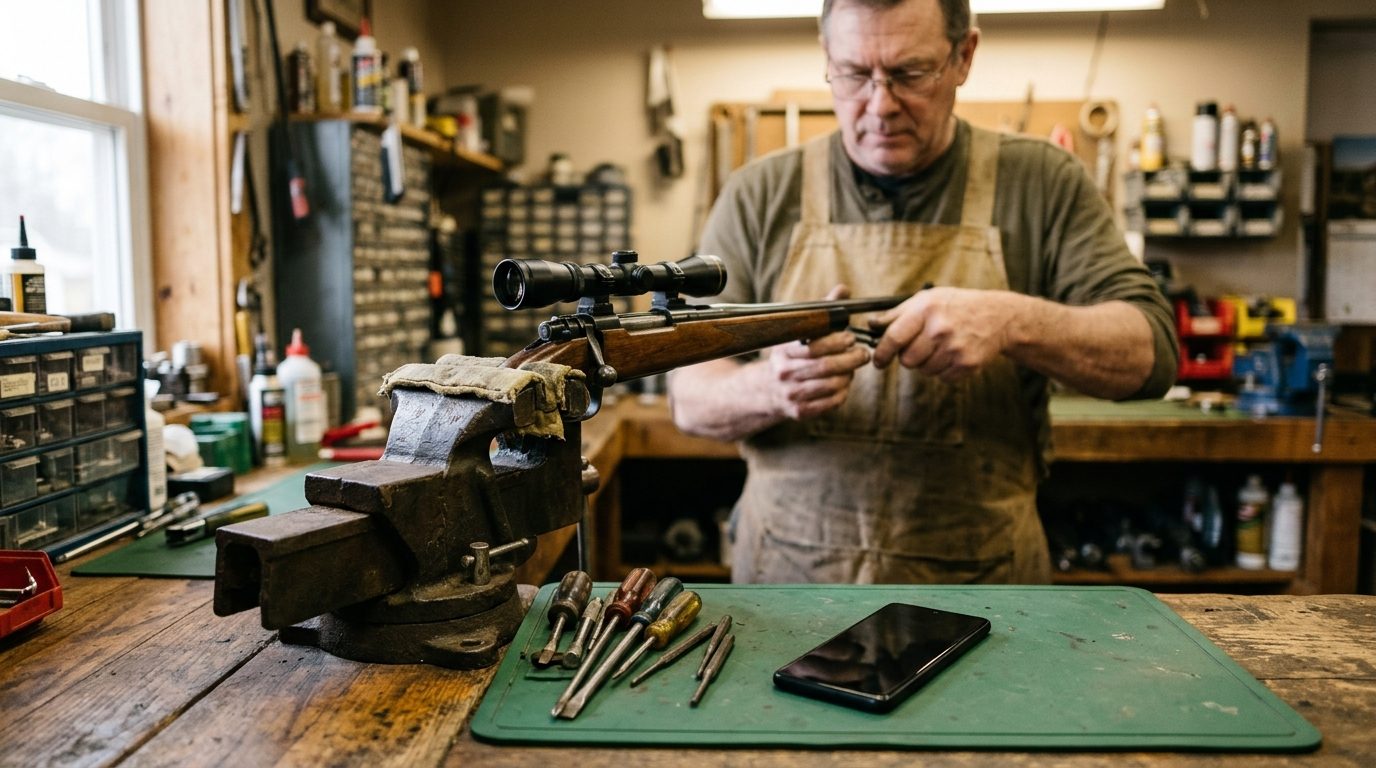
The bench is three weeks deep and the phone has not stopped. "Is my rifle done yet?" "Did you get the part?" "What did you find?" Each call pulls the gunsmith off a job, and the answer is usually "not yet." Meanwhile an estimate has sat unapproved for nine days behind an unreturned voicemail, and four guns from last spring are still on the ready rack.
That is a communication problem, and most of it goes away once every repair ticket has a fixed set of texts tied to its status. Here is that set: what each says, what triggers it, how long to wait, and what to do when the customer goes quiet.
Why the phone is the real bottleneck on the bench
A repair ticket has about five moments where the customer needs to hear from you: intake, diagnosis and price, a slipped date, ready, and sitting too long. Miss one and you get a phone call instead.
Some shops push status requests into a separate channel. Midwest Gun Works routes them to email and asks customers to "allow ample time after your firearm has been processed into our shop before requesting a status." That cuts interruptions, but the customer still has to ask. A text at each status change answers before they do.
The rule: text on a change of status, and never otherwise. A customer who only hears from you when something happened reads every message. One who gets a weekly "still working on it" stops reading by week two.
The repair ticket timeline: five texts
| Ticket status | Text | When it goes | If no reply |
|---|---|---|---|
| Checked in | Intake confirmation | Before they leave the counter | None needed |
| Diagnosed | Estimate and approval request | Same day as diagnosis | Second text at 48 hours, call at 5 business days |
| Delayed | Parts or date update | The day you know the date has moved | None needed |
| Ready | Pickup notice | As soon as it is off the bench | Uncollected ladder starts at 7 days |
| Uncollected | Reminder ladder | 7, 21 and 45 days after ready | Letter and phone call |
1. Intake confirmation. Send it while the customer is still at the counter, so they see it arrive.
Hi Mike, this is [Shop] gunsmithing. We've got your Remington 700 in on ticket 4127 for a trigger job and scope mount. We'll text you from this number once we've looked at it, usually within [X] days. Reply STOP if you'd rather we call.
It puts the ticket number in writing, shows them the number to save, and asks for their agreement to be texted at the moment they are most likely to give it.
2. Estimate and approval. Next section; this is where turnaround time is lost.
3. Parts delay. Only when the date you gave has moved. Silence after a missed date is what triggers the call.
Mike, quick update on ticket 4127: the trigger kit is backordered at the distributor. New estimate is [date]. Nothing you need to do. We'll text the moment it's done.
"Nothing you need to do" saves a round of replies asking exactly that. Texts 4 and 5 are covered below.
The estimate text is where your turnaround time goes
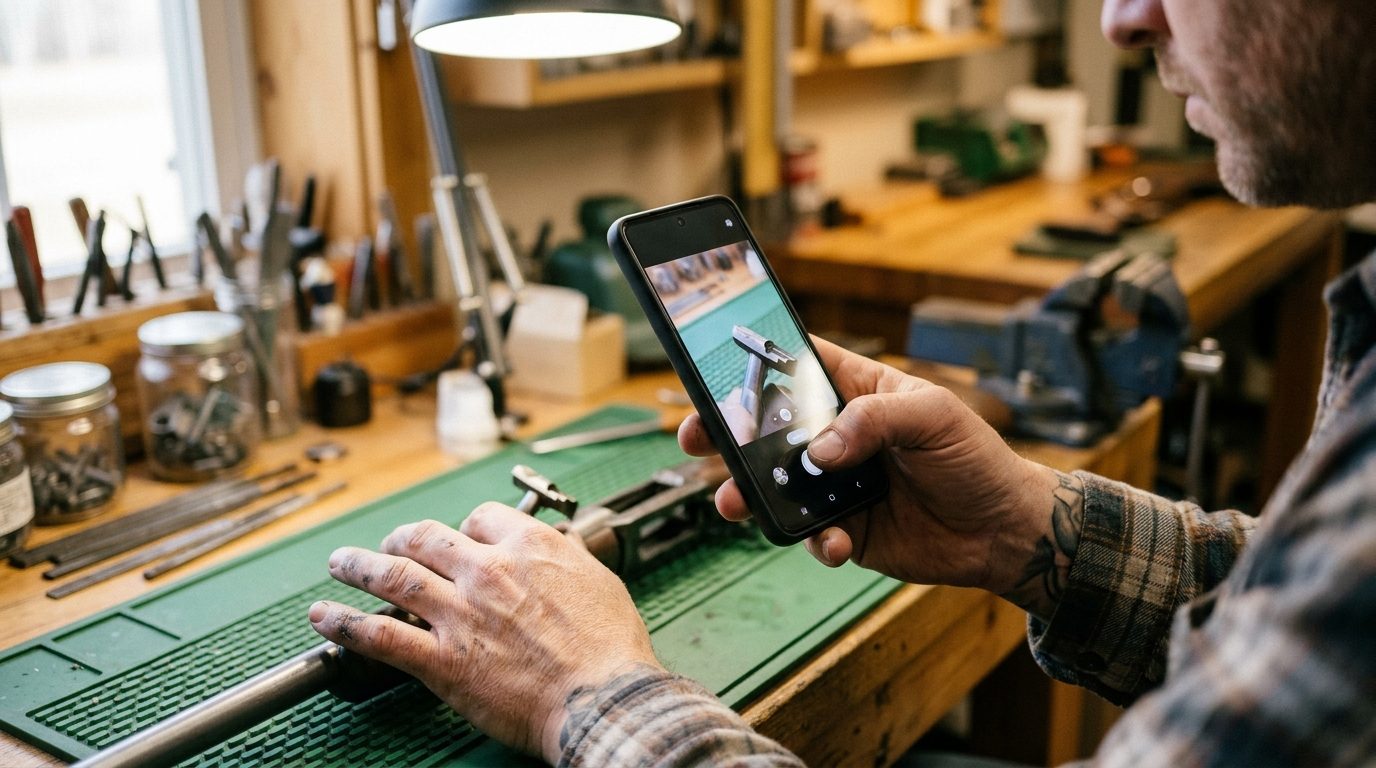
Shops rarely lose days on the bench. They lose them waiting for a yes, while a diagnosed gun takes rack space and the job clock has not started.
The estimate text needs four things: what you found, what it costs, how long it will take once approved, and a one-word reply.
Mike, we've looked at your 700 (ticket 4127). The extractor is cracked, which is why it's failing to extract. Replacing it plus the trigger job and scope mount comes to $[amount] all in, about [X] days once you approve. Reply YES to go ahead, or call us at [number] with questions.
Attach a photo of the problem part. The inbox sends MMS, and a picture of a cracked extractor answers "do I really need that?" faster than any explanation.
When YES comes in, reply "Thanks Mike, we're on it."
No reply after 48 hours:
Hi Mike, just checking you saw the estimate for your 700 (ticket 4127): $[amount] for the extractor, trigger and scope mount. Reply YES to start, or NO and we'll have it ready to collect as-is.
Offering "NO" is deliberate: a customer who has decided against the work often goes silent rather than say so. A one-word exit frees the rack.
No reply after five business days: stop texting and call. The number may be wrong, or the customer needs a conversation.
A written YES is also a dated record of what was approved at what price. The inbox is searchable by phone number and content, so finding it later takes seconds.
Ready for pickup: say who collects it and what to bring
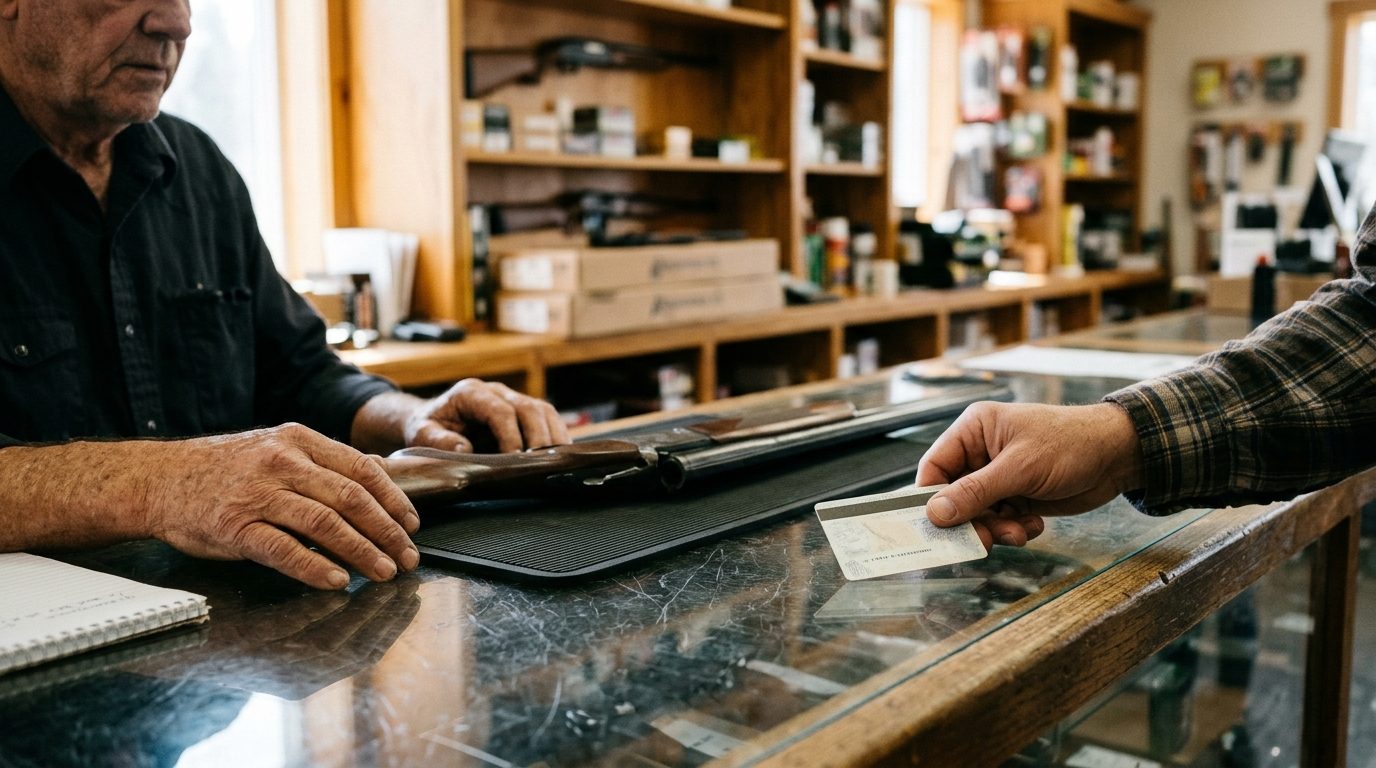
Good news Mike, your Remington 700 is ready (ticket 4127). Total due is $[amount]. Pick it up [hours] at the counter, and please bring your photo ID. It has to be collected by you, since you're the person who dropped it off.
The last line is not decoration. Under federal rules, a Form 4473 is not required to record the disposition of a firearm delivered to a licensee solely for repair, when it is returned to the person from whom it was received. A spouse or friend collecting it is outside that language, and some states add their own requirements. Settle how your shop handles that case, then put the answer in the pickup text.
For questions you answer ten times a week ("Can my wife grab it?", "Do you take cards?"), build a quick reply: a slash shortcut like /id that expands into the full answer. The dashboard counts how often each is used, so after a month you know what to fold into the pickup text itself.
The uncollected-gun ladder: 7, 21 and 45 days
Every shop has guns on the ready rack that should have gone home months ago. A three-step ladder, loaded the day the ticket moves to ready, clears most of them.
Day 7:
Hi Mike, a reminder your 700 is ready for pickup at [Shop] (ticket 4127). We're open [hours]. Reply if you need us to hold it a little longer.
Day 21:
Mike, your rifle (ticket 4127) has been ready for three weeks. Can you let us know when you'll be in? Reply with a day and we'll have it at the counter.
Day 45:
Mike, this is our last text about ticket 4127. Your rifle has been ready since [date]. Please call us at [number] this week so we can arrange pickup. [Add your posted storage policy here, if you have one.]
After day 45, stop texting: call, then send a letter. What happens to a gun nobody collects depends on your state's rules and your posted policy, so never threaten anything in a text you have not confirmed with your attorney. The ladder's job is to get the gun home and leave a dated trail showing you tried.
Schedule all three when the ticket goes to ready. Android Texter takes a future send time in the composer or the API, and pending messages can be edited or cancelled at /dashboard/scheduled. Cancel the rest of the ladder at pickup, or the customer gets "your rifle is still waiting" while it sits in their safe.
Who owns the inbox, and what the week looks like
Pick one owner: whoever runs the counter, not the gunsmith. The point is to keep the person at the bench at the bench.
- One Android handset paired for the repair line. If you also run transfers and retail, pair a second phone for the counter. Android Texter can pair several Android phones to one account, each with its own number, and both inboxes show in the same dashboard. Our FFL transfer-ready playbook covers the counter side.
- Forwarding when needed. A forwarding rule can route inbound messages matching a pattern to another phone or a Telegram channel, so technical questions reach the bench without the gunsmith watching the inbox.
- An after-hours auto-reply. "Thanks, we got your message. The shop is closed and we'll reply when we open at [time]." It stops the 9 a.m. follow-up call.
If your ticket system can call a webhook or connects to Zapier, a status change can fire the text through the REST API or the Zapier app's Send SMS action. If not, the counter sends from the dashboard with quick replies.
The weekly rhythm:
- Monday morning: sweep every ticket in Diagnosed. Anything past 48 hours with no reply gets the second estimate text. Anything past five business days gets a call.
- Wednesday: check promised dates against parts orders and send delay texts for anything that has slipped.
- Friday morning: walk the ready rack. A Friday reminder gets a Saturday pickup.
Track three numbers, on paper if you like: days from estimate to approval, guns on the ready rack older than 21 days, and status calls per week. If the texts work, all three fall.
Why this runs on your own phone, and what still applies
Carrier-registered business texting does not want this traffic. Twilio rejects A2P 10DLC campaigns that contain content related to firearms, explosives, or related weapons, and its verification guidance says firearms and accessories are not permitted on short code or long code routes regardless of age gating. A pickup notice on a repaired shotgun hits the same category filter as a sale announcement.
Android Texter sends from a real Android handset on your own carrier line, as person-to-person SMS, so there is no A2P campaign to register and no category filter at the aggregator. That changes the carrier gate and nothing else. The TCPA and FCC rules apply in full, and consent is your responsibility: get the yes at the counter and record it on the ticket.
Opt-outs are also yours to handle. Under the FCC rules a customer can revoke consent by any reasonable method, and you must honor it within ten business days. Android Texter does not suppress a number that replies STOP, so tag the contact, cancel their scheduled messages, and switch to calling. We cover the detail in what actually counts as STOP.
Frequently Asked Questions
Do I need a Form 4473 when a customer picks up a repaired gun?
Under 27 CFR 478.124(a), a 4473 is not required when a firearm delivered solely for repair is returned to the person it was received from. If someone else is collecting it, or your state has its own rules, check with your compliance process before you send the pickup text, and say in the text who must collect it.
Can I send the customer a photo of the damaged part?
Yes. The Android Texter inbox can attach images and other media, so the estimate text can include a photo of the cracked extractor or the pitted bore. It goes out as MMS from your shop's number. A photo usually gets a faster approval than a written description, and it heads off the "do I really need that?" call.
What if a customer never answers the estimate?
Send one follow-up at 48 hours that offers both YES and NO, so a customer who has changed their mind can say so in one word. If there is still nothing after five business days, stop texting and call. Two unanswered texts usually mean a wrong number or a customer who needs a conversation.
Get the bench off the phone
Write the five texts once, save them as quick replies, and load the ladder every time a gun comes off the bench. To send them from your own number without a firearms category filter in the way, set up Android Texter on a spare Android phone and send the first intake text this week.