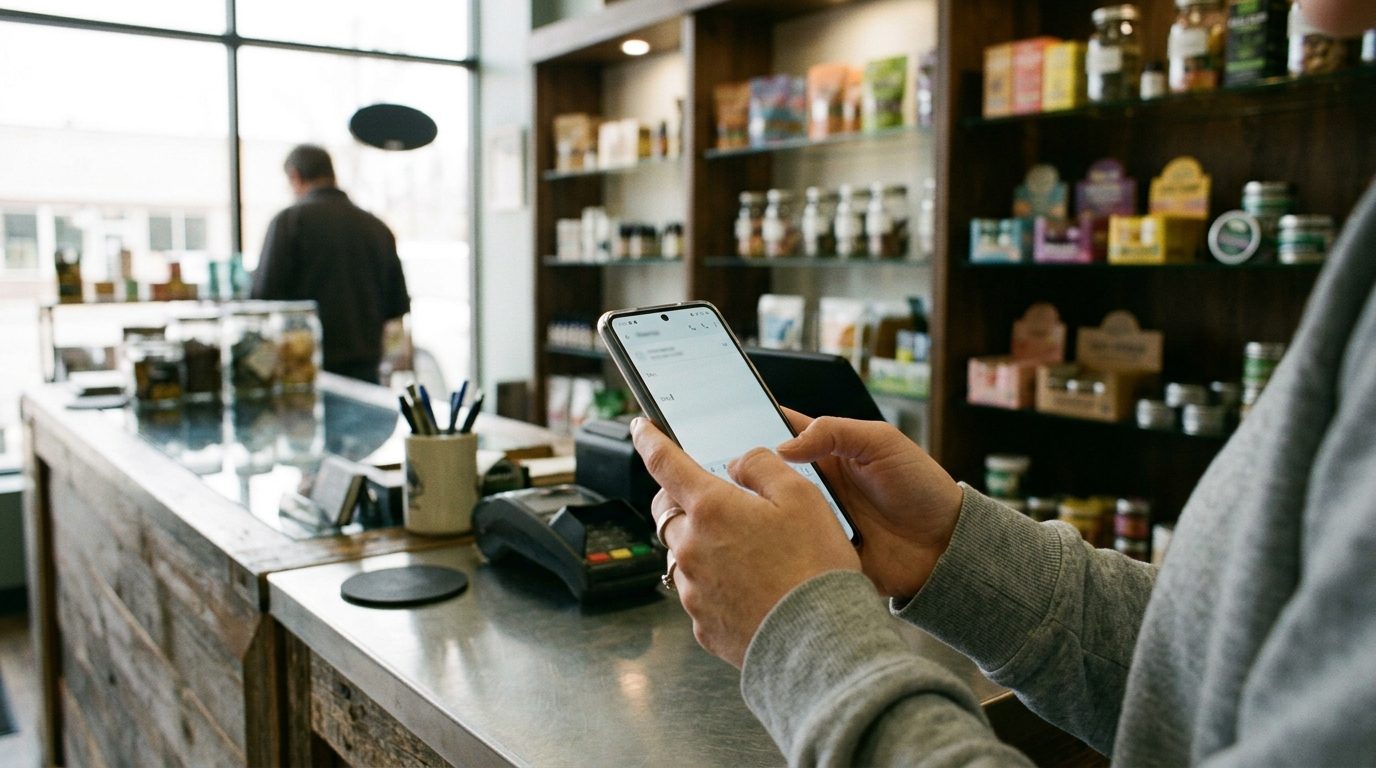
If you sell hemp, CBD, or cannabis products, you have a deadline problem and a communication problem stacked on top of each other. A federal law is about to make most of the hemp-derived products on your shelves illegal to sell, and you need to tell your customers before that happens: which SKUs are getting pulled, what's replacing them, and when. The obvious move is a mass text. The problem is that the SMS platforms built for mainstream retail were never built to carry cannabis or CBD content in the first place, so the message you need to send the most urgently is often the one that gets filtered into nothing.
Here's what the deadline actually is, why your texts get blocked regardless of state legality, and what a compliant way to actually reach your list looks like.
What changes on December 11, and why the date moved twice
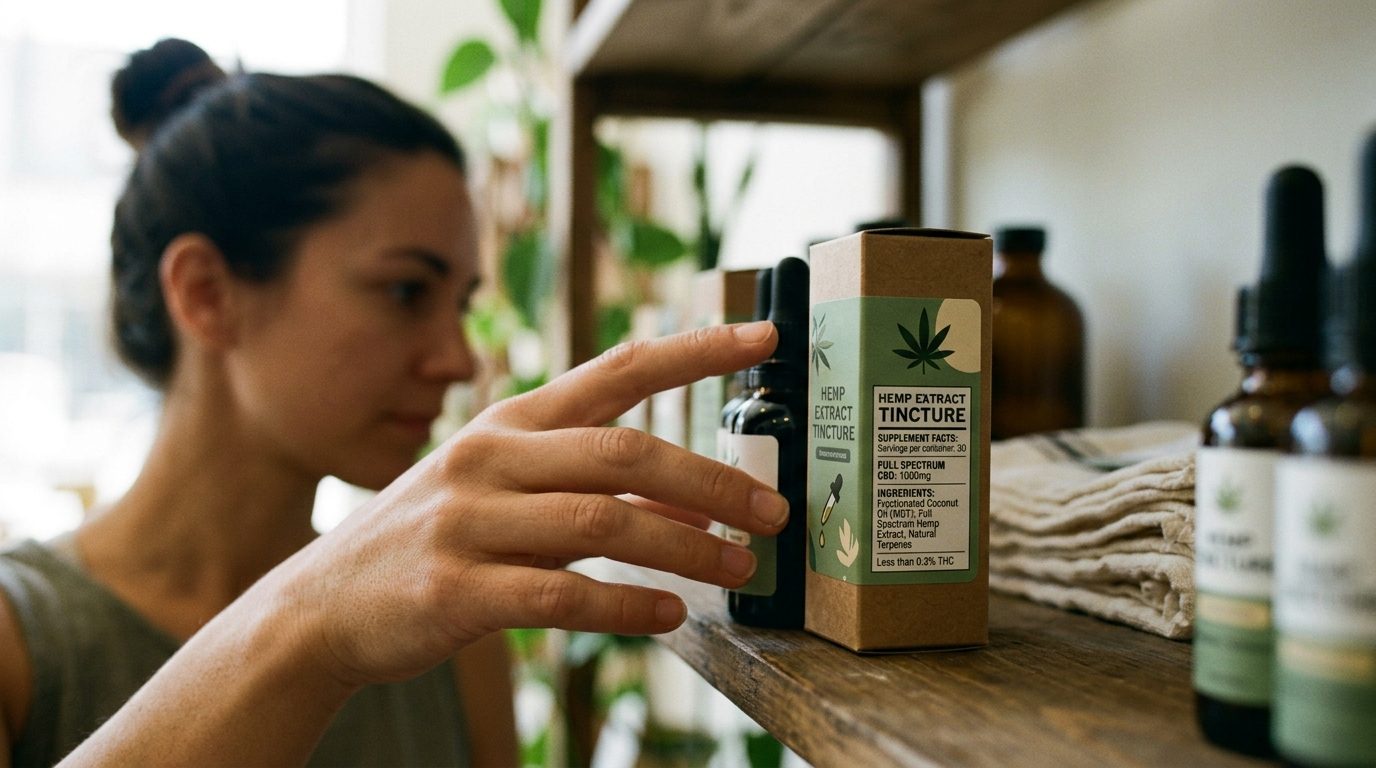 Section 781 of the Continuing Appropriations, Agriculture, Legislative Branch, Military Construction and Veterans Affairs, and Extensions Act, 2026 (H.R. 5371) rewrites the federal definition of hemp in the Agricultural Marketing Act. The 2018 Farm Bill defined hemp by delta-9 THC content alone, capped at 0.3% on a dry-weight basis, which is the loophole that let delta-8, THCA flower, and most intoxicating hemp beverages be sold as federally legal hemp for years. Section 781 closes that loophole by switching to a total THC standard, one that includes THCA and delta-8, still capped at 0.3% dry weight, and adds a hard limit of 0.4 milligrams of total THC per container for any finished product. Synthetic and synthesized cannabinoids are excluded outright. Industry estimates put the share of currently sold hemp-derived products that fail the new standard at roughly 95% (Congressional Research Service summary).
The law was signed in November 2025 with a one-year runway, putting the original effective date at November 12, 2026. A stopgap funding bill signed September 2, 2026 pushed most of the restriction back another 30 days, so most of Section 781 now takes effect December 11, 2026, though products containing synthetic or non-naturally-occurring cannabinoids lose hemp status on the original November 12 date (Hemp Law Group's status tracker). The FDA, which enforces the new definition alongside USDA, has not yet published the cannabinoid list or defined what counts as a "container" for the per-unit cap, so retailers are working against a moving deadline with real gaps in the guidance.
Whatever your inventory looks like on December 12, your customers need to hear about it from you before then, not after they show up to buy something you can no longer sell.
Why your existing SMS platform won't carry that message
 Any SMS sent through a Twilio-style aggregator to a 10-digit number in the US runs through A2P 10DLC, the carrier-mandated business-messaging system that requires you to register a brand with The Campaign Registry, get a specific campaign approved by industry and use case, and pay ongoing per-campaign fees. Carriers then filter every outbound message against that approved campaign profile.
Cannabis, CBD, and hemp all fall under content rules the industry shorthands as SHAFT-C: Sex, Hate, Alcohol, Firearms, Tobacco, and Cannabis/CBD. Messages that read as SHAFT-C content are blocked outright on 10DLC, and having that content anywhere on your website can get a campaign rejected even before you send your first text (10DLC.org's SHAFT reference). This applies whether or not your state has legalized cannabis. More than 40 states now permit medical or recreational cannabis in some form (NCSL's state cannabis law tracker), and CBD sold within the old Farm Bill definition has been federally legal since 2018. None of that matters to a carrier filter built around content classification, not legality. A message announcing a restock, a reformulation, or a discontinued-SKU notice under the new hemp law reads as cannabis content either way, and gets treated the same as a THC dispensary ad.
Vape and e-cigarette retailers hit a related but separate wall under the PACT Act, which restricts how vape products ship and who can sell them, though it doesn't directly regulate SMS content the way SHAFT-C does. Carriers block vape promotional texts anyway, conservatively, to avoid the liability question entirely.
What P2P routing changes, and what it never will
Android Texter routes messages through a user-owned Android phone on a real carrier line, the same path your phone uses when you text a friend. That's person-to-person (P2P) SMS, not application-to-person (A2P) traffic, and A2P 10DLC's brand registration, campaign approval, and SHAFT-C content filtering apply to A2P traffic, not P2P. A message about a hemp reformulation sent from a paired Android device isn't evaluated against a cannabis campaign profile, because there is no campaign: the carrier sees a person texting from a personal number.
What doesn't change is the law that actually governs the content: the Telephone Consumer Protection Act, which requires prior express consent before you text a wireless number for marketing purposes and carries penalties of $500 per violation, tripled to $1,500 for willful violations. Android Texter doesn't reduce that exposure, and it isn't a compliance product. It removes the carrier-level gate that has nothing to do with whether your customer said yes; the consent question is exactly as much your responsibility as it would be on any other channel.
A compliant way to run the actual announcement
A hemp-ban notice is still a marketing or transactional text to people who bought from you, so the baseline rules don't change:
- Only text people who consented to text messages from your business specifically. A purchased list, or a list scraped from a loyalty program you didn't disclose SMS use for, isn't consent. This is the single biggest source of TCPA exposure in the industry and no channel fixes it.
- Keep age-gating intact. If your consent capture already requires 21+ verification, that verification carries forward to the SMS list. Don't build a workaround for the announcement that skips it.
- Every message needs a working opt-out. STOP, UNSUBSCRIBE, CANCEL, END, and QUIT all have to return automatic suppression. Android Texter's auto-reply rules can be configured to catch these keywords and confirm the opt-out without a human touching it.
- Segment by what actually changed. A blanket "some products are changing" text is less useful, and more likely to read as spam, than telling loyalty-tier customers which specific SKU they buy is affected. The contact tagging in Android Texter's dashboard supports this kind of segmentation without needing a separate CRM.
- Keep records of consent and of what you sent. If a customer disputes getting a marketing text they didn't agree to, the burden is on you to show otherwise.
Getting the volume out without tripping delivery limits
 If your list runs into the thousands, a single phone number sending it all at once looks exactly like a burst of spam to a carrier's velocity filters, ban or no ban. Android Texter's multi-device pairing lets one account distribute sends across several paired phones, so no single line carries the whole announcement at once. The dashboard and API both support scheduled sends on an RFC 3339 timestamp, which matters if you're staggering the announcement by time zone or waiting for a specific reformulated product to actually land in stock before you tell people it's available. For list hygiene, the Landline Remover integration in the dashboard flags landlines before you burn a send on a number that was never going to receive a text at all.
None of this requires a campaign approval or a monthly per-campaign fee, because none of it is A2P traffic to begin with.
Frequently Asked Questions
Does the December 11 hemp ban affect CBD products sold in a dispensary, not just hemp shops?
Yes. Section 781 redefines hemp federally, so any product marketed as hemp-derived, including CBD sold in a licensed cannabis dispensary, is measured against the new total THC standard and the 0.4 mg per-container cap regardless of where it's sold. State cannabis licensing doesn't exempt a hemp-derived product from the federal definition.
Will a 10DLC campaign for a hemp or cannabis brand ever get approved?
Cannabis and CBD are categorized under SHAFT-C, which most carriers block outright rather than soft-restrict, so approval is unlikely regardless of how the campaign is worded. Some aggregators reject the application before it even reaches a carrier for review.
Does sending through a personal phone reduce my TCPA risk?
No, and no SMS platform can honestly claim otherwise. The TCPA governs consent and content no matter which channel carries the message. P2P routing only removes the carrier's A2P content gate; it has no effect on whether you had consent to text a given number.
Do I still need to honor STOP requests on an urgent announcement text?
Yes. STOP, UNSUBSCRIBE, CANCEL, END, and QUIT must all trigger suppression immediately, including for time-sensitive compliance announcements. Urgency isn't an exception to consent law.
Is there a grace period after December 11 for products already on shelves?
The law itself doesn't specify a sell-through grace period for existing retail inventory, and FDA guidance on enforcement specifics, including how "container" will be defined, hadn't been published as of this writing. Retailers should not assume a grace period exists without published guidance confirming one.
Android Texter exists for exactly this situation: a legal, licensed business that needs to reach its own customers by SMS and can't get a carrier to approve the campaign. If you're staring down a December inventory change and a list you can't get delivered to, that's the gap it fills.