
Your renewal list for next month has sixty names on it. The carrier's non-pay notice for the Hendersons went out by mail eight days ago, and nobody in the house has opened it. Your CSR left two voicemails last week. Neither was returned. By the time anyone notices, the policy has lapsed, the client is shopping, and the agency that answers first gets the book.
People stopped answering unknown numbers years ago, and carrier mail looks like junk until it says FINAL. A short text from the agency they know gets read. This is the sequence an independent agency can run for renewals, lapse warnings and claim check-ins, who owns each reply, and what to do when nobody answers.
Who texts, and from which line
Decide this before you send anything, because the reply is where the work happens.
- Service line: renewals, billing, lapse warnings, document requests, claim check-ins. Owned by the CSR or account manager for that client. Replies need an answer the same business day.
- Producer line: remarketing, coverage reviews, cross-sell conversations. Owned by the producer. Slower, higher value.
Keep them on separate numbers. A "can you just call me" should reach someone who can pull up the policy, not a producer out at a commercial walkthrough. If you run Android Texter, multi-device pairing lets one account hold both handsets, each with its own number, and both threads land in the same browser inbox.
The renewal sequence: 45, 21 and 7 days out
 Most renewal texts fail for one reason: they read like a billing notice. The one that works reads like a note from the person who wrote the policy.
Day 45: the heads-up. Trigger: the policy appears on your monthly renewal report. It asks for nothing except a reply if something has changed.
Hi Dana, it's Marcus at Ridgeline Insurance. Your auto policy renews on Nov 12. If anything changed this year (new driver, new car, moved, longer commute), text me here and I'll make sure the renewal reflects it. Otherwise nothing to do yet.
Every "we got a new car" reply is a coverage gap you would otherwise discover at claim time.
Day 21: the premium check. Trigger: the renewal offer is in and you can see the new premium. If the increase is small, send the short version. If it jumped, send the review offer, because a large increase they discover on their own is when they call another agent.
Hi Dana, your renewal from the carrier came in. The premium is going up at renewal. I'd like to shop it or check your discounts before it takes effect. Want a 10 minute call this week? Reply with a day that works.
Put the dollar figure on the call, not in the text. Keep texts to the fact, the date and the next step.
Day 7: the last nudge. Only goes to people who have not replied to either message and have not paid.
Dana, quick reminder your auto policy renews Nov 12. If your payment is on autopay you're all set. If not, reply PAY and I'll send the carrier's payment link, or CALL and I'll ring you today.
No reply after day 7: the CSR calls. Two unanswered texts mark this client as one who needs a human, which is exactly where CSR phone time should go.
The lapse warning: same day the notice lands
Carriers mail a notice of cancellation for non-payment with a date on it. The text should go the same day you see it, because every day lost is a day off the grace period.
Day 0: the notice arrives.
Hi Tom, it's Priya at Ridgeline. The carrier is showing a missed payment on your homeowners policy. It hasn't cancelled, and it's easy to fix before Oct 30. Reply here and I'll walk you through it, or reply CALL.
Day 3: no reply, no payment.
Tom, following up on your homeowners policy. The cancellation date is Oct 30. If you've already paid, ignore this and thank you. If money is tight this month, reply and let's look at your options together.
Five days before the cancellation date: stop texting and call. If the policy lapses, the next conversation is about reinstatement or a rewrite at a worse rate, and that belongs on the phone.
The "if money is tight" line matters. People who can't pay go quiet. A reason to reply is how you save the account with a payment plan, a higher deductible or a coverage change.
Claim check-ins
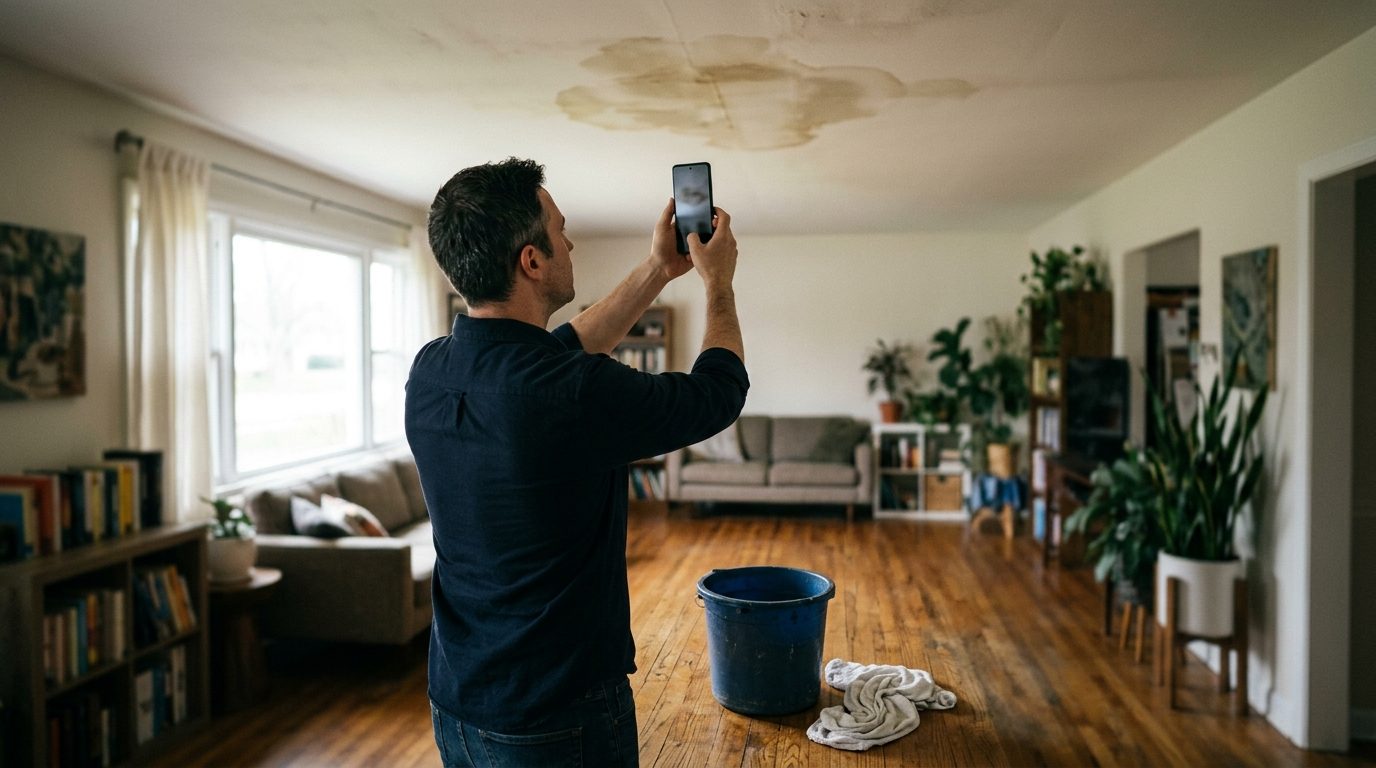 Claims are where a client decides whether they need an agent at all. The carrier's adjuster owns the claim. The agency owns the relationship, and three texts carry it.
Day of first notice:
Hi Leah, I saw the claim for the water damage come through. Your claim number and adjuster contact should arrive from the carrier today. If they haven't by tomorrow, text me and I'll chase it.
Day 3:
Leah, checking in. Has the adjuster been in touch to schedule the inspection? If you have photos of the damage, you can send them here and I'll make sure they reach the file.
Photos by MMS are one of the few things a client will actually do from their phone, so ask for them.
After the inspection or the first payment:
Leah, how did the inspection go? Anything in the estimate that doesn't look right to you? I'm glad to review it with you.
If the answer is a complaint about the adjuster, that thread goes to the account manager the same day, and the agency makes the call to the carrier.
What a week in the inbox looks like
 A small agency can run all of this with an hour on Monday and short daily triage.
Monday morning. Pull next month's renewals and this week's non-pay notices from your agency management system. Schedule the day-45 and day-21 texts for the week. In Android Texter, the composer has a scheduled-send picker and everything queued is visible and editable at /dashboard/scheduled. If someone on staff scripts, the REST API accepts a scheduled_at timestamp on POST /api/v1/messages/send, so the renewal report can queue the sequence directly.
Every day at 10 and 3. The CSR clears the service inbox. Most replies fall into five buckets, which is what quick replies are for: /pay for the carrier payment link, /call for "I'll call you this afternoon," /docs for what to photograph and send, /idcard for how to get proof of insurance, /thx for the close. Usage counts on each one show which question clients ask most.
After hours. An auto-reply rule can answer anything that arrives outside office hours:
Thanks, got it. Our office opens at 8:30 and someone will reply then. If this is an accident or emergency, call your carrier's claims line on your ID card.
Producer handoff. A forwarding rule can push replies containing words like "quote," "umbrella" or "boat" to the producer's phone or a Telegram channel, so a cross-sell opening doesn't sit in the CSR's queue.
Friday. Ten minutes on the numbers.
What to measure
A four-column spreadsheet tells you whether text is doing the work:
- Reply rate on the day-45 text. If it's low, the message reads like a form. Rewrite it in the CSR's voice.
- Policy changes caught before renewal. Count the "new car," "moved," "kid got their license" replies.
- Non-pay notices resolved before the cancellation date, split by texted and not texted.
- Renewals needing a phone call. This should fall as the sequence settles in.
Consent, opt-outs and where the lines are
Texting your own clients about their own policies is the least controversial texting an agency does. It still has rules, and four of them change what you send:
- Collect the mobile number with permission to text it at application or intake, and keep the record. Renewal, billing and claim messages are service messages. A text that pitches an umbrella policy is marketing, and marketing to a client is not automatically covered by the existing relationship. We covered that line in Does an Established Business Relationship Cover Texts?.
- Honor opt-outs quickly. FCC rules let a consumer revoke consent by any reasonable method, including replying STOP, QUIT, END, REVOKE, OPT OUT, CANCEL or UNSUBSCRIBE, and require it to be honored within ten business days. The FCC has waived until January 31, 2027 the part that would apply one opt-out to every unrelated message type, but the core obligation is in force. Our opt-out rules article walks through the edge cases.
- Medicare is different. If you sell Medicare Advantage, CMS rules prohibit unsolicited text messages to beneficiaries. Contact the beneficiary asked for is not unsolicited. Prospecting by text is off the table.
- Keep sensitive detail out of the text. A text can be read from a lock screen. Names, dates and next steps belong in the message. Policy numbers, premiums and claim amounts belong on the call or the carrier portal.
A handset changes the delivery route, not your obligations. The TCPA applies to every one of these messages, and consent is the agency's responsibility whatever sends them.
When a registered A2P provider is the better answer
Insurance is not a blocked category. Most agencies can register a brand and campaign with a mainstream provider and get approved. If you are a large agency sending tens of thousands of messages a month through an agency management system that already has texting built in, that is probably the right tool, and you should use it.
A phone-based gateway fits a different agency: a handful of staff, moderate volume, and clients who already have the agent's number saved. There is no registration, no campaign vetting and no brand fee, and the renewal text arrives from a number the client recognizes. That recognition is most of why the day-45 message gets a reply.
Frequently Asked Questions
How far in advance should an insurance renewal reminder text go out?
Start about 45 days out with a heads-up that asks whether anything changed, follow at 21 days once the renewal offer and premium are known, and send a final nudge at 7 days only to clients who haven't replied or paid. That spacing gives you time to remarket a large increase before the policy renews rather than after the client has already started shopping.
Can I text clients about a missed premium payment?
Yes, if they gave you their mobile number with permission to contact them about their policy. Send it the day you see the carrier's non-pay notice, name the cancellation date, and leave the amount owed for the call. Include an easy reply path for people who can't pay, because silence is the most common response from clients who are short on money.
Should agents and CSRs text from their personal phones?
Not from a phone that is only personal. The replies need to be visible to the agency, so the account stays serviceable when someone is out or leaves. A dedicated service handset paired to a shared inbox keeps the conversation with the agency, lets a colleague pick up a thread, and keeps opt-outs and history in one place.
Can Medicare agents text prospects?
Not unsolicited. CMS rules for Medicare Advantage prohibit unsolicited text messages to beneficiaries, alongside cold calls and voicemail. Contact a beneficiary has requested, such as replying to someone who returned a business reply card, is not treated as unsolicited. Check your carriers' own marketing guidance as well, since plans often add rules on top of CMS.
Run your renewals from the agency's own number
Android Texter pairs your agency's Android handsets to a browser inbox with scheduled sends, quick replies, auto-replies and forwarding, so the renewal sequence above runs from a number your clients already know. Set up your service line at androidtexter.com.