Friday is a due date. Forty accounts pull that morning, and you know from last month that eight or nine will come back as returns. The borrower is not ignoring you. They got paid Thursday night, the rent cleared first, and by the time your ACH file hits the account the money is gone. A call on Monday goes to voicemail. A text on Tuesday gets read in four minutes and answered with "can you run it Friday instead."
That exchange is the reason a short-term lender texts: to get the money and the withdrawal to line up on the same day. Three scheduled texts per payment do the job, and everything else is a reply. Every message in the sequence is transactional, about a loan the borrower signed, sent to the number they gave at application. Renewal offers stay on a separate line, covered below.
Three days out: the heads-up text
 Trigger: due date minus three days, which for most weekly and biweekly loans is the day after the borrower's previous payday. Send window: 10:00 to 11:00 a.m. borrower local time.
Hi [First name], this is [Agent] at [Lender]. Your payment of $[Amount] on loan ending [1234] is scheduled for [Day], [Month Date]. If anything has changed with your pay date, reply here and I can look at options before then.
The amount is the figure from the loan agreement, to the cent. The date includes the weekday, because "the 17th" means nothing to someone paid on Fridays. The last line invites the one reply you want: the heads-up from a borrower whose pay date slipped.
What a reply does. The common one is "I don't get paid until Friday, can we do it then." It goes to the agent who owns the account, and the answer is a text, not a call: confirm the new date and amount in writing in the same thread. Moving the date turns a regular withdrawal into an unusual one, which carries its own notice (see the rules section).
No reply is the expected outcome and the good one. Do not send a second heads-up.
Morning of: the confirmation text
Trigger: the due date. Send window: 8:00 to 9:00 a.m. local, never earlier.
Good morning [First name], a reminder that $[Amount] for your [Lender] loan ending [1234] is scheduled to come out of your account ending [5678] today. Reply PAID if you have already taken care of it, or reply here if there is a problem and I will call you back.
Replies sort into three buckets, each with a canned answer:
- "Paid." Check the loan management system before replying. If it posted, confirm and close. If not, say so and ask how they paid, because sometimes it was cash at the counter that nobody logged.
- "Can you run it tomorrow" or "I only have half." The extension conversation. The agent offers what state law and the agreement allow, nothing else, and confirms the new terms by text.
- "Wrong number." Suppress the number, flag the account, and re-verify contact details offline before any further text.
A fourth reply needs no agent. STOP, QUIT, CANCEL, END and UNSUBSCRIBE are suppressed by Android Texter automatically. The loan still exists, any legally required notice goes by the channel the borrower consented to for it, and nobody texts that number from that line again.
After the miss: the return text
Trigger: the return notice from your ACH processor, which for a non-sufficient-funds return usually lands the next business day. Send window: the morning you receive it, 9:00 to 10:00 a.m. local.
Hi [First name], [Agent] at [Lender]. The $[Amount] payment scheduled for [Day] on your loan ending [1234] was returned by your bank. Nothing further has been attempted. Reply with a day this week that works and I will set it up, or call me at [Branch number] if you would rather talk it through.
"Nothing further has been attempted" tells the borrower you are not about to hit the account again, which is what they fear. The message asks for a date, not for money. A borrower who gives you a date is a borrower in a conversation. Whether you can re-attempt at all is governed by the two-consecutive-failures rule below, so for many branches the return text is also where the agent starts collecting a new authorization.
On no reply: wait two business days, then one follow-up.
[First name], following up on the returned payment of $[Amount] on your [Lender] loan. I can still set up a new date this week. Reply here or call [Branch number] and we will sort it out.
After that, the account moves to phone and mail. A third unanswered text gets a STOP, not a reply.
Who owns the inbox, hour by hour
 A branch with 400 active loans sees anywhere from a handful to a few dozen replies a day, bunched in the hour after each scheduled send. What works is one shared inbox and one owner per thread. The branch manager opens the dashboard at 8:30, after the morning-of sends, and makes three passes:
- Replies to this morning's confirmations. The "paid" bucket is handled on the spot with a quick reply. Anything asking for a change is assigned to the agent who originated the loan.
- Returns from yesterday's file. The return texts go out now.
- Anything unanswered from yesterday. A thread left open for more than a business day is the manager's to close personally.
Quick replies carry the load. A branch needs about six: paid-confirmed, paid-not-found, extension-offer, extension-confirmed, call-back-scheduled, and wrong-number. In Android Texter they are slash shortcuts in the composer, and the dashboard counts how often each is used.
What to measure, per due-date cycle: the share of three-day texts that get a reply (rising means pay dates are drifting at origination), the first-attempt success rate, and the median days from a return to a resolved account.
Origination and servicing on separate lines
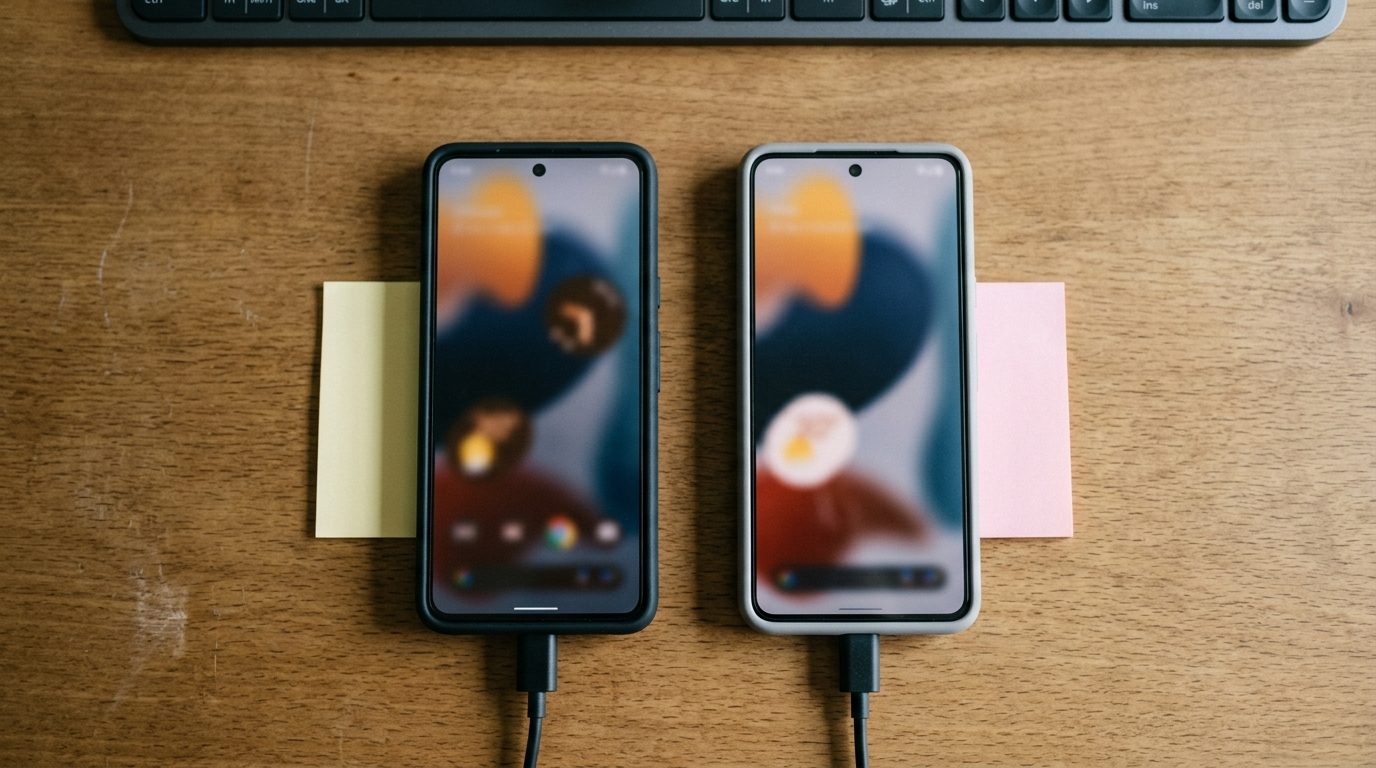 The number a borrower saved at application is the one they answer when it says their payment is tomorrow. Renewal offers, re-borrow invitations and anything containing the word "approved" go out from a different number, which means a different paired handset.
Android Texter pairs several Android phones to one account, each with its own number, and a send can be pinned to a specific device or routed automatically. The branch setup is two handsets: a servicing phone that carries the due-date sequence and nothing else, and an origination phone for applications and offers. A borrower who replies STOP to an offer has opted out of the offer line, not out of reminders about a loan they signed, and separate numbers keep those decisions separate. Both handsets feed the same dashboard inbox.
Scheduling the sequence so nobody has to remember it
The three scheduled messages are created at funding. The composer's scheduled-send picker takes a date and time per message, and the queue at /dashboard/scheduled is where an agent edits or cancels them when a borrower moves a date. Schedule in the borrower's time zone if you lend across state lines.
If your loan system can make an HTTP call when a loan funds, the sequence can be created automatically: one request per message to the send endpoint with a scheduled_at timestamp in RFC 3339 format, plus a webhook on inbound messages to push each reply back against the right account. The walkthroughs for LoanPro and TurnKey Lender cover the API side.
The rules that change what you send
One section, on purpose. Our earlier piece on why payday lender SMS delivery stalls at 30% covers the carrier gate and the TCPA in depth. This is only the part that changes the messages above.
Consent and opt-out. Every text here goes out under the consent collected at application, so make sure the application collects it, with the number, and keep the record. Under the FCC's rules a borrower can revoke by any reasonable method, including replying "stop," and the revocation must be honored within ten business days at most. The handset changes none of this. The channel is open, the TCPA applies in full, and consent is yours to document.
The CFPB payment provisions. The surviving part of the Payday Lending Rule, 12 CFR 1041.9, took effect March 30, 2025. Before the first withdrawal on a covered loan, a payment notice goes out: by mail no later than six business days before the transfer, electronically no later than three. A changed amount, date or payment channel is an unusual withdrawal with its own notice. A text can carry either notice only if the borrower affirmatively consented to text delivery for it specifically, and only as an "electronic short notice" with the required content and a link to the full notice. Your plain three-day reminder is not that notice unless you built it to be. After two consecutive failed transfers, no further withdrawal is allowed without new authorization, and a consumer rights notice goes out within three business days of the second return. The CFPB said on March 28, 2025 it would not prioritize enforcement and was considering narrowing the rule. It is still in force, states can enforce it, and borrowers can sue under it.
Reg F. The requirement that every collection text carry opt-out instructions, in 12 CFR 1006.6(e), applies to debt collectors as the FDCPA defines them, which a lender servicing its own loans under its own name generally is not. It applies the moment you place the account with an agency, and some states extend similar duties to first-party creditors. Which side of that line your branch is on is a question for counsel.
Say the real number. On October 8, 2026 the FTC returned more than $15.8 million to about 2.1 million customers of the cash advance app Cleo AI, after a complaint alleging advertised amounts were rarely delivered and fees for instant funding were hidden. In a reminder text, the amount is the amount in the agreement, any fee named is one the agreement and your state permit, and "to avoid additional charges" never appears unless it is literally true.
Frequently Asked Questions
How many texts should a lender send per payment due date?
Three scheduled messages: a heads-up three days out, a confirmation the morning of, and a return notice if the payment fails, plus one follow-up two business days after an unanswered return. Everything else is a reply to something the borrower said. More scheduled messages than that produce opt-outs, not payments.
Can the three-day reminder double as the CFPB payment notice?
Only if you built it to. The electronic short notice has required content, must link to the full notice, and can go by text only when the borrower consented to text delivery for that notice specifically. Without that consent, send the notice by the channel they did consent to and keep the three-day text as a plain reminder.
What happens when a borrower replies STOP to a payment reminder?
Android Texter suppresses the number automatically, and nobody texts it from that line again. The loan does not go away. Legally required notices go out by the other channel the borrower consented to, and the account owner moves to phone and mail. With servicing and offers on separate handsets, a STOP to an offer does not touch the servicing line.
Run next Friday's file off this
If your due-date texts are dying at the aggregator, or going out from an agent's personal phone with no record, the sequence above runs from one shared dashboard through a handset the branch already owns. Android Texter pairs the phone, schedules the three messages at funding, routes replies to the agent who owns the account, and keeps servicing and offers on separate numbers. Set up the servicing handset at androidtexter.com and schedule next week's file tonight.