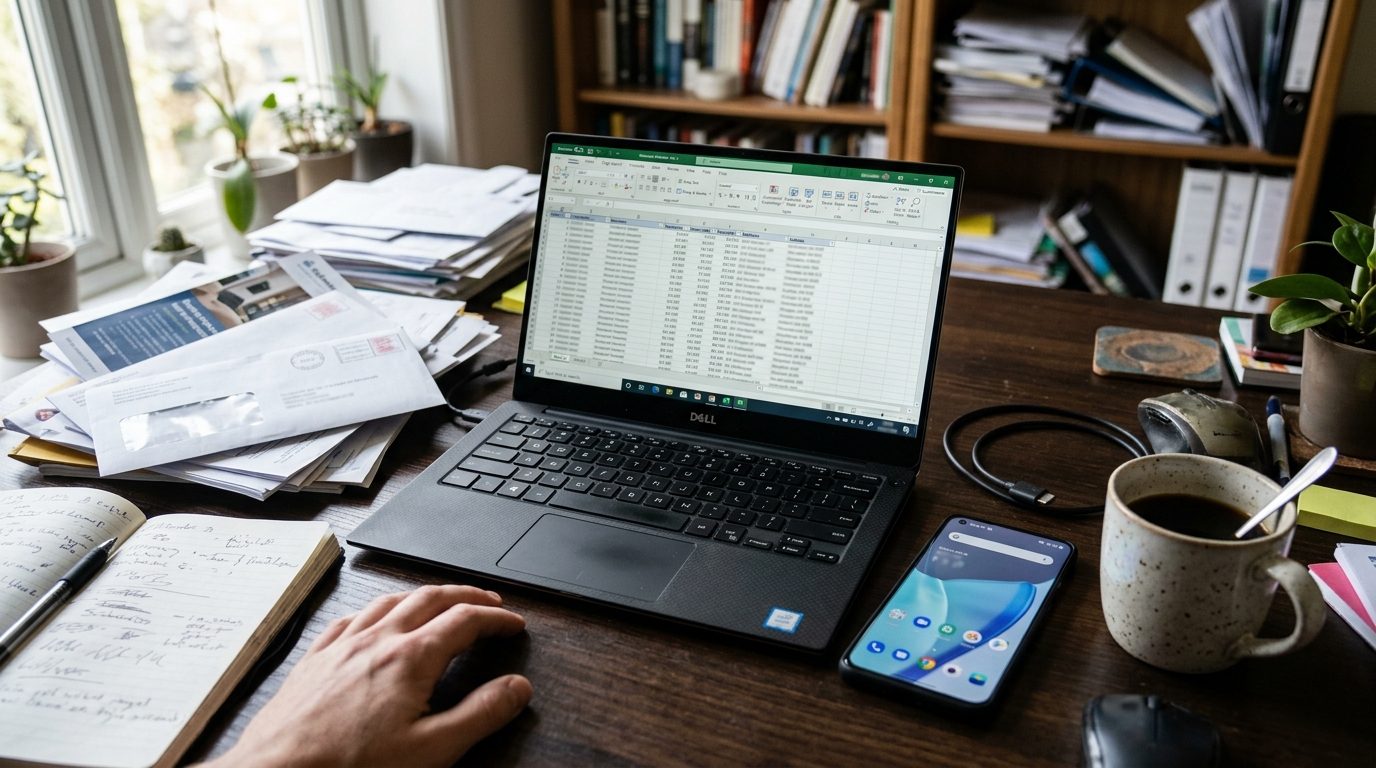
You bought a skip-traced list of a few thousand off-market homeowners, loaded it into whatever tool sends your texts, and one of two things happened. Either almost nothing went through and you're staring at a 15 percent delivery rate with no explanation, or everything sent and now there's a demand letter sitting in your inbox because message number 4,412 landed on someone who got that phone number in 2024 and has never owned property in your target zip.
Those are two different problems wearing the same complaint: "my texts aren't working." One is a carrier deliverability problem. The other is a Telephone Consumer Protection Act problem, and it does not go away no matter which platform sends the message. Here is what's actually happening at each layer, and what changes and what doesn't when you switch tools.
Why your list gets throttled even after a campaign gets approved
 Most wholesalers who go through the standard route register an A2P 10DLC campaign with a carrier-approved aggregator, get it approved, and then watch delivery hover well under 20 percent of what they send. There's rarely an error message telling you why. A message can be silently filtered by a carrier's quality scoring without ever generating a bounce, so a filtered message and a dead number look identical from your side.
The reason has less to do with content and more to do with category. "We buy houses" style outreach gets treated by carriers as low-quality lead generation almost regardless of what the message actually says, because the use case itself is associated with high complaint volume. The CTIA Messaging Principles and Best Practices give carriers wide discretion to filter or block traffic based on sender reputation and complaint rates, not just on prohibited content categories. An approved campaign is not a delivery guarantee. It's a starting point that a carrier can throttle at any time without telling you.
A skip trace gives you a phone number, not consent
Skip tracing pulls a phone number out of public records, data broker files, or utility and tax records tied to a property. It is genuinely useful for finding the right person. It is not, on its own, consent to text them.
The TCPA requires prior express consent before you send an automated or marketing text to a wireless number, and violations carry statutory damages of $500 per message, which a court may in its discretion treble to $1,500 if it finds the violation willful or knowing, under 47 U.S.C. § 227. Each message in a campaign counts as a separate violation, so exposure scales with your list size, not with how the campaign performed. Being associated with an address, or appearing in a skip-trace result, is not the same act as opting in. Courts evaluating wholesaling and lead-gen text campaigns have consistently drawn that line the same way.
The wrong number problem, illustrated by a case that has nothing to do with real estate
On August 17, 2026, a federal court in Oregon granted final approval of a $1.93 million TCPA settlement in Kruzel v. Molina Healthcare. The underlying claim wasn't about text messages. It was about prerecorded voice calls that Molina, through a vendor, placed to numbers tied to plan members, except the numbers had changed hands and belonged to someone else by the time the calls went out. The legal theory, that reaching the wrong person on a stale number is its own TCPA violation independent of whatever consent you had for the original number's owner, applies identically to text campaigns.
That matters for wholesaling because skip-traced lists are built from aggregated public records that go stale constantly. The FCC estimates roughly 35 million phone numbers are disconnected and reassigned to new subscribers every year. A meaningful slice of any purchased or scraped list is already reaching the wrong person before your first message goes out, and "the data said this was their number" is not a defense.
The tool built specifically for this problem
The FCC created the Reassigned Numbers Database for exactly this scenario. You give it a phone number and a date, and it tells you whether that number has been permanently disconnected since then. It's available at reassigned.us, and it is refreshed monthly.
Read the safe harbor carefully, though, because it is narrower than most summaries of it suggest. Under 47 CFR 64.1200(m), the protection covers a caller who had already obtained prior express consent for that number, queried the database against the date that consent was given, got an answer of "no", and reached a stranger anyway because the database was wrong. It is a safety net under a consent you already had. It is not a substitute for consent you never had. On a cold skip-traced list there is no consent date to query against, so the formal safe harbor is simply not available to you.
Query it anyway. The numbers it flags are the ones most likely to reach a stranger who has no idea who you are, and those are the messages that turn into demand letters. It is the cheapest thing on this list relative to what a wrong-number class action costs, even without the safe harbor attached to it.
Where a phone-based channel actually helps, and where it doesn't
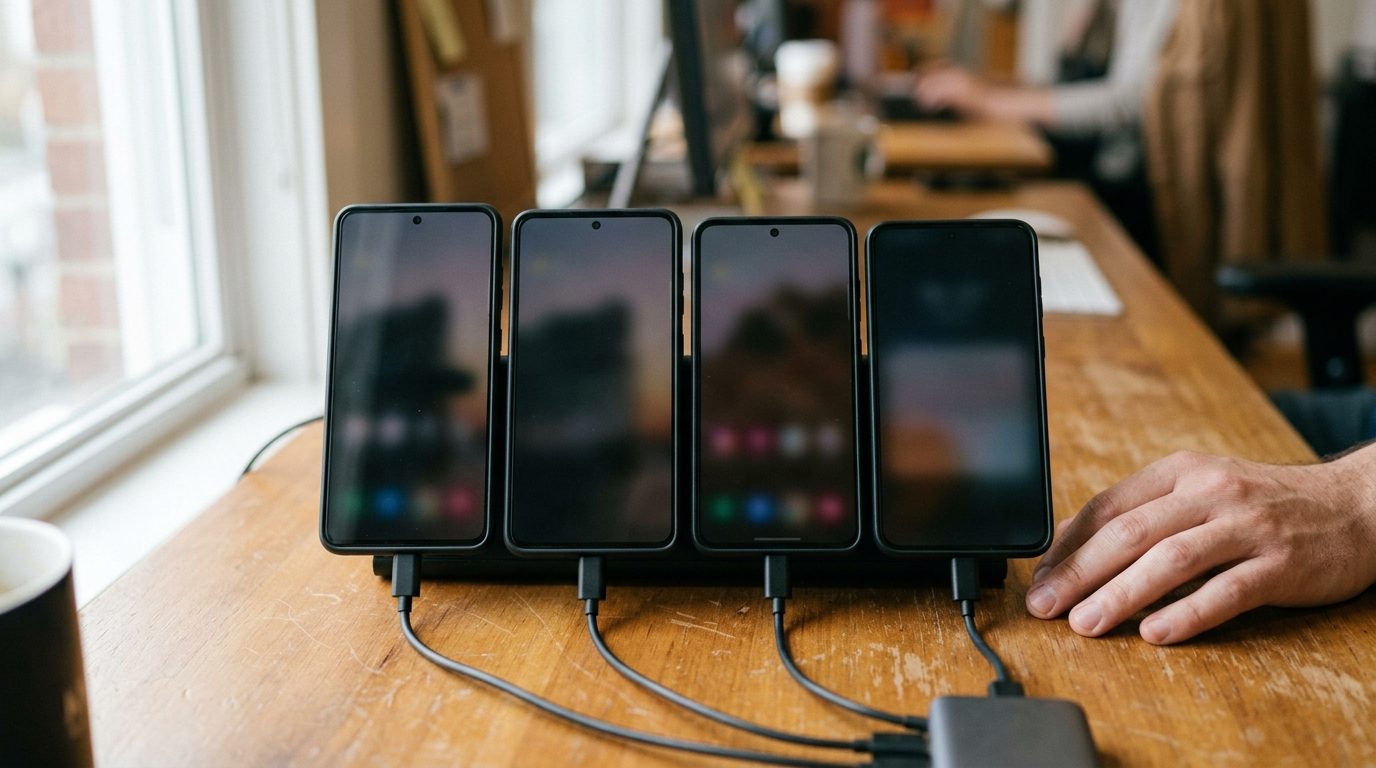 Android Texter routes messages through the carrier line on a real, user-owned Android phone, the same way a text to a friend routes, rather than through an aggregator's A2P pipeline. That traffic isn't subject to the campaign classification and quality-score throttling described above, because it isn't A2P traffic in the first place. It's person-to-person SMS from an actual handset.
That solves the deliverability half of the problem described earlier: no campaign to get flagged as low-quality lead gen, no carrier throttle sitting between an approved campaign and an actual inbox. Multi-device pairing lets one operator spread outbound across several paired phones, each handling a natural, personal-line volume rather than one number absorbing an entire list's worth of sends in a burst that trips a carrier's velocity filter. The dashboard's threaded inbox and contact tags are built for the reply volume that follows: a 2 percent response rate on 10,000 sends is 200 live conversations that need a place to land.
What it does not do is touch anything in the consent half of the problem. Routing around A2P 10DLC changes which carrier gate your message has to clear. It has no bearing on whether you had consent to text that number, whether it's been reassigned, or whether the person on the other end is on a do-not-call list. Scrubbing, consent capture, and opt-out handling are exactly as much your responsibility on a P2P line as they would be anywhere else, and a channel that skips the carrier gate is not a channel that reduces TCPA exposure.
Building a list and cadence you can defend
 Before a first send, run the list against the national Do Not Call registry and any state-level equivalents that apply to your target areas, and keep that scrub fresh. There is a real deadline attached to this one: the registry's own safe harbor at 47 CFR 64.1200(c) requires a version of the registry obtained no more than 31 days before the call goes out. Scrub against the Reassigned Numbers Database as well, and re-scrub anything you hold on to, since that database is refreshed monthly and numbers keep turning over between pulls. Cross-check against a known-litigator list if you have access to one; a meaningful share of TCPA suits come from a small, repeat pool of plaintiffs.
Keep whatever consent record exists, timestamped, even if it's thin. Route STOP, UNSUBSCRIBE, CANCEL, END, and QUIT to automatic suppression, not a queue someone checks once a day. And keep the cadence itself conservative: an initial message and one or two follow-ups reads very differently to a regulator, or a plaintiff's attorney, than a number that keeps getting texted weekly for months after silence.
Frequently Asked Questions
Is cold texting real estate leads illegal?
Not automatically, but it's high-risk. The TCPA requires prior express consent for automated or marketing texts to wireless numbers, and a skip-traced number alone doesn't establish that. A manually sent, genuinely one-to-one message carries different exposure than an automated blast to a purchased list, but neither one is consent-free by default.
Does skip tracing give me consent to text a homeowner?
No. Skip tracing surfaces a phone number tied to public or aggregated records. Consent is a separate, affirmative act by the person you're texting, given for that specific kind of contact. Owning a property or appearing in a skip-trace result is not the same thing, and courts have not treated it as equivalent.
What is the FCC Reassigned Numbers Database and do I need to use it?
It's a database, run under an FCC program, that tells you whether a phone number has been permanently disconnected since a date you specify. The formal safe harbor in 47 CFR 64.1200(m) is narrow, and worth understanding before you rely on it: it protects a caller who already had prior express consent for that number and got a wrong answer from the database, so it does nothing for cold outreach to a purchased list. Querying it is still worth the money, because the numbers it flags are the ones most likely to land on a stranger. Given how cheap the check is relative to a class action, most wholesaling operations should be using it.
Why do my wholesaling texts still get filtered after my 10DLC campaign was approved?
Approval isn't a delivery guarantee. Carriers score traffic on an ongoing basis by complaint rate and use-case reputation, and "we buy houses" style lead generation is one of the categories that gets throttled hardest regardless of message content, often without any failure signal back to you.
Does texting from a personal phone instead of a 10DLC number lower my TCPA risk?
No, and it isn't meant to. It changes which carrier gate your message has to clear for delivery. It has no effect on whether you had consent, whether the number was reassigned, or whether the recipient is on a do-not-call list. Those obligations are identical no matter what sends the message.
Skip-traced lists will always contain some percentage of wrong numbers, and no channel eliminates that. What Android Texter changes is the deliverability side: P2P routing through a real device instead of a throttled A2P campaign, and multi-device pairing to spread volume without tripping carrier velocity filters. The consent and scrubbing work described above is still yours to do, on any channel.