If you have started shopping for a way to text customers from a real US phone number, you have run into four terms that all get thrown around like they mean the same thing: short code, toll-free, 10DLC, and P2P. They are not the same thing. They differ in what they cost, how long approval takes, how many messages per second they can push, and whether your industry is even allowed to use them at all. Picking the wrong one means either overpaying for throughput you do not need or registering for a channel that quietly throttles your messages to nothing once you are already committed to it.
Here is what each one actually is, what it actually costs, and which one fits an operator who just needs texts to arrive.
The four ways a text leaves a US phone
Every outbound SMS from a business in the United States travels through one of four channel types, and the type determines the rules that apply to it:
- Short code: a 5 or 6 digit number leased from a national registry, built for very high volume.
- Toll-free number: a standard toll-free number (800, 888, 877, and so on) registered for SMS and verified by carriers before it can send at scale.
- 10DLC: a normal 10-digit local number registered as "application-to-person" (A2P) traffic through The Campaign Registry (TCR).
- P2P: a normal 10-digit number sending the way a person sends texts to a friend, with no business registration at all.
The first three are all forms of A2P messaging: a business is the sender, and carriers require it to identify itself and its use case before traffic gets a green light. P2P is not A2P at all, which is the whole reason it behaves differently.
Short codes: highest throughput, highest price, longest approval
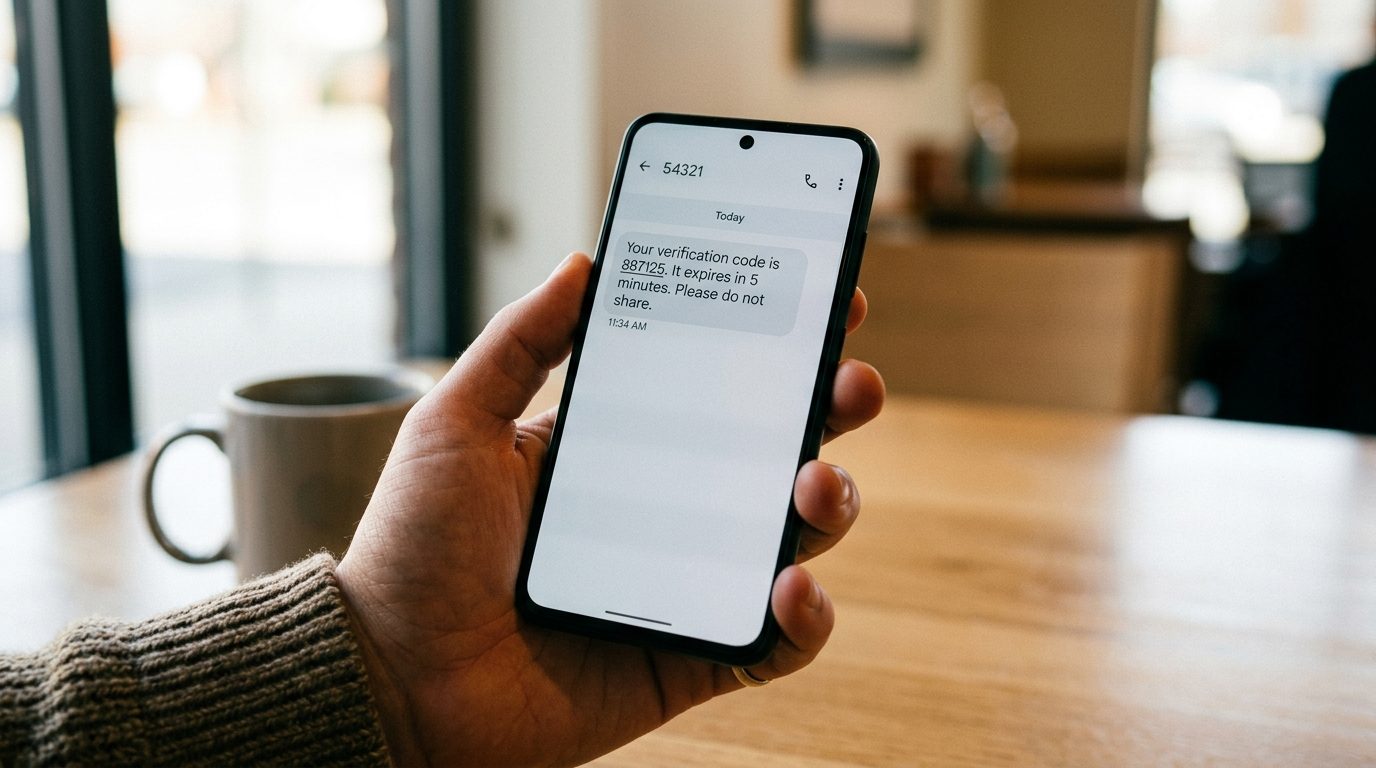 Short codes exist for senders who need to move a very large volume of messages fast: two-factor codes, appointment confirmations for a national chain, alerts. The registry is run by CTIA, the wireless trade association, and codes are leased, never owned. A random code assigned by the system leases for $500 a month, and a vanity code you pick yourself runs $1,000 a month, and provisioning takes two to four weeks after you pay before the code actually goes live.
That price and timeline only make sense at real scale. A solo operator or a small team sending a few hundred texts a day has no reason to be here. Short codes also carry their own content rules: CTIA's Short Code Monitoring Handbook requires documented opt-in before you send to anyone, same as every other channel, so a short code buys you speed, not a pass on consent.
Toll-free numbers: cheap to lease, but nothing sends until verification clears
Toll-free SMS looks like the easy middle option: the number itself is cheap to lease and setup feels lighter than a full 10DLC brand and campaign registration. The catch is verification. Before a toll-free number can send meaningful volume, carriers require it to go through a review of the business and how it collects consent, and that review typically takes five to seven business days, sometimes longer if anything in the submission needs a second look. Until it clears, messages from an unverified toll-free number get filtered hard by the major carriers.
Toll-free is a reasonable fit for a business that already qualifies for standard A2P registration and just wants a national-sounding number instead of a local one. It does nothing for a business whose use case gets flagged during that review in the first place.
10DLC: the default path, and where entire industries get shut out
 10DLC is what most businesses end up on, because it is what Twilio, MessageBird, Plivo, and similar providers push by default. It requires two separate registrations with TCR: a one-time Brand registration, then a Campaign registration tied to a specific use case. Real fees, according to a current partner support article, run from about $4 up to roughly $72 for brand vetting depending on tier, a $15 vetting fee per additional campaign, then a recurring monthly campaign fee of $1.50 to $10 depending on use case, on top of a per-message carrier fee of roughly $0.003 for AT&T, T-Mobile, and Verizon ($0.005 for US Cellular).
Those fees buy you a registered slot in a system that carriers filter aggressively by category. Carrier content rules, commonly referred to as SHAFT-C, flag or reject content around sex, hate, alcohol, firearms, tobacco, and cannabis outright, and a longer list of use cases including payday lending, debt collection, and credit repair get soft restricted: approved on paper, then throttled hard in practice with no explanation and no appeal.
That gap between approval and delivery is exactly what a recent industry webinar covering debt collection texting worked through: agencies from Williams & Fudge, Lendly, and Harris & Harris compared 10DLC against short codes for reliability, and the panel's blunt takeaway was that carrier reputation, not the registration paperwork, is what actually determines whether messages land. You can be fully registered and still get filtered.
P2P: the one channel with no registry at all
 P2P is not a product a carrier sells to businesses. It is what happens when a message originates from a real handset on a real consumer line, the same way it does when you text a coworker. There is no Brand registration, no Campaign vetting, no monthly fee to TCR, and no SHAFT-C content review, because none of that machinery exists outside A2P. Android Texter routes outbound SMS through a phone the operator actually owns, so traffic looks to the carrier like any other person sending a text, because that is what it is.
This is not a workaround or a loophole. There is no rule against sending a text from your own phone. It is also not a way to avoid the law that actually governs what you can text and who you can text it to. The TCPA applies to a message sent through Android Texter exactly the way it applies to a message sent through a fully registered 10DLC campaign: you still need prior express consent for marketing texts, you still need to honor STOP, and you still carry the liability if you do not. Android Texter opens the channel. It does not touch consent, and it does not reduce TCPA exposure.
Picking the right one for your volume and your industry
 If your use case is on the approved list and you are sending real volume (tens of thousands of messages a month or more), 10DLC or a short code is worth the registration overhead. You get the fee structure built for scale and, for approved categories, decent delivery.
If you are in a category that gets soft-restricted or blocked outright, no amount of correctly filled-out paperwork changes that. Payday lending, debt collection, cannabis and vape, crypto, MLM, lead generation, real estate wholesaling, and gambling all fall into that bucket to varying degrees. For those operators, P2P through a tool like Android Texter is not the fast option or the cheap option first, it is the option that is actually open, because A2P gating simply does not apply to it.
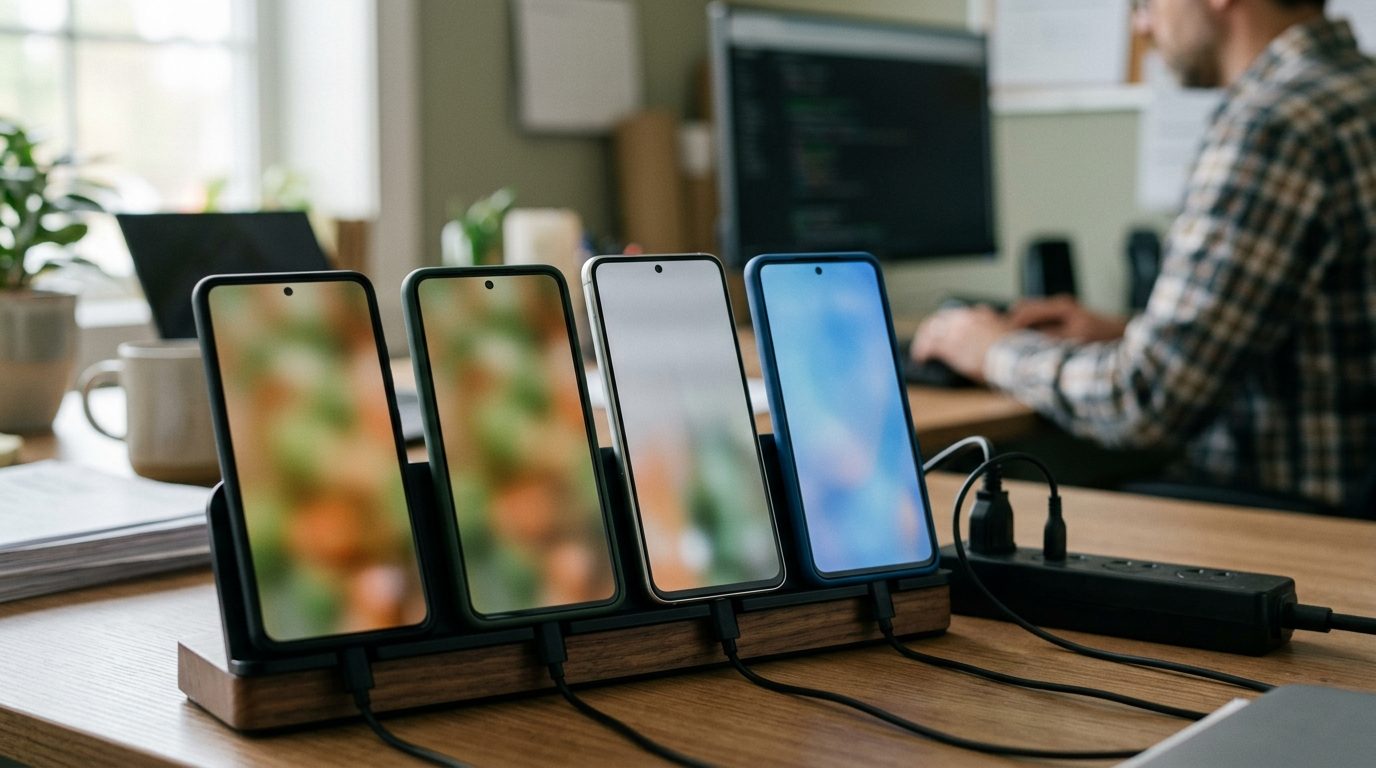
A lot of operators land on a mix: 10DLC or toll-free for the transactional messages that sail through review (appointment reminders, receipts), and P2P for the outreach that carriers would flag regardless of how honest the content is.
Frequently Asked Questions
Can I use more than one of these channels at once?
Yes. Nothing stops a business from running a 10DLC number for transactional messages and a separate P2P line for outreach that would get filtered under A2P content rules. Multi-device setups make this easier to manage from one inbox instead of juggling separate logins per channel.
Does P2P SMS still require consent from the recipient?
Yes, fully. The TCPA governs what you send and who you send it to regardless of which channel carries the message. P2P routing removes the carrier's business-registration gate, not the federal consent requirement. Get consent, document it, and honor opt-outs the same as you would on any other channel.
Why did my 10DLC campaign get approved but still get filtered?
Approval and delivery are two separate systems. TCR approves your registration paperwork; individual carriers then apply their own content and reputation filters to each message in real time. A campaign can clear registration and still get throttled if the carrier's filter flags the category, the sending pattern, or the content itself.
Is it legal to text customers from a personal Android phone for business?
Yes. There is no rule against using your own phone to send a text, business-related or not. What matters legally is the same thing that matters on any channel: you need the recipient's consent for marketing messages and you need to honor STOP requests, per the TCPA.
How fast can I actually start sending on each option?
P2P is immediate, since there is no registration step. 10DLC and toll-free both run from a few business days to a few weeks depending on vetting tier and how clean your submission is. Short codes take two to four weeks minimum after payment, regardless of how complete your paperwork is.
If your business is stuck waiting on a campaign review, or already sitting in a category carriers throttle no matter what you submit, Android Texter routes your SMS through a phone you own instead of a registered business number, so the channel itself is not the thing standing between you and your customers.