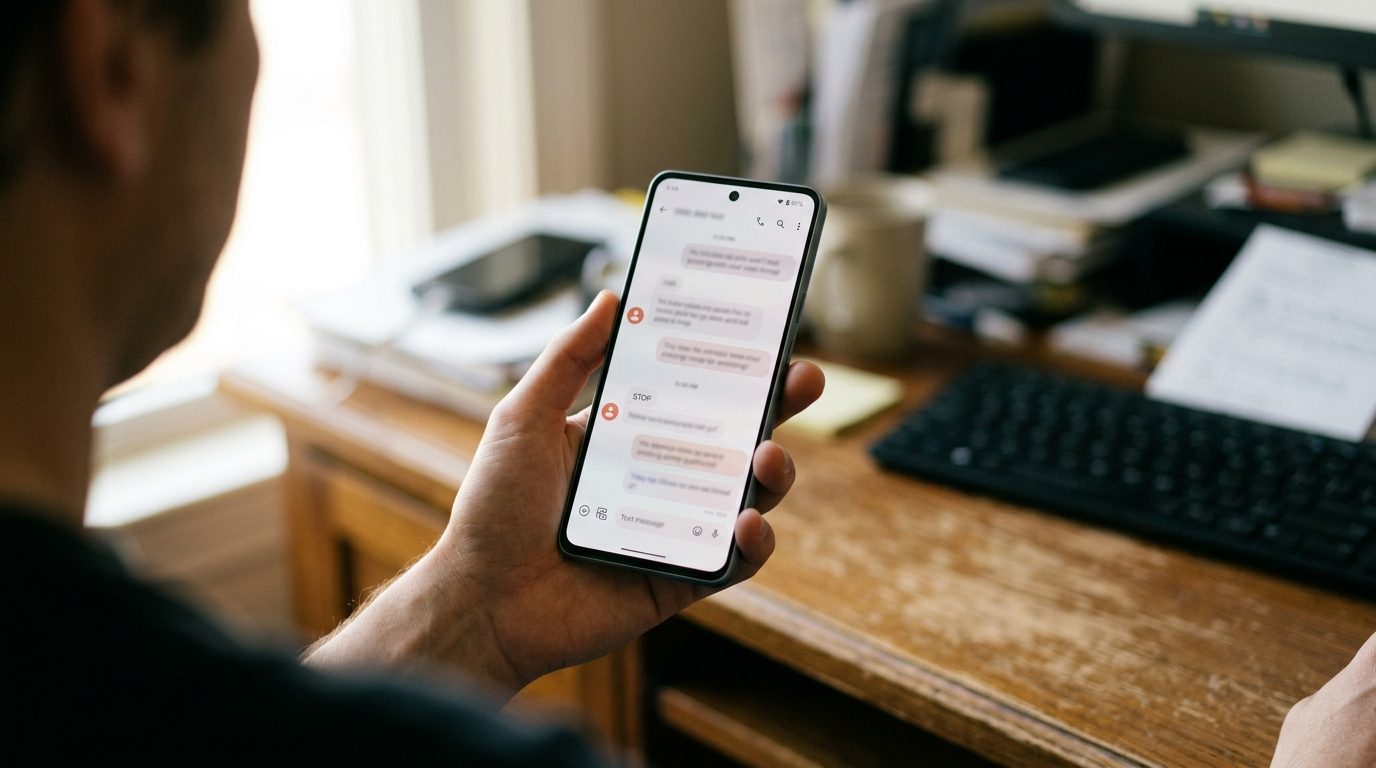
You honor every STOP reply the day it arrives. You still watch your delivery rate slide a few points every month, with no rejection code and no explanation from the carrier. Those two facts are connected more often than most operators realize. A recipient who gets a second message after opting out rarely emails you to complain. They tap "Report Junk" in their messaging app, or forward the text to 7726, and that report lands in the same system that decides whether your next message reaches anyone at all.
This isn't a legal problem you can lawyer your way out of. It's an operations problem: whether the word STOP actually removes a number from every list that could text it again, the moment it's typed.
What Happens When an Opt-Out Doesn't Actually Stop Anything
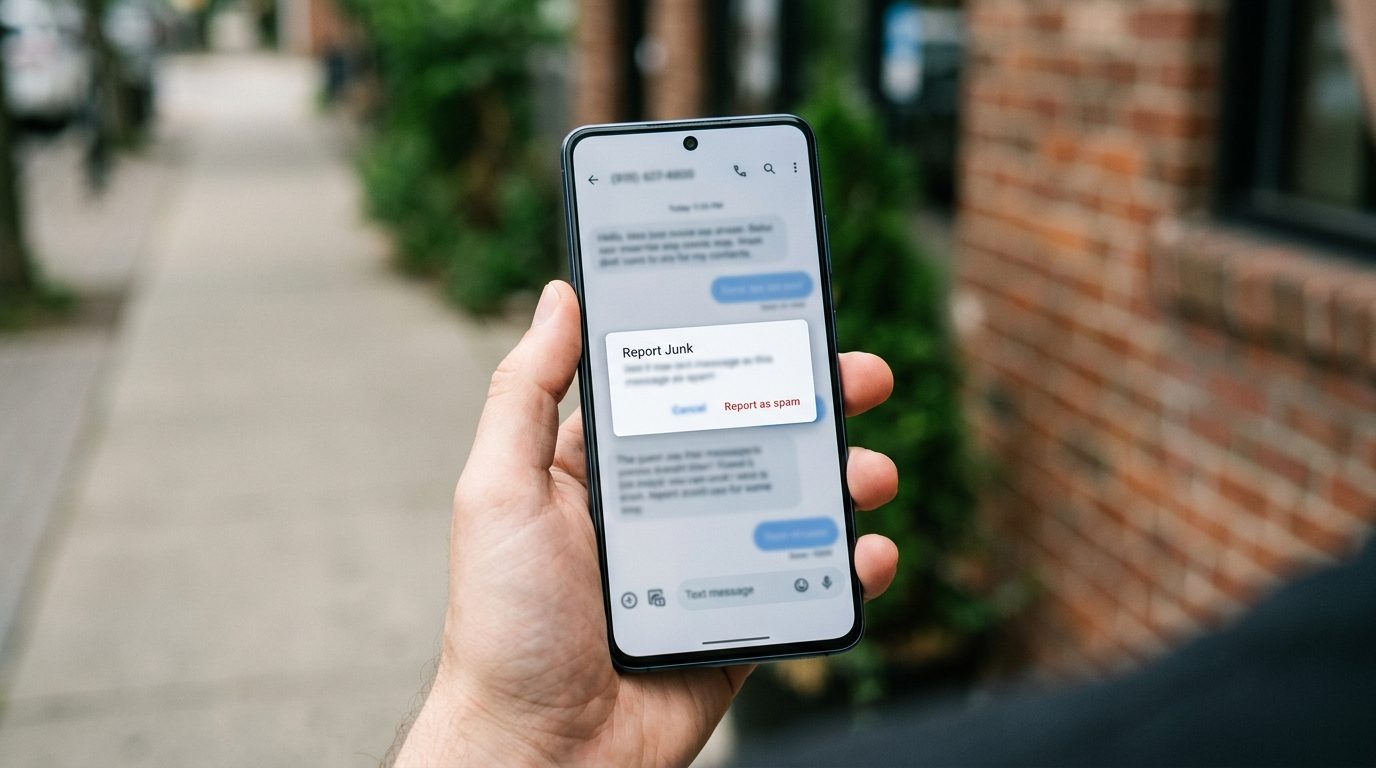 Most operators think of STOP as a compliance checkbox: reply received, box checked, move on. What the recipient experiences is different. They asked to not hear from you again, and a few days later another message shows up anyway, often because the opt-out was logged in one system (a CRM tag, a spreadsheet, a compliance log) that never talked to the system actually queuing sends.
At that point the recipient has two options. They can reply STOP a second time, which mostly just confirms to them that the first one didn't work. Or they can report the message as spam, either through their phone's built-in reporting feature or by forwarding it to the carrier short code 7726, which spells SPAM on a keypad. The FTC's own guidance to consumers tells people to do exactly this, and carriers actively route those reports into abuse detection. T-Mobile's support documentation describes forwarding to 7726 and using "Report Junk" as the two main ways a report reaches the network side, not just the recipient's own phone.
A single missed suppression rarely does lasting damage. A pattern of them, from the same sending number, is what tells a carrier's filtering system that a line is worth watching more closely.
Why One Spam Report Outweighs a Dozen Delivered Messages
Carriers don't publish the exact thresholds that move a number from "trusted" to "watched," and Android Texter isn't going to pretend otherwise. What's public is the shape of the incentive: a message that gets tapped as spam by even a small share of recipients tells the network more about a sending pattern than a hundred messages nobody reacted to at all. Complaint rate, not raw volume, is the signal carriers weight most heavily, because it's the cleanest proxy for "recipients didn't want this."
That has a direct consequence for anyone running high-risk outbound: your worst deliverability days usually aren't caused by your best copy or your worst copy. They're caused by whichever ten numbers on your list already told you to stop and got texted anyway. Fix that leak and the number that actually moves is complaint rate, which is the one carriers watch.
This applies whether you're sending through a registered A2P campaign or through a personal handset, which is the model Android Texter uses. Routing through P2P SMS means your traffic isn't gated behind carrier brand and campaign registration the way A2P traffic is. It does not mean a number is invisible to ordinary spam reporting. A phone that keeps getting reported behaves, from the network's point of view, like any other phone that keeps getting reported.
The FCC Is Rewriting Opt-Out Rules Again, Starting September 30
 None of the above depends on what Washington does next, but it's worth knowing what's in motion. On September 9, 2026, the FCC circulated a draft Report and Order and Further Notice of Proposed Rulemaking in CG Docket No. 02-278 for consideration at its September 30 open meeting. As of this writing it has not been adopted, only circulated, so treat anything below as scheduled, not final.
The draft Order would let a business interpret a revocation request as applying only to the specific category of message it was sent in response to, rather than wiping out consent for every type of message from that sender, the "revoke-all" standard the Commission had adopted in 2024. A companion Further Notice asks for comment on shortening the current ten-business-day window for honoring a revocation request, requiring two-way texting so a consumer can revoke by replying to any text, and possibly trimming the standardized list of reply words a caller must treat as an automatic opt-out.
That standardized list already exists. The FCC's 2024 order recognized stop, quit, end, revoke, opt-out, cancel, and unsubscribe as per se reasonable methods of revocation by reply text, on top of any other clearly-expressed opt-out request in plain language. Whatever the FNPRM eventually does to that list, the operational lesson doesn't change: a word on a government list only protects you if your own system actually removes the number the moment it sees the word.
How to Actually Suppress an Opt-Out
Four things have to be true for an opt-out to hold, and most breakdowns happen at one of them:
It has to be recognized on the first reply, not the second. STOP, UNSUBSCRIBE, CANCEL, END, and QUIT should all trigger the same suppression, along with the plain-language versions people actually type, like "take me off this list." If your system only catches the exact word STOP, you will miss a meaningful share of real opt-outs.
It has to write to the same place your sender reads from. A tag in the CRM that the SMS platform never checks isn't suppression, it's a note to yourself. The suppression flag and the send queue need to be the same system, or synced in real time, not reconciled at the end of the week.
It has to survive a list re-import. A lot of leaks happen when a fresh list gets uploaded, from a new lead source or a re-scrubbed database, and it silently overwrites the suppression flag on numbers that already opted out. Suppression needs to be checked at send time, not just at import time.
It has to be confirmed, once, and then go quiet. A short confirmation reply ("You've been unsubscribed and won't receive further messages") closes the loop for the recipient. Continuing to send after that, even a "did you mean to unsubscribe?" follow-up, undoes the confirmation and reads as exactly the kind of ignored opt-out that gets reported.
In Android Texter's dashboard, opt-out handling for STOP, UNSUBSCRIBE, CANCEL, END, and QUIT is built into the auto-reply automation: the keyword triggers a confirmation and the account-level suppression in the same step, so there's no separate spreadsheet to keep in sync with the send queue. That's a mechanical fix for the leak described above, not a compliance opinion. Consent and honoring opt-outs correctly are still the operator's responsibility, the same as they'd be on any channel.
If You Send From More Than One Number, Suppression Has to Follow the Contact
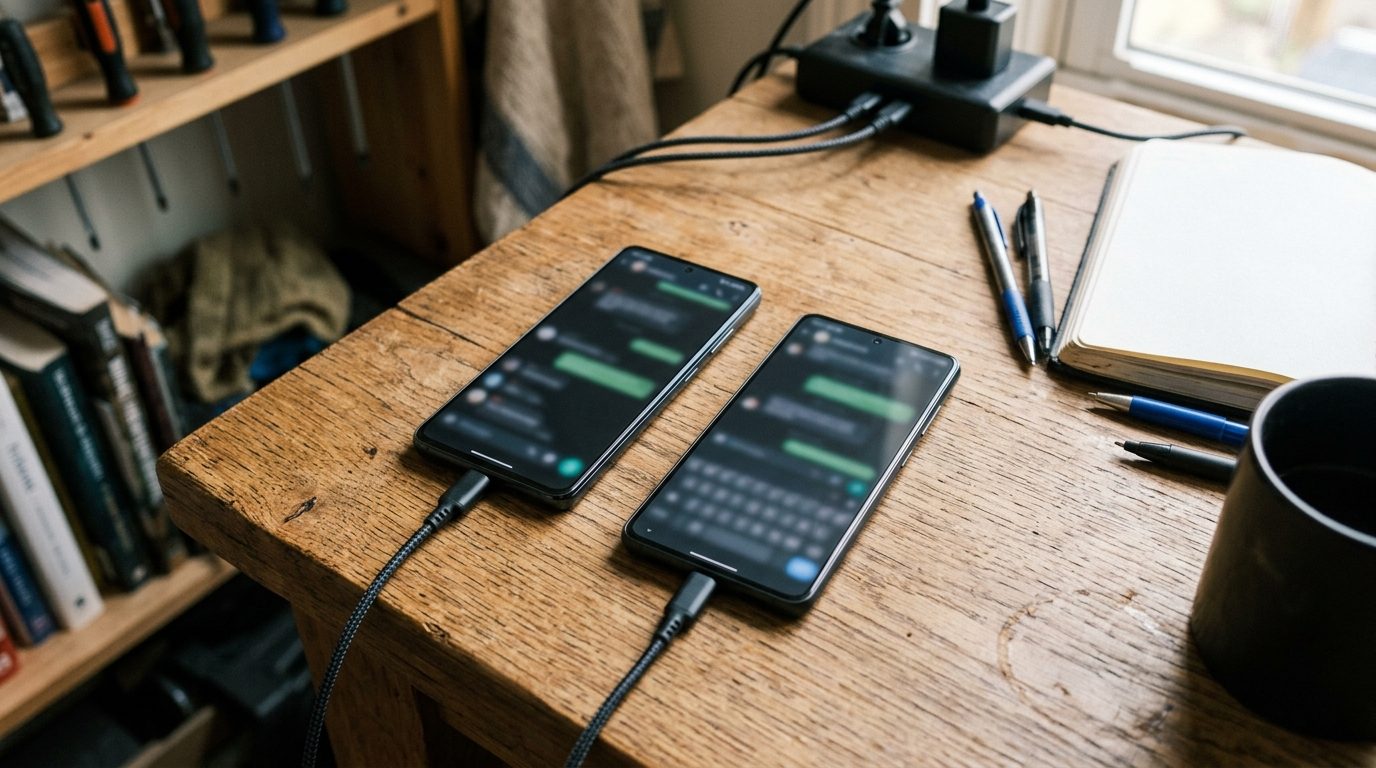 Operators running enough volume to trip a single line's velocity limits often spread outbound across multiple paired phones. That's a reasonable way to avoid looking like a burst-sender on any one number. It creates a specific new failure mode for opt-outs, though: if suppression is tracked per device instead of per contact, a number that opts out on line A can still get texted from line B.
Android Texter's contact records live in the shared dashboard rather than on an individual handset, which is also where multi-device accounts already route all inbound and outbound activity into one inbox. An opt-out logged against a contact applies regardless of which paired device would otherwise have sent to them next. If you're evaluating any multi-line setup, this is the specific question worth asking a vendor before you commit: does an opt-out on one line actually block every other line, or just the one that received it?
Frequently Asked Questions
Does honoring STOP protect me from a TCPA lawsuit if I make one mistake?
No single practice makes you immune. The TCPA's private right of action allows $500 per violation, up to $1,500 for willful violations, and courts generally count each message as a separate violation. Reliable suppression reduces how often a mistake happens; it doesn't erase liability for the ones that still do.
What words count as a valid opt-out besides STOP?
The FCC's 2024 order recognizes stop, quit, end, revoke, opt-out, cancel, and unsubscribe as automatically reasonable, plus any other clearly-worded request like "no more texts." Android Texter's automation handles STOP, UNSUBSCRIBE, CANCEL, END, and QUIT directly; anything phrased differently still needs a human to catch it and suppress manually.
Will one spam report get my number blocked?
Unlikely on its own. Carriers weigh patterns, not isolated reports. A single complaint from an otherwise clean sending history is far less consequential than a recurring share of recipients tapping "Report Junk" on the same type of message week after week.
Does texting through a personal phone instead of a business platform make me immune to spam filtering?
No. Person-to-person SMS through Android Texter sits outside the A2P 10DLC registration and campaign-approval gate carriers apply to business platforms, which is why industries that get blocked there can send at all. It doesn't exempt the number from ordinary spam-complaint monitoring, which applies to any phone that recipients report.
Is the FCC's September 30 vote final law yet?
No. As of this writing it's a draft Report and Order circulated for the Commission's September 30, 2026 open meeting, with a companion Further Notice still open for public comment on additional changes. Nothing described above takes effect until the Commission adopts it and it's published in the Federal Register.
Send Fewer Wasted Messages
Suppression isn't glamorous, but it's the cheapest deliverability fix most operators haven't made. If you're still chasing opt-outs across a spreadsheet and a separate sending tool, Android Texter's auto-reply rules turn STOP, UNSUBSCRIBE, CANCEL, END, and QUIT into automatic account-level suppression the moment they land, so the next message never gets a chance to go out.