
You send 400 texts in an afternoon from a number that was working fine that morning, and by evening half of them never arrived. No bounce, no error code, nothing in your delivery log that says why. The recipient just never got the message, and neither did you get a signal that anything was wrong.
That's not a bug. It's a phone number acting like a phone number is supposed to act, and then suddenly not acting like one anymore. Every wireless carrier has a working definition of what normal texting looks like, and once your traffic stops matching it, the network starts making its own decisions about which of your messages get through.
The frustrating part is that no carrier publishes a number and says "this is the limit." They don't, on purpose, because a published number is a number spammers optimize against. But the wireless industry's own trade group has come close to publishing one anyway, and it's worth knowing what it actually says.
What Counts as Normal Texting, According to the Carriers Themselves
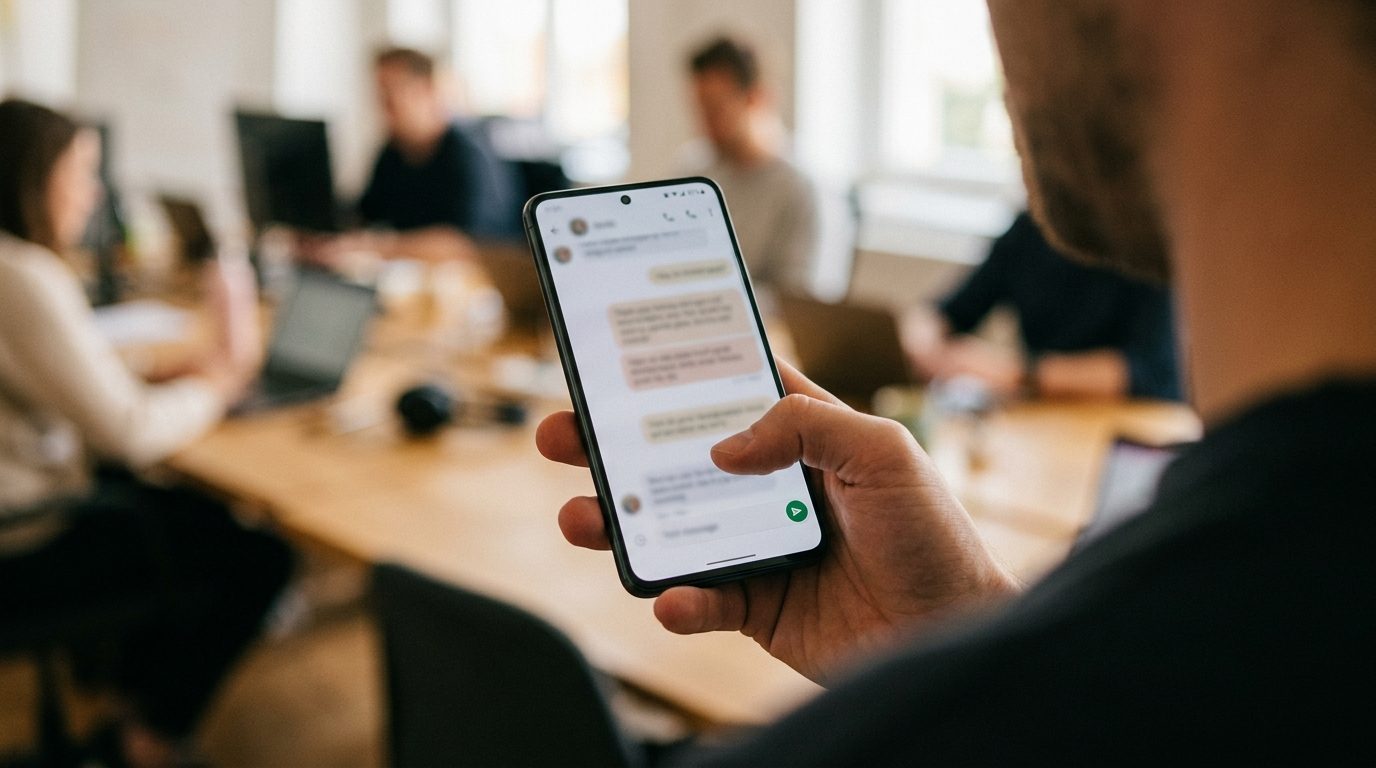 CTIA, the trade association for AT&T, T-Mobile, Verizon, and the rest of the US wireless industry, maintains a document called Messaging Principles and Best Practices. It's the closest thing to an industry rulebook for how carriers tell person-to-person texting apart from business texting, and its Exhibit I lays out, in a table, the attributes of what it calls "typical Consumer operation." These are not hard caps. The document says outright that they're illustrative, not determinative. But they're the yardstick carrier filtering systems are built around, and they're specific:
- Throughput: 15 to 60 messages per minute, with the accompanying note that a person "is typically not able to originate or receive more than about one message per second."
- Volume: up to 1,000 messages a day, though the note adds that "only in unusual cases" does a real person send or receive more than a few hundred in a day, and a person doesn't send continuously over a long stretch of time.
- Unique recipients: up to 100 distinct numbers per message, with a typical person messaging something closer to 10.
- Balance: roughly a 1:1 ratio of outgoing to incoming messages per number, with some latitude either way, because normal texting is a back-and-forth conversation.
- Repetition: 25 repetitive messages is the threshold CTIA flags, since a real person doesn't send the same or near-identical text over and over to different people.
Put plainly: a number that fires off a thousand near-identical messages to a thousand strangers who never reply looks nothing like a person texting, and the network doesn't need a human to notice that. It's a pattern-match problem, and carriers, and the network security vendors they contract with, run it in real time.
What Registering for 10DLC Actually Buys You
 The answer most people expect at this point is "then register your number as a business number and the limit goes away." That's the premise behind A2P 10DLC, the registration system carriers built specifically so businesses could text at volumes a person never would. You register a Brand with The Campaign Registry, register a Campaign describing what you're sending and why, and once a carrier approves it, your traffic is supposed to get evaluated against your registered use case instead of against "does this look like a person."
What surprises a lot of people is that registration alone doesn't raise your throughput by much. AWS's own SMS documentation lists the default throughput for a US 10DLC long code at 1 message part per second, the same ceiling CTIA describes for ordinary person-to-person traffic. Getting above that requires a separate throughput increase request on top of the registration, evaluated per carrier based on your brand's trust score and campaign type. Registration gets you evaluated as a business. It doesn't hand you volume by itself, and the process still runs 2 to 5 business days for campaign vetting on top of brand approval, with recurring fees at every stage.
And for a long list of industries, including payday and short-term lending, debt collection, cannabis, vape, crypto, MLM, and gambling, the campaign application gets rejected before any of that matters. This is where the two paths genuinely diverge: 10DLC is built for businesses that can get approved and can afford to wait on higher throughput. It does nothing for a business that can't clear the approval step at all.
The Honest Way to Spread Volume Across Multiple Numbers
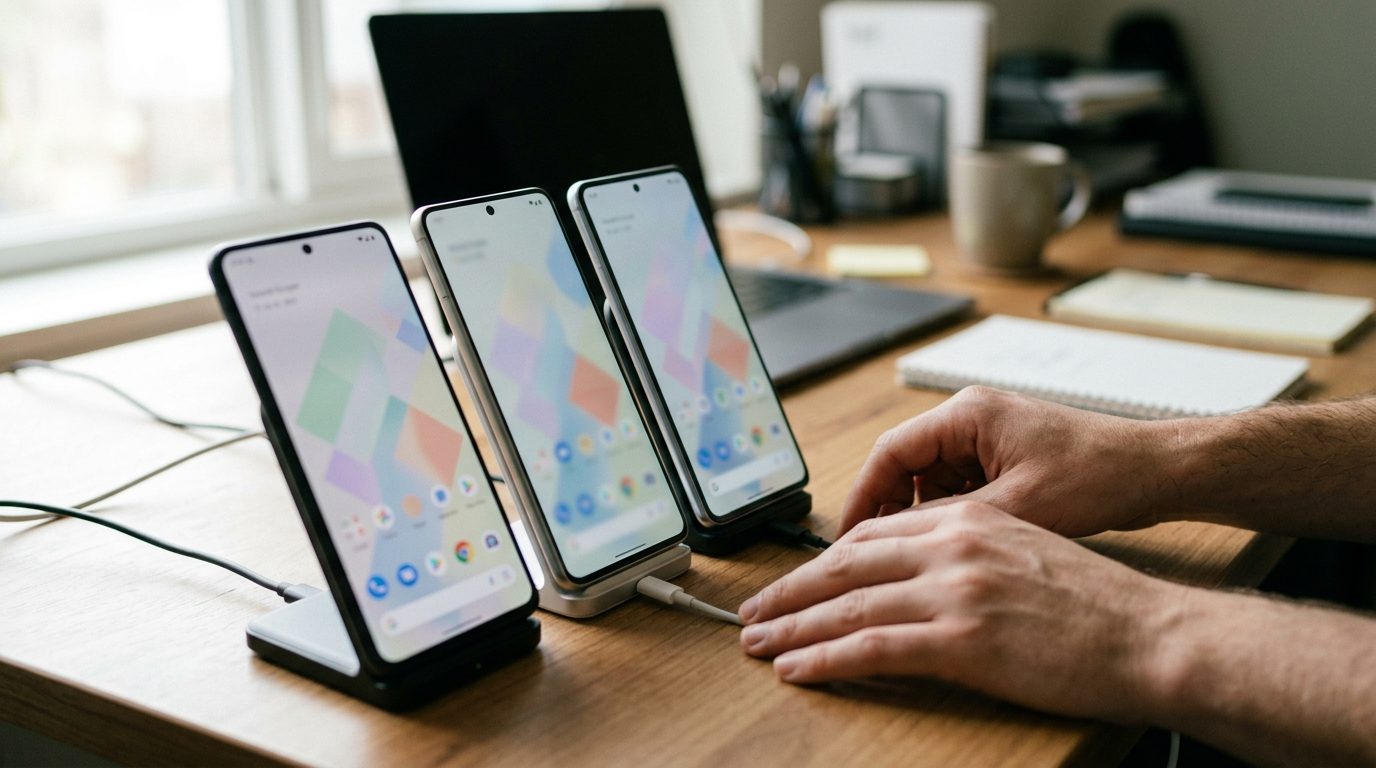 If a single line tops out at roughly the same throughput whether or not it's registered, the practical fix for real volume is more lines, not one line pushed harder. This is different from what the industry calls "snowshoeing," which is spreading spam traffic across a pile of numbers you don't have any real relationship to, specifically to dodge a filter that's watching any one of them. Carriers watch for that pattern too, and AWS's own documentation warns that spreading toll-free traffic across multiple purchased numbers to beat the 3 MPS toll-free limit gets flagged for exactly that reason.
The distinction that matters is whose numbers they are and what's actually happening on them. Android Texter's multi-device pairing lets one account pair several Android phones, each with its own real carrier line, and route sends to a specific device or auto-route to whichever is online. In the real estate wholesaling vertical, where cold outbound to homeowner lists is common, operators typically spread outbound across 3 to 5 paired phones, each handling roughly 100 to 200 sends a day, so no single line's traffic looks anomalous against the kind of volume a person on that line would plausibly generate. Every message still routes as a normal person-to-person text from a real handset on a real consumer line, because that's what it is.
That's the difference between distributing real conversational volume across lines you actually operate, and renting a stack of anonymous numbers to launder spam through. The first is what a busy person with several phones looks like to a carrier. The second is exactly the pattern CTIA's document exists to catch.
Volume Isn't a Compliance Shortcut
None of this changes who you're allowed to text or what you have to prove about it. Throughput and consent are two separate questions, and it's worth being precise about which one you're solving. Staying under a carrier's velocity radar says nothing about whether you had consent to text someone in the first place. The Telephone Consumer Protection Act still requires prior express consent for non-emergency marketing texts to a wireless number, regardless of which number sent it, how many other numbers you also own, or whether the message got flagged by a filter. Spreading volume across multiple devices makes messages more likely to be delivered. It does not make them more likely to be legal, and it's not designed to.
We don't give legal advice, and nothing here is a substitute for it. Get consent, keep a record of it, and honor every STOP, UNSUBSCRIBE, CANCEL, END, and QUIT the same way you would on a single line.
Frequently Asked Questions
How many texts can I send from one phone number in a day before it gets flagged?
There's no published hard number. CTIA's own trade documentation puts typical consumer volume at up to 1,000 messages a day but notes that real people rarely exceed a few hundred, and carrier filtering systems are built around that pattern rather than a fixed count. Sustained volume in the hundreds to a single line, especially to strangers who don't reply, is what draws scrutiny.
Does registering for A2P 10DLC increase how fast I can send?
Not automatically. AWS's documentation lists the default 10DLC throughput at 1 message per second, the same as an unregistered line. Higher throughput requires a separate increase request evaluated against your brand's vetting score, on top of the registration itself.
Is spreading texts across multiple phones the same as snowshoeing?
No, and the difference is what carriers actually watch for. Snowshoeing spreads spam traffic across many numbers you have no real operating relationship to, specifically to dodge a per-number filter. Multi-device pairing across phones you actually own and use, each staying near the volume a real person would generate, is a different pattern entirely.
Why did some of my texts just disappear with no error?
Most carrier filtering is silent by design. A message that gets classified as bulk or spam-pattern traffic is typically dropped or heavily delayed at the network level, with no bounce and no delivery-failure signal sent back to the sender. That silence is itself one of the signs you're being filtered rather than hitting dead numbers.
Will a higher-volume line ever get treated like a business number without registering?
Generally no. Carriers classify traffic by pattern, and a line that consistently exceeds consumer-style throughput, volume, and repetition thresholds will get evaluated as non-consumer traffic whether or not you've registered it. Registering at least gives you a use case the carrier can vet the traffic against.
Where This Leaves You
If you can register a 10DLC campaign and your volume needs fit inside its actual throughput ceiling, register it. That's what the system is for. If you're in an industry that can't get approved, or you just want your outbound to look like what it actually is, person-to-person texting from real numbers, Android Texter routes through Android phones you pair yourself, with multi-device support built specifically to spread volume the honest way instead of pushing one line past the point where it stops looking like a person.