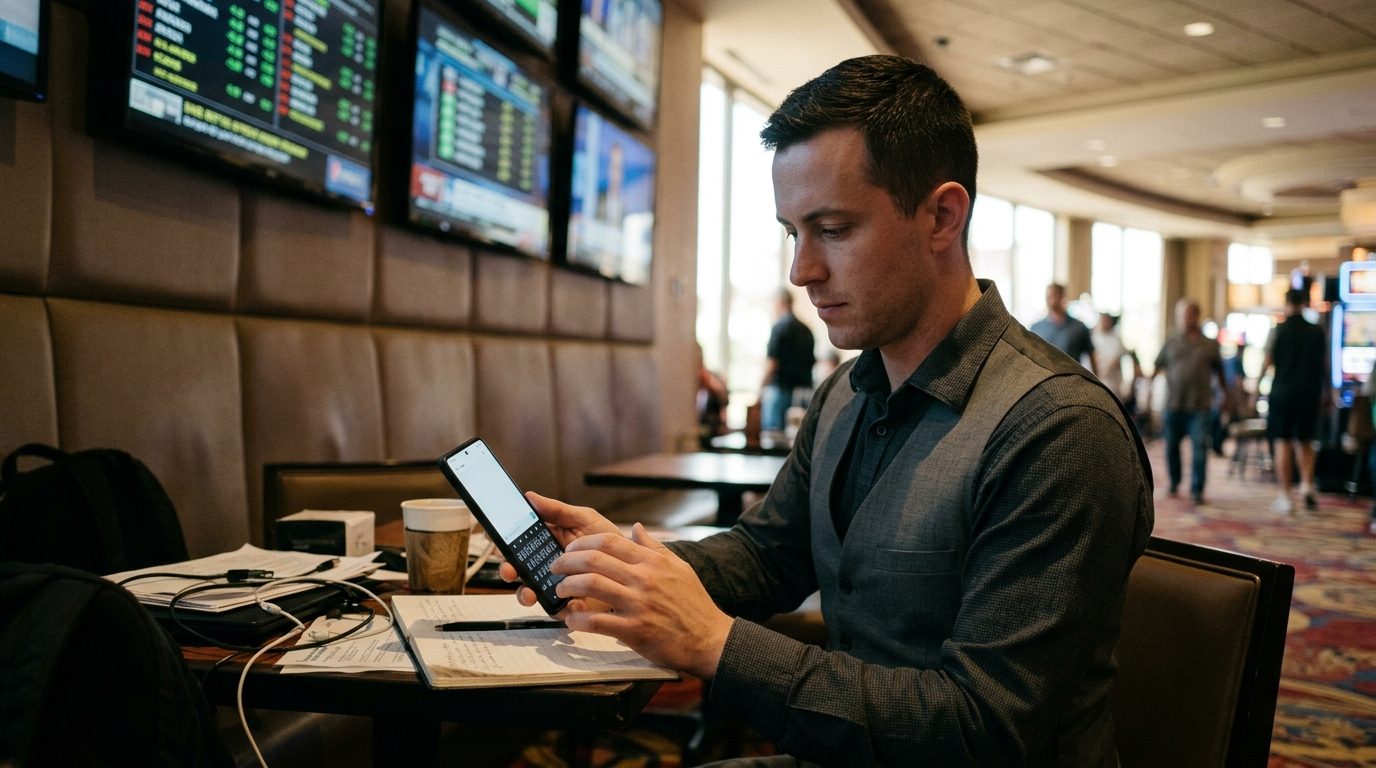
A marketing lead at a regional sportsbook builds a list of thirty thousand opted-in bettors, plugs it into the same toll-free number the company uses for account alerts, and the verification comes back rejected: "30461: Toll Free verification rejection, Disallowed: Gambling". A casino runs into the same wall trying to register a 10DLC campaign for a free-play promotion. Twilio's own US SMS guidelines list "Gambling/Sweepstakes" as a forbidden category on both long code and toll-free, full stop, no appeal path.
That's the wall. It doesn't change what the business actually needs, which is a channel that can put a message in front of a bettor an hour before kickoff, or in front of a VIP player the morning after a big session, and have it read within minutes. This is about how that channel actually runs day to day: the event window, the VIP host's book, the win-back send, and who in the building owns each one.
The event window: why the hour before kickoff beats the day before
 A promo about tonight's game is worth the most in the window right before it starts and worth almost nothing twelve hours later. A sportsbook's SMS calendar should be built around kickoff times, not a fixed daily send slot.
The mechanics: segment the opted-in list by the sport or team a player has actually bet on before, not the full list. Schedule the send for a fixed window before the specific game, for example 45 to 60 minutes out, so it lands while the player is deciding what to watch and hasn't put the phone down yet. A generic "good luck tonight" blast to everyone regardless of interest reads as spam and trains people to ignore the number.
Template, event-window promo: "Cowboys/Eagles kicks off at 8:15. Boosted odds on the first-half spread are live now in your app. Reply STOP to opt out."
Trigger: a tracked game start time, for the segment that has bet that sport in the last month. Timing: one send, 45 to 60 minutes before kickoff, never a repeat during the same game. No-reply handling: no follow-up that day. If a player hasn't opened three straight event-window texts, pull them out of that segment and try a different one (loyalty tier or a different sport) rather than sending a fourth into a dead channel.
VIP host texting: one relationship, one phone
 The highest-value players in a casino or sportsbook aren't managed by a marketing calendar, they're managed by a host who knows them by name. The SMS version of that relationship is a host texting from a number that stays the same and a thread the player can reply to like they're texting a person, because they are.
This is the one place where multi-device pairing matters most: give each host their own paired phone and number inside the same dashboard, so a player's thread with their host never gets mixed into the general marketing line, and the host can see their whole book in one inbox without carrying a second physical phone.
Template, VIP host check-in: "Hey [name], it's [host]. Saw you had a good run Saturday. I've got two seats for the fight next month if you want them, let me know."
Trigger: a notable session (win, loss, or milestone) or a stretch of inactivity from a specific high-value player. Timing: host-paced, not automated, sent when the host actually has something worth saying. No-reply handling: a host follows up by phone after 48 hours of silence rather than sending a second text, because a VIP thread that gets ignored twice in a row starts to feel like marketing instead of a relationship.
Reactivating a dormant player list without sounding like spam
 A list of players who haven't logged a session in 30, 60, or 90 days is valuable, but only if the first message back doesn't read as a demand to deposit. Lead with something the player can act on without money changing hands: a free-play credit that's already been added to their account, a new game type, a note that odds boosts are back on their usual sport.
Template, dormant reactivation: "It's been a minute. We added $10 in free play to your account, no deposit needed. It expires in a week if you want to use it."
Trigger: no logged session in a defined window (30, 60, 90 days are common tiers, and each tier gets its own message rather than one generic "we miss you"). Timing: a single send, then one follow-up 4 to 5 days later only if the free play hasn't been claimed, then stop for that cycle. No-reply handling: after the second message with no engagement, drop the player back to a quarterly cadence instead of a weekly one. Texting a dormant list every few days is what actually gets it filtered.
Promo and free-play announcements that don't burn the list
General promotional sends, new game launches, tournament announcements, loyalty tier changes, need a lower frequency cap than event-window texts because they're competing for the same inbox. Segment by loyalty tier so a low-volume player and a VIP aren't getting the identical blast, and give every promo a clear reply path (a keyword, a link to the app, or "reply YES to claim") rather than a one-way announcement.
Template, free-play promo: "New: same-game parlays are live. First one's on us, up to $25, today only. Reply PLAY to claim."
Trigger: a product launch or a scheduled promotional calendar slot. Timing: capped, most operators hold general promo sends to once or twice a week per player regardless of tier, so the event-window and VIP threads don't get crowded out. No-reply handling: no follow-up on unclaimed promos, since chasing a promo reply is what turns a promotional line into a nuisance line.
Building the week: who owns the inbox
A working setup splits the inbox three ways. Marketing owns the event-window and promo calendar and schedules those sends in advance against known game times, using scheduled sends style timestamp scheduling rather than manual triggering. Hosts own their own book and text in real time, at their own pace, from their own paired device. Support or a shared front-desk line handles everything else: account questions, STOP replies, and the routine "is this promo still live" traffic, using auto-reply rules for the ones that repeat and a shared quick-reply set so nobody's typing the same answer from scratch twenty times a day.
STOP handling isn't optional and isn't something to build custom. An auto-reply rule keyed to STOP, UNSUBSCRIBE, CANCEL, END, and QUIT should confirm the opt-out and suppress the number immediately, the same way it would for any other SMS program.
What's off the table, regardless of channel
The operations above assume the underlying gambling relationship is legal and licensed. A few things don't move regardless of which channel carries the message. Self-exclusion is absolute: a self-excluded player comes off every list immediately and stays off, and that list gets checked before every send, not just once. Age and jurisdiction gating on the list itself is the operator's responsibility, since a licensed sportsbook can only market to bettors physically located and legally able to bet in a licensed state. And the TCPA still requires consent for marketing texts to a wireless number regardless of what a carrier does or doesn't allow at the network layer; Android Texter has covered what actually counts as valid opt-out handling if you want the fuller rules rather than the operational summary here.
Worth watching: regulators are starting to look at gambling texts specifically, not just gambling ads. New Jersey Senate Bill S3401, introduced by Sen. Andrew Zwicker and referred to committee in February 2026, would bar licensed casino and sports wagering operators from sending push notifications or text messages that solicit wagers or deposits, with fines starting at $500 per violation. It hasn't passed, and it's one state, but it's a preview that the rules here could get more specific than the TCPA's general consent standard, on a state-by-state basis, the same way mini-TCPAs have done in other verticals.
Where Android Texter fits
The reason this whole playbook is written around a phone rather than an aggregator is that a phone is what already carries it: a host's number, a general marketing line, a support line, each on its own paired device inside one dashboard, sending as ordinary person-to-person SMS rather than a registered A2P campaign that gambling content can't pass in the first place. Licensing, jurisdiction, self-exclusion, and TCPA consent don't change: those stay the operator's job either way.
Frequently Asked Questions
Can casinos and sportsbooks legally text customers?
Yes, if the customer gave prior express consent and the operator is licensed to market in that customer's jurisdiction. The TCPA governs consent and opt-out for any business texting a wireless number; it doesn't ban gambling content specifically, but state gaming regulators can and do add their own rules on top of it.
Why does Twilio reject gambling SMS campaigns?
Twilio classifies gambling and sweepstakes as a forbidden content category on 10DLC long code and toll-free numbers in the US, so campaigns get rejected at verification regardless of the actual message content. This is a carrier and aggregator policy decision, not a TCPA requirement.
How far in advance should event-window texts go out?
Close to kickoff, not a day ahead. A window of 45 to 60 minutes before a specific game start time is common, sent only to the segment that has actually bet that sport or team, since a message about tonight's game loses most of its value once the event starts.
What does a VIP host actually send by text?
Something personal enough that it wouldn't make sense as a mass send: a comment on a recent session, an invite to an event, a check-in after a stretch of no activity. It's paced by the host's judgment, not a marketing calendar, and a host follows up by phone rather than texting twice into silence.
Is a free-play credit a good way to reactivate a dormant player?
It's a common approach because it gives the player something to act on without asking them to deposit first. Lead the message with the credit itself, cap it to one follow-up if it goes unclaimed, and drop unresponsive players to a slower cadence rather than repeating the same offer weekly.
If your marketing or VIP host texts keep getting blocked at verification, Android Texter routes them through a real Android handset as ordinary person-to-person SMS instead of a registered campaign, which is where the rejection happens in the first place.