
You typed "Twilio alternative" into Google because Twilio already told you no, or throttled your campaign into uselessness after saying yes. Maybe you sell CBD, run a payday loan book, collect debt, or bought a leads list for real estate wholesaling. Twilio isn't singling you out. It's applying a published rule set, and once you understand what that rule set actually gates, the decision about what replaces it gets a lot simpler.
This isn't a sales page dressed up as a comparison. Twilio is the market leader for a reason, and there are workloads it genuinely does better. Here's where each product actually wins.
What Twilio Actually Gates
Twilio routes standard business text messages through A2P 10DLC, the application-to-person regime the major U.S. carriers built to vet business SMS traffic sent from ordinary 10-digit numbers. Before you can send a single message at scale, you register a Brand with The Campaign Registry, then register a Campaign describing your use case, then wait for carrier approval. Twilio's own fee schedule puts brand registration at $4, with an optional $40 secondary vetting fee, plus a monthly campaign fee of $1.50 to $10 depending on use case, on top of per-message charges (Twilio). The dollars aren't the obstacle. The approval is.
Some content categories don't get a campaign to approve at all. Twilio's own error documentation states plainly that campaigns promoting cannabis, CBD, marijuana, or other controlled substances are rejected "regardless of state-level legality" (Twilio). Industry breakdowns of Twilio's broader messaging guidelines put payday and short-term loans, third-party debt collection, cryptocurrency promotion, gambling, and multi-level marketing on that same forbidden list, alongside the SHAFT categories (sex, hate, alcohol, firearms, tobacco) that the carrier trade group CTIA has long flagged for restriction (Aloware, CTIA). A few adjacent categories, like credit repair, real estate wholesaling, and vape or CBD retail, aren't flatly banned but get filed as high-risk and vetted or throttled harder than a standard campaign.
None of this is TCPA. The Telephone Consumer Protection Act is federal law enforced by the FCC and by private lawsuits. A2P 10DLC is a private rulebook the carriers wrote and enforce themselves, with no court and no appeal beyond Twilio's own review queue. Confusing the two is where most people misjudge their options.
Where Android Texter Is a Real Alternative
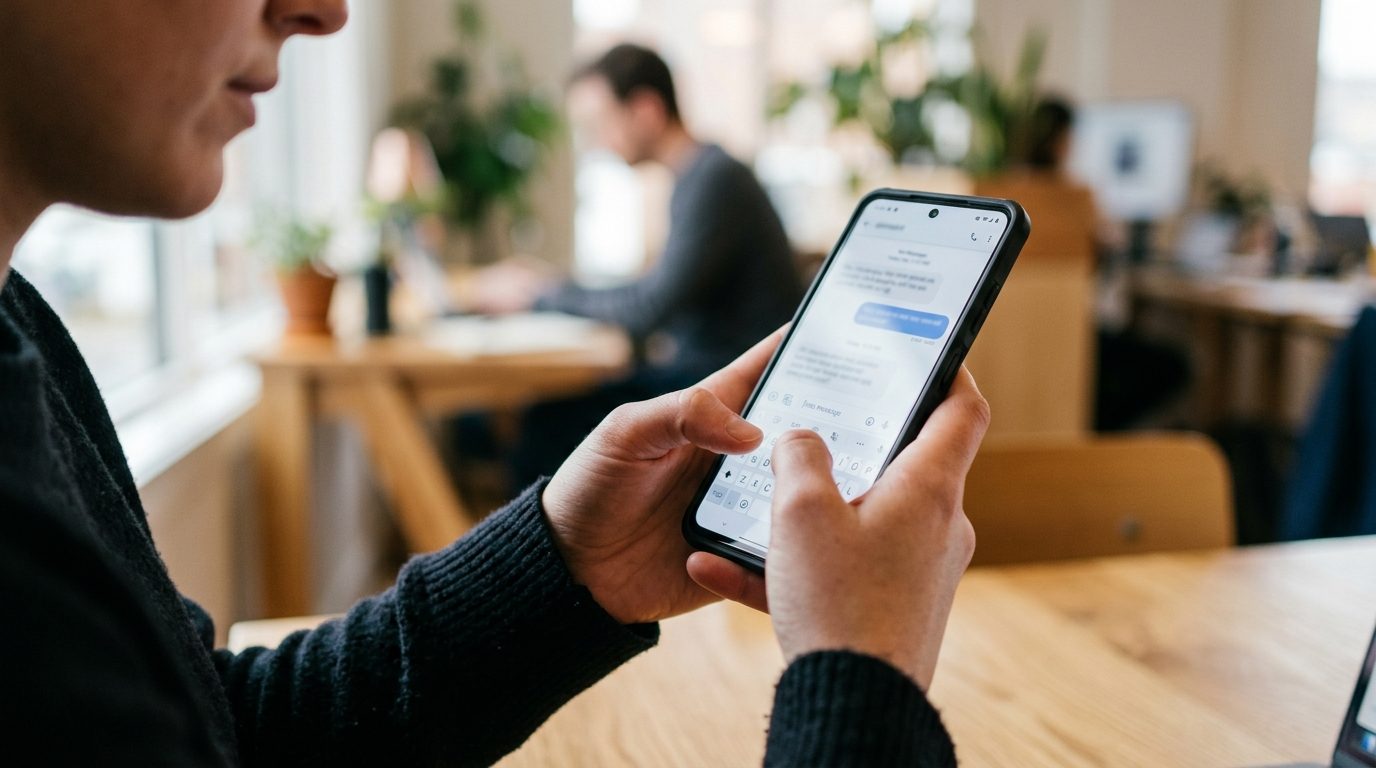 Android Texter sends SMS from a user-owned Android phone instead of a carrier-aggregator pipeline. The phone runs the Android Texter app; the dashboard at androidtexter.com is the inbox, composer, and automation layer on top of it. Every message goes out over the phone's own carrier line, the same way it would if you typed it into the stock Messages app. That's person-to-person SMS, not application-to-person, and A2P 10DLC simply doesn't apply to it, because the traffic isn't originating from a registered business sender ID in the first place. There's no Brand to register, no Campaign to get rejected, and no forbidden-category list to check your industry against.
That's what makes it a real option for the verticals Twilio won't touch: payday and short-term lending, debt collection, cannabis and CBD, crypto, MLM, gambling, and lead generation. It's also why carriers keep tightening the screws on some of these categories at the regulatory level, not just the messaging level. A federal jury convicted a business owner over a $24 million crypto Ponzi scheme this year (Cointelegraph), and Florida's Attorney General sued two sweepstakes casino operators and their payment processors in the same window (Gambling Insider). Carriers block these categories by default because fraud and enforcement risk in them is real, not because they're guessing.
One feature worth knowing about if you're sending real volume: multi-device pairing lets one account run several paired phones and split outbound across them, so no single line trips a carrier's velocity filters. Android Texter's own material on real estate wholesaling, a vertical with heavy cold-outbound volume, describes operators spreading roughly 100 to 200 sends per device per day to keep each line's pattern looking like normal personal texting. That's a specific example from one vertical, not a universal cap, but it shows the shape of the workaround: more phones instead of one bigger pipe.
Where Twilio Still Wins
 Be honest about this part or the comparison isn't worth reading. Twilio wins on raw volume. A dedicated short code is rated for roughly 100 messages per second (Twilio), which is built for the kind of blast that a phone-based sender was never designed to do. Twilio also offers number types Android Texter doesn't touch at all: short codes and toll-free numbers, both provisioned and vetted as dedicated resources, on top of standard 10DLC long codes.
Twilio also ships tooling that has nothing to do with the sending pipe. Its Lookup and Verify APIs check whether a phone number is real, whether it's a landline or mobile line, and whether a name matches the number on file, aimed squarely at fraud prevention during account signup (Twilio). If your business is in an approved category and needs that kind of identity verification bolted onto messaging, that's a mature, documented product. Android Texter doesn't have an equivalent.
And if your vertical isn't restricted at all, say, mainstream e-commerce order updates or appointment reminders, and you're sending real six-figure monthly volume, a registered A2P campaign with carrier-approved throughput is the more scalable long-term infrastructure. Registration is annoying once. Rebuilding your sending pattern around a single handset's natural pace is annoying every day.
The Actual Trade-Off
- Getting approved: Twilio requires Brand and Campaign registration with carrier sign-off. Android Texter requires none of that, because the traffic is P2P.
- Vertical restrictions: Twilio has a published forbidden list that includes cannabis, payday lending, debt collection, gambling, and crypto promotion. Android Texter doesn't gate by industry; TCPA and carrier abuse rules still apply to everyone equally.
- Volume ceiling: A Twilio short code is built for blast-scale sending. Android Texter scales by adding paired phones, not by raising one number's rated throughput.
- Number types: Twilio offers long code, short code, and toll-free. Android Texter sends from a standard 10-digit mobile number, the kind a real person carries.
- Fraud and identity tooling: Twilio has Lookup and Verify built in. Android Texter's contact tooling covers tagging, bulk import, and landline detection through its Landline Remover integration, not identity verification.
- API access: Both expose a REST API. Android Texter's is documented at androidtexter.com/api with an OpenAPI spec and a free tier with a daily send quota; the pro tier removes the cap.
TCPA Doesn't Care Which One You Use
This is the part that's easy to gloss over and expensive to get wrong. The Telephone Consumer Protection Act requires prior express consent before you send a non-emergency marketing text to a wireless number, full stop, regardless of which pipe the message travels through. Violations carry statutory damages of $500 per text, or actual damages if higher, and a court can award up to three times that amount if the violation was willful or knowing (47 U.S.C. § 227(b)(3), Cornell Law).
Switching from Twilio to Android Texter, or to any other sender, changes nothing about that exposure. What Android Texter removes is a carrier-level approval gate sitting on top of TCPA, not the law itself. Get consent, keep records of it, and honor STOP requests immediately no matter which platform sends the message.
How to Decide
 If your industry is on Twilio's forbidden list outright, cannabis, payday lending, debt collection, gambling, or crypto promotion, there's no amount of paperwork that gets a campaign approved. That's a wall, not a queue. A phone-based sender is the practical option.
If your industry is approved and you're already sending six-figure monthly volume with a registered brand in good standing, Twilio's short codes and carrier-approved throughput are going to outperform any single-phone or multi-phone setup. The registration pain is a one-time cost against ongoing scale.
Most operators land in between: an approved-but-throttled category (real estate wholesaling, credit repair, vape retail) where Twilio technically works but delivers a fraction of what's sent. That's where running both makes sense, Twilio for what it'll actually carry, a phone-based line for the volume it won't.
Frequently Asked Questions
Is sending SMS from a phone through Android Texter a loophole in A2P 10DLC?
No. A2P 10DLC governs application-to-person traffic from registered business sender IDs. A message sent from a real handset on a real carrier line is person-to-person by definition, the same category as texting a friend. It's a different traffic classification, not a workaround of the same one.
Can I use Android Texter for an industry Twilio has banned outright, like payday lending or cannabis?
Yes. Since the traffic doesn't route through A2P 10DLC, there's no forbidden-category check to fail. You still need to follow TCPA, state-level rules for your industry, and standard carrier abuse limits, the same as any sender.
Does switching to Android Texter lower my TCPA risk?
No, and don't let anyone tell you otherwise. TCPA applies to the content and consent behind a text, not the pipe it travels through. Android Texter removes a carrier registration gate; it does not reduce your obligation to get consent and honor opt-outs.
Does Twilio ever approve high-risk verticals like credit repair or vape retail?
Sometimes, with heavier vetting and higher fees, and often at throttled delivery rates even after approval. These sit in a soft-restricted middle tier, unlike categories such as cannabis or payday lending that Twilio rejects outright regardless of paperwork.
What's the actual message volume ceiling on Android Texter?
There's no published hard cap. Each paired phone sends at the pace a normal personal line would, governed by the same carrier velocity behavior any handset is subject to. Operators sending real volume typically pair multiple devices and split traffic across them rather than pushing one line past what looks like normal texting.
If your last campaign got rejected for a reason that has nothing to do with your content or your consent records, the rejection is coming from a registry, not a law. Android Texter routes through a phone you'd otherwise be texting from anyway, so there's no campaign to reject. See how it works.