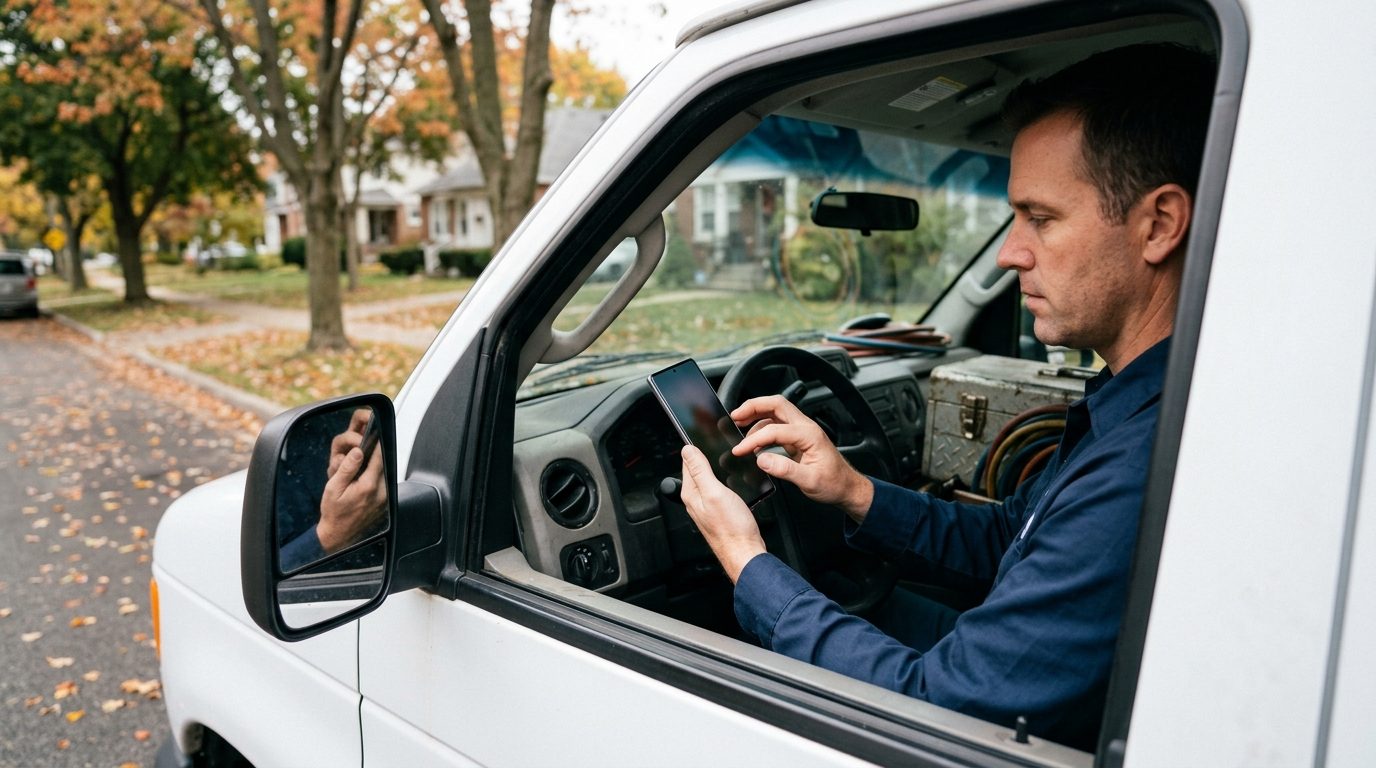
It is the last week of September. You have four techs on the road, two of them running late, and the phone keeps ringing with customers asking whether anyone is actually coming today. Six quotes went out last week and three of them have heard nothing back. Furnace season starts in about three weeks and the list of people who had a tune-up last October is sitting in your field-service software, unused.
Each of those gets smaller with a text sent at the right moment by the right person. Below is the sequence a small plumbing, HVAC or electrical shop can run from Monday: the templates, what triggers each one, and what to do when nobody answers.
The Five Texts a Service Company Actually Sends
Most of the value sits in five messages:
- The day-before confirmation, so the slot is still real when the van arrives.
- The on-my-way text, so someone is home and the gate is open.
- The quote follow-up ladder, because unsigned quotes usually die of silence.
- The job-done text, with the invoice and the review ask.
- The seasonal reminder to past customers.
The first four go to someone who asked you to come out. The fifth is marketing, and is handled differently.
The Day-Before Confirmation
Trigger: the job is booked for tomorrow. Send: between 3 and 5 p.m. the day before, so there is time to fill a cancelled slot.
Hi [First name], it's [Your name] at [Company]. Confirming [Tech] is booked for your [service] tomorrow between 10 and 12. Reply YES to confirm or tell me a better time.
On no reply: do nothing until 8 a.m., then call. A two-minute call at 8 is cheaper than forty minutes in traffic to a locked door. If they reply with a new time, move it in your scheduler first, then answer, so the text and the calendar never disagree.
Queue these as scheduled messages rather than typing them one by one at 4:45. Anything queued can be edited or cancelled if a job moves.
The On-My-Way Text
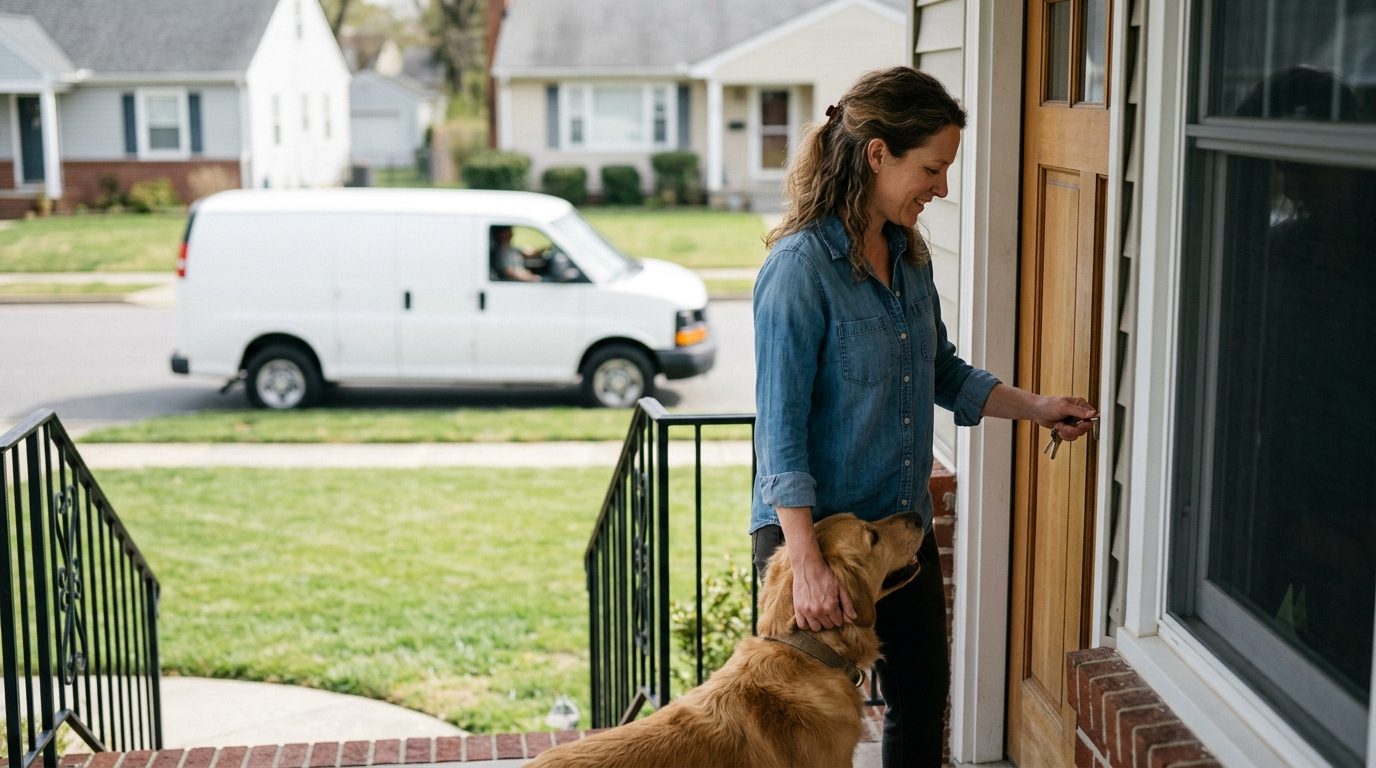 This is the message customers remember. It goes out when the tech leaves the previous job, usually 15 to 45 minutes away. Earlier and the ETA is a guess; later and the customer cannot act on it.
Hi [First name], [Tech] from [Company] here. Leaving my last job now, should be with you around 2:15. If you can, please clear the space around the water heater. Reply here if anything has changed.
Who sends it: the tech, not the office, because only the tech knows when the last job actually finished. A saved quick reply takes a few seconds to send before pulling out.
When the tech is running late: send a second text as soon as the new time is known, never after the original ETA has passed.
Running about 30 min behind on the job before yours. New arrival around 2:45. Sorry for the shift. Reply if that no longer works and we'll rebook.
On no reply: nothing. If the customer is not home on arrival, the tech calls from the driveway and waits ten minutes.
The Quote Follow-Up Ladder
The ladder runs four messages over three weeks and then stops.
Day 1, the morning after the quote is sent:
Hi [First name], it's [Your name] at [Company]. Just checking the quote for the [job] came through OK. Happy to walk through any line on it by text or on a quick call.
Day 4:
Any questions on the [job] quote? If price is the sticking point, tell me. There is usually a way to phase the work or swap the unit for a cheaper one.
Day 10:
Hi [First name], we're booking into [week] now. If you want the [job] done before it gets cold, reply and I'll hold a slot.
Day 21, the last one:
Last note from me on the [job] quote. If you went another way, no problem, and if you want to revisit it later just reply to this text.
What a reply does: any answer moves the quote out of the ladder and to whoever wrote it. "We're thinking about it" gets one question back ("Is it the price or the timing?") and a manual follow-up date. "We went with someone else" gets a thank-you and nothing more. Do not push past Day 21.
Schedule all four the day the quote goes out, and cancel the rest the moment the customer answers. A customer who signed on Day 3 and gets the Day 10 nudge stops trusting your office.
The Job-Done Text
Trigger: the job is marked complete. Send: within the hour.
Thanks for having [Tech] out today, [First name]. Your invoice is here: [link]. If anything isn't right, reply to this text and it comes straight to us. And if we did well, a quick review helps a small shop more than you'd think: [review link].
On no reply: one reminder about the invoice after seven days if it is unpaid. Never chase the review. One ask, once.
The Fall Tune-Up List
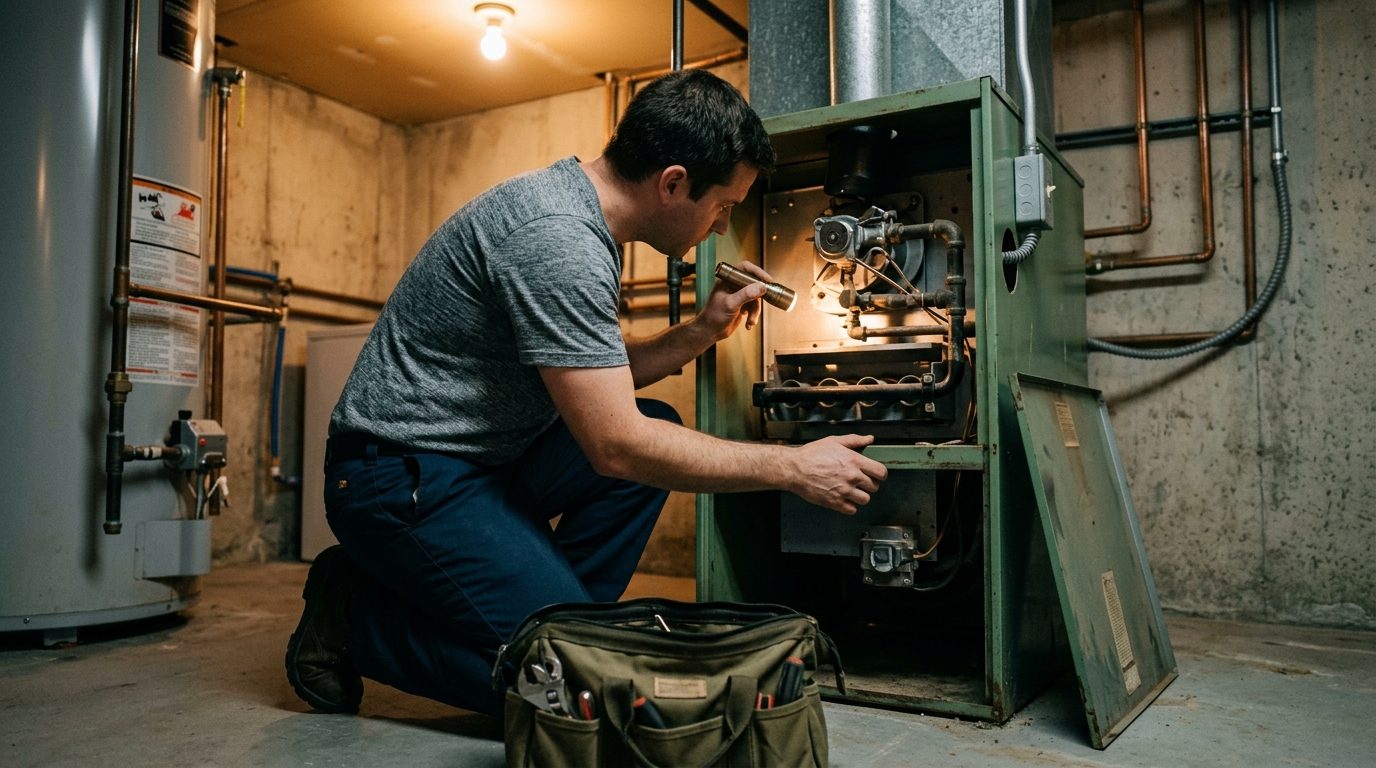 This is the message that fills October. The list is last fall's furnace and boiler customers.
When: the first two weeks of October, before the first cold night. Segment: only customers who agreed to hear from you about it. Pace: several days, not one blast.
Hi [First name], it's [Company]. Your furnace was last serviced in October 2025. We're booking fall tune-ups for the next three weeks. Reply with a day that suits and we'll send times. Reply STOP to opt out.
On no reply: one follow-up ten days later, then leave them until spring. Replies go to the office, which books them straight into the scheduler.
One phone should not send several hundred of these in an hour. Carriers watch per-line velocity, and a burst from one number looks like spam. Schedule the list across a week, or split it across more than one paired phone. Our piece on per-number sending limits has the numbers.
Who Owns the Inbox
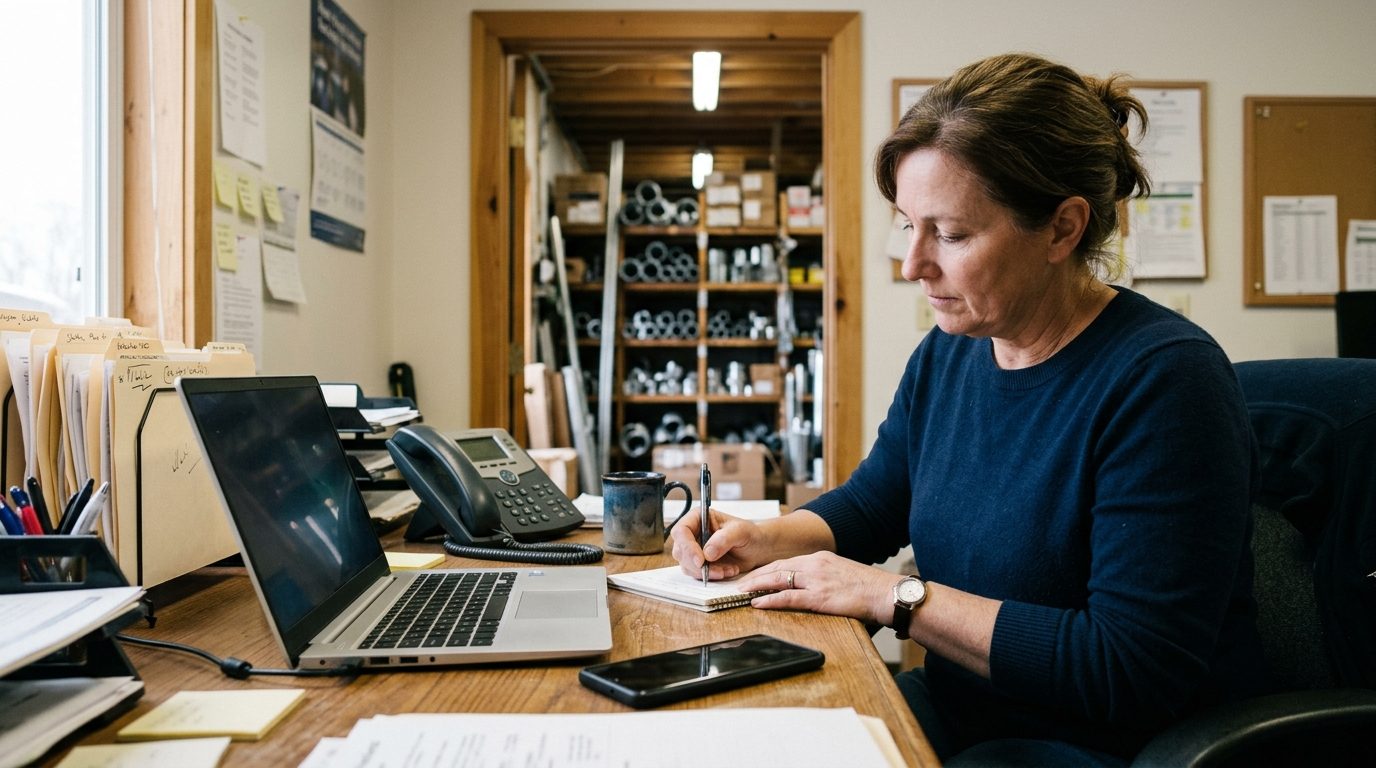 The usual failure is a reply landing on a phone in a van while the tech is under a sink. Decide who owns each message type:
- Confirmations, quote follow-ups, seasonal replies: the office manager, working from the shared inbox in a browser.
- On-my-way and running-late: the tech, from their phone.
- After-hours inbound: an auto-reply rule, then the office at 8 a.m.
A workable after-hours auto-reply:
Thanks for texting [Company]. We're closed until 8 a.m. If water is actively leaking or you have no heat, call [emergency number]. Otherwise we'll reply first thing.
In Android Texter the common setup is an office line and the owner's line, both paired to one account, so the owner sees every thread without answering them. Forwarding rules can push a particular customer's texts to one tech's phone. Quick replies (slash shortcuts that expand to a full message) keep on-my-way texts consistent across techs.
Where Android Texter Fits, and Where It Doesn't
Field-service software like Jobber already sends on-my-way and quote texts, and a home-services company can usually get a business texting campaign approved. If yours already texts customers from a registered number and it works, keep it.
The friction is registration. Jobber's help center says two-way texting from a dedicated number requires registering the number with your business details, including a tax ID unless you are a sole proprietor, and that processing can take up to three weeks. It also says an unregistered number carries a heightened risk of delivery failure. Three weeks from today is the middle of furnace season.
Android Texter sends from an Android phone you already own, on its own carrier line, as ordinary person-to-person SMS. There is no brand registration or campaign vetting, and the customer sees the number they may already have saved as "the furnace guy." It suits an owner-operator or small office that already texts customers from a phone and wants a shared inbox and scheduling on top. A company sending thousands of messages a day is usually better served by a registered A2P provider.
Consent, STOP and the 8 p.m. Cutoff
Four of these five messages are replies to a job the customer booked. The seasonal reminder is marketing, and it needs the customer's consent. A job you did last year does not automatically cover it; our article on whether an established business relationship covers texts is worth reading before you send to a past-customer list.
Three rules change what you do:
- Honor opt-outs everywhere. Under the FCC's rules, a customer can revoke consent by any reasonable method, including replying "stop," "quit," "end," "revoke," "opt out," "cancel" or "unsubscribe," and the request must be honored within ten business days. Android Texter suppresses a number automatically on STOP, UNSUBSCRIBE, CANCEL, END and QUIT. A reply like "please stop texting me" still has to be handled by a person.
- Keep marketing inside 8 a.m. to 9 p.m. at the customer's local time, per the telephone solicitation hours in 47 CFR 64.1200(c)(1).
- Keep a record of when and how each customer agreed to seasonal reminders.
The channel changes none of this. The TCPA applies to texts from a phone exactly as it does to texts from a platform, and consent is your responsibility. For the full opt-out picture, see what actually counts as STOP.
Frequently Asked Questions
What should an on-my-way text from a contractor say?
Name the tech and the company, give a specific arrival time rather than a window, say what the job is, and ask for anything the customer needs to do, such as clearing access to the unit or putting a dog away. End with "reply here if anything has changed" so the customer knows the number is monitored. Send it when the tech leaves the previous job, usually 15 to 45 minutes out.
How many times should I follow up on a quote by text?
Four messages over about three weeks is enough: the morning after, day 4, day 10 and a final note on day 21. Any reply takes the customer out of the sequence and into a real conversation. Stopping after the fourth protects your reputation, and a customer who went quiet is more likely to come back to a shop that did not pester them.
Can I text past customers about a seasonal tune-up?
Only if they agreed to hear from you about it. A reminder about service they have not booked is marketing, and marketing texts need consent under the TCPA. Record when each customer opted in, include an opt-out line, send between 8 a.m. and 9 p.m. their time, and remove anyone who replies STOP. We do not give legal advice, so check your own consent language with counsel.
Should the tech or the office send the texts?
Split it by who has the information. The tech knows when they are actually leaving the last job, so the on-my-way and running-late texts come from the tech. Confirmations, quote follow-ups and seasonal replies belong to the office, which can see the calendar and the quote. A shared inbox lets both work the same threads without anyone texting from a number the customer does not recognize.
Run the Week From One Inbox
Pick the confirmation and the on-my-way text first, since they save the most wasted drives, and add the quote ladder once those are habit. If you want to run all of it from the phone that is already in your pocket, Android Texter pairs that phone to a shared inbox with scheduling, quick replies and after-hours auto-replies, without a registration queue in front of it.