
The account has a working mobile number, a validation notice that went out two weeks ago, and a consumer who hasn't picked up a single call. What you need is the text sequence: what goes out first, what the offer says, who answers, and what happens when Monday's agreed payment doesn't arrive Friday.
Here is that sequence, from opener to third installment.
Why the payment plan belongs on text
A balance and a pay link works on the consumer who was going to pay anyway. The account that needs a collector belongs to someone who can't clear the balance and avoids your calls because they assume every call is a demand for all of it. That consumer will often answer a question they can reply to with one word, at 9:40 at night, without anyone hearing their voice. The payment plan suits text because it is already a back-and-forth: options, a choice, a confirmation, then a short run of reminders. The goal below: silence to a confirmed plan, then the plan kept alive through the first three installments, where plans hold or break.
Three things come first. The account carries a texting permission in your system (the consumer texted you from that number or gave you consent to text it about the debt). The account has one owning collector, whose handset the texts go out from. And that collector has a plan grid: settlement floor if your client allows one, shortest and longest terms, and minimum monthly amount, so they can answer a 9:40pm reply without waiting on a supervisor.
The opener and the no-reply ladder
Trigger: the account enters the text queue with a recorded texting permission. Window: weekdays, late morning to early evening in the consumer's time zone.
Text 1 (Day 0): Hi [First name], this is [Collector] at [Agency]. [Agency] is a debt collector. This is an attempt to collect a debt and any information obtained will be used for that purpose. It's about your [Original creditor] account. If a monthly plan is easier than paying in full, I can set it up by text. Reply PLAN to see options. Reply STOP to opt out of texts.
It asks for one word, names a person and a creditor the consumer recognises, and leads with the plan. The disclosure sentence is a placeholder for your counsel's approved wording.
No reply after three days: send once more, at a different time of day.
Text 2 (Day 3): [First name], [Collector] at [Agency], a debt collector, following up on your [Original creditor] account. Plans start at $[minimum] a month. Reply PLAN for three options, or CALL and I'll ring you when it suits you. Reply STOP to opt out of texts.
No reply after a further seven days: one last text, then the account returns to mail and phone for this cycle.
Text 3 (Day 10): [First name], last text from me on this for now. If you'd like a plan on the [Original creditor] account, reply PLAN any time and it comes straight to me. [Agency], a debt collector. Reply STOP to opt out of texts.
Three texts in ten days, then stop. An ignored opener tells you to try a different channel, not the same message louder.
The offer and the confirmation
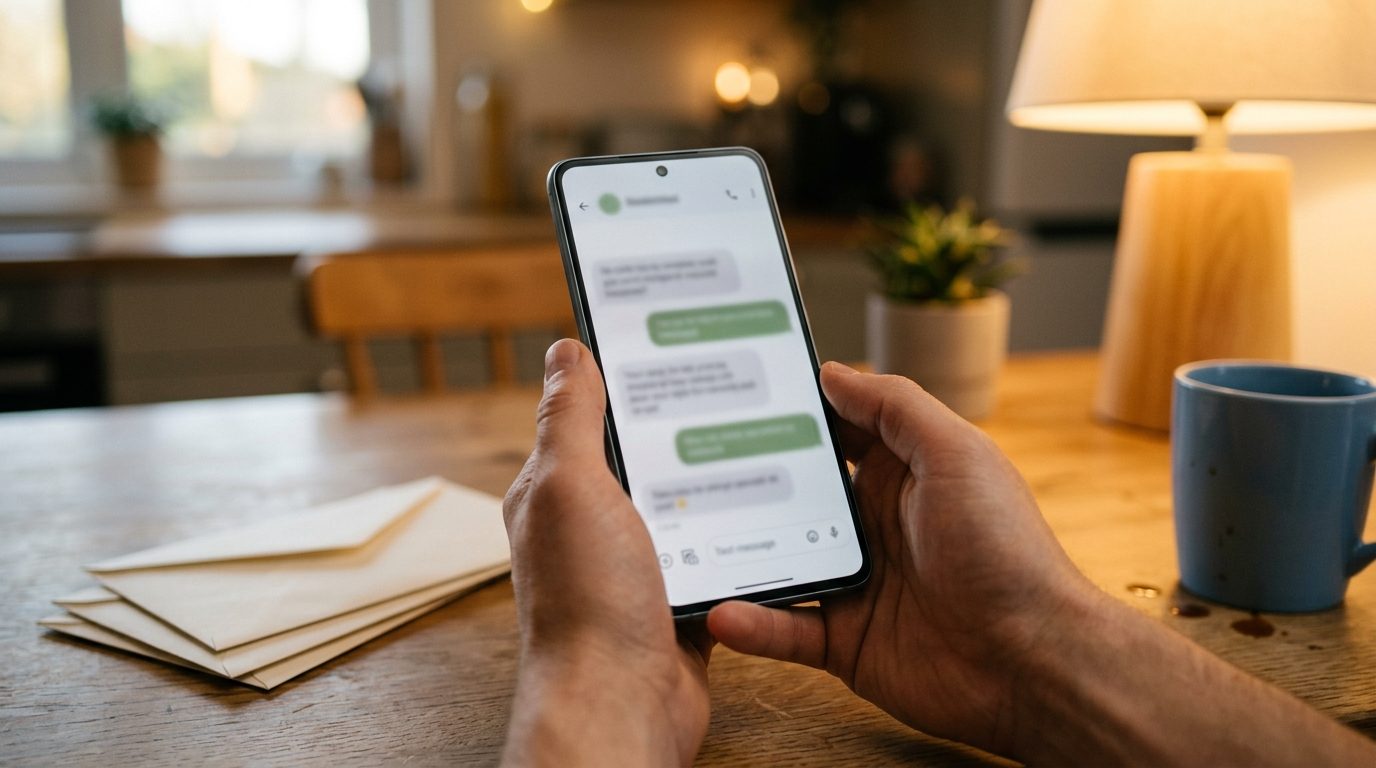 When the consumer replies PLAN, an auto-reply rule can acknowledge it instantly ("Got it, [Collector] will send your options shortly"), but the options need the account's real numbers, so the collector sends them, within the hour during working time.
Text 4 (offer): Thanks [First name]. Your balance is $[balance]. Three ways to resolve it: 1) $[amount] once, by [date]. 2) $[amount] a month for [n] months. 3) Tell me what you can manage monthly and I'll see what I can approve. Reply 1, 2 or 3. [Agency], a debt collector. Reply STOP to opt out of texts.
Option 3 is the one that draws replies from people who can't afford 1 or 2. Below your floor? Counter once inside the grid rather than refusing. When they pick, confirm everything in a single message they can screenshot:
Text 5 (confirmation): Confirmed: $[amount] on the [day] of each month, [n] payments, first on [date]. Pay here: [payment link]. I'll text you three days before each one. If anything changes, reply here before the due date and we'll adjust it. [Agency], a debt collector. Reply STOP to opt out of texts.
"Reply here before the due date" is the most important line in the sequence. It gives the consumer a way to say "I'm short this month" other than going quiet, and an adjusted plan beats a cancelled one.
Reminders after the plan is agreed
Schedule every reminder at the moment the plan is confirmed, not the night before each one. In Android Texter that is a scheduled send from the composer, or the API's scheduled_at field with an RFC 3339 timestamp, and scheduled messages can be viewed, edited or cancelled from the dashboard if the plan changes.
Text 6 (three days before): Hi [First name], reminder: your $[amount] payment is due [day, date]. [payment link]. Reply if you need to move it. [Agency], a debt collector. Reply STOP to opt out of texts.
Text 7 (payment posted): Got it, thank you. $[amount] received, $[remaining] left, next payment [date]. [Agency], a debt collector. Reply STOP to opt out of texts.
Collectors skip the receipt because it collects nothing, yet seeing the balance fall is what gets the second installment paid on time.
When a payment is missed
A missed payment on a fresh plan is usually a cash-flow problem, not a decision to stop.
Text 8 (day after due date): [First name], your [date] payment of $[amount] hasn't come through. If this month is tight, reply with what you can do and when, and I'll adjust the plan rather than close it. [Agency], a debt collector. Reply STOP to opt out of texts.
No reply in three days: the collector calls once, then texts that the plan is still open and asks for a date. No reply by day 10: mark the plan broken and return the account to your standard workflow, without a text announcing it.
Who owns the inbox and how replies get routed
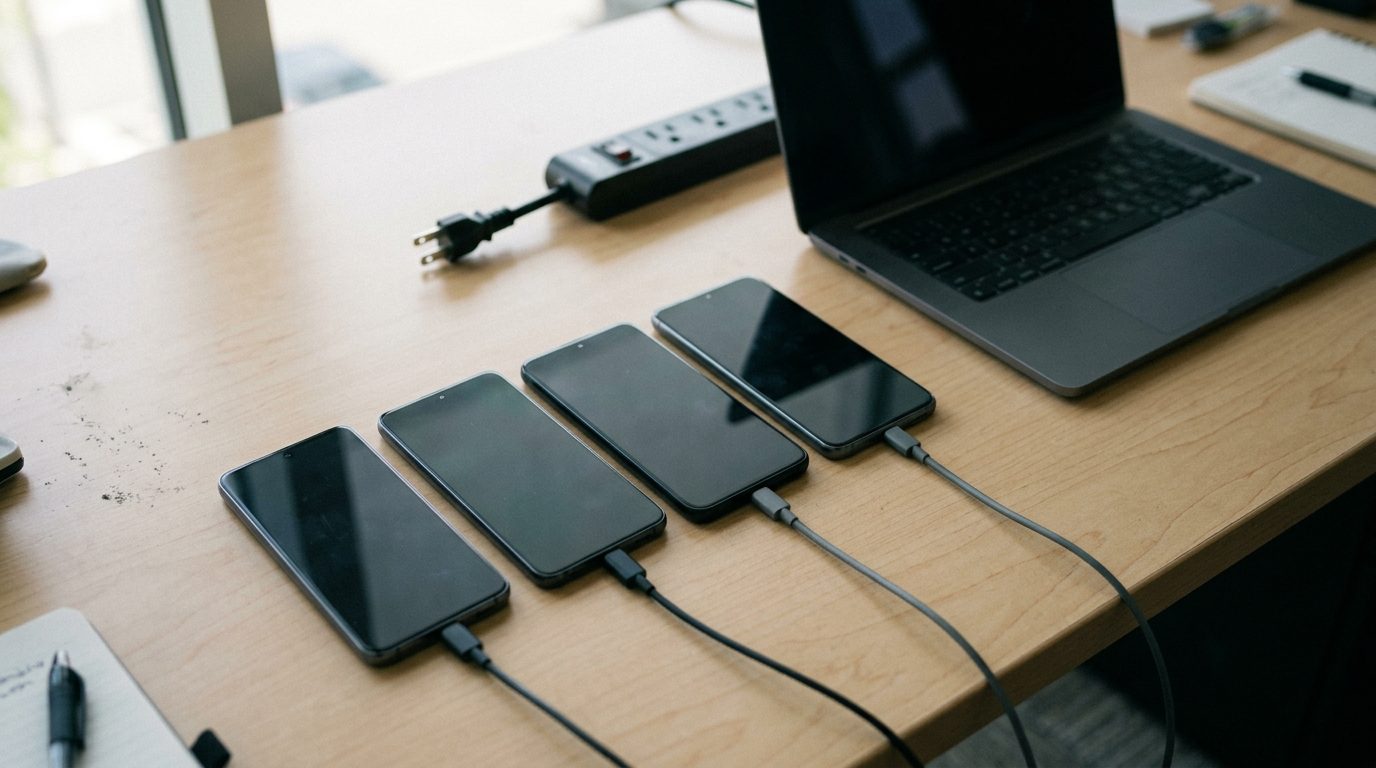 A reply is only useful if it reaches the collector who knows the account. The simplest setup is one Android handset per collector, all paired to the agency's Android Texter account. Each phone shows up as its own device with its own number, sends go out with that collector's
 device_id, and replies come back to that line in the shared dashboard inbox. When a collector is out, an SMS forwarding rule can route inbound from their line to a colleague's phone or to a Telegram channel the floor watches (how forwarding to Telegram works). To log replies against the account in your collection system, register a webhook for message.received.
Give the floor quick replies so the disclosure line never gets dropped: /plan for the three-option offer, /link for the payment link, /call for "Happy to talk. What time works today or tomorrow?", and /dispute for your approved acknowledgement that the account is on hold for review. Usage counts show which ones the floor actually relies on.
The collector's morning: overnight PLAN replies get options before 10am, then today's missed payments, then disputes to their owner. Openers go out after lunch.
The reply that stops everything: disputes
 "This isn't my debt." "I already paid this." "I never owed that." Treat any of these as a dispute: stop the sequence, cancel that account's scheduled reminders, and hand it to whoever handles disputes.
The cost of getting disputes wrong was on display last week: on October 2, the Court of Appeals of Indiana upheld a $1.95 million verdict against a collector over a disputed apartment charge of about $110. According to AccountsRecovery.net, the collector confirmed the balance with the property manager without considering the "as is" lease addendum the tenant had signed, and kept reporting the debt for more than a year. That dispute didn't arrive by text, but the lesson holds: a dispute needs an owner and a hold, not another reminder. Reg F's dispute rules are in 12 CFR 1006.38.
The rules that shaped these templates
We cover the law in more depth in our NYC SHIELD rule article and our post on what counts as an opt-out. This isn't legal advice. These are the points that changed what you send:
- An opt-out line in every text. Reg F requires a clear and conspicuous, reasonable and simple opt-out method in each electronic communication (12 CFR 1006.6(e)). Android Texter suppresses STOP, UNSUBSCRIBE, CANCEL, END and QUIT automatically.
- "Debt collector" in every text. The initial communication carries the full disclosure, and each later one must say it is from a debt collector (12 CFR 1006.18(e)).
- 8am to 9pm, consumer's local time. Reg F presumes anything outside that window is inconvenient (12 CFR 1006.6(b)(1)(i)).
- The 60-day number check. Reg F's safe-harbour procedure for texting requires that the consumer texted you from the number or consented directly, and that within the past 60 days they did so again or you confirmed with a complete and accurate database that the number hasn't been reassigned (12 CFR 1006.6(d)(5)). The FCC's Reassigned Numbers Database is the usual tool. Put the check on a calendar for any plan longer than 60 days.
- The TCPA still applies. Consent is your responsibility, and sending from a handset does nothing to reduce your exposure.
What to measure every Monday
Track four numbers per collector: replies per Text 1 sent, plans confirmed per PLAN reply, the share of plans that paid their first three installments, and opt-outs per template. Good replies but few plans means the offer is wrong, usually a missing option 3 or a floor set too high. Plans breaking at installment two point at the reminders, or a skipped receipt.
Frequently Asked Questions
Can a debt collector text you about a payment plan?
Yes. Reg F treats text messages as a permitted way to communicate about a debt. Each text must identify the sender as a debt collector, give a simple way to opt out, and arrive between 8am and 9pm in the consumer's time zone. TCPA consent rules also apply. Have counsel approve your disclosure wording before you build templates around it.
How many collection texts can you send in a week?
Reg F's seven-calls-in-seven-days presumption counts telephone calls, not texts, but the general ban on harassing or repeated communication covers every channel. This playbook caps the opener at three texts over ten days and sends plan reminders only around due dates, which keeps the channel useful and gives the consumer little reason to reply STOP.
What should a collector do when someone replies "not my debt"?
Treat it as a dispute. Stop the sequence, cancel scheduled reminders on that account, and route it to whoever handles disputes in your agency. Reg F's dispute and verification rules are in 12 CFR 1006.38. An automated reminder firing after a dispute reply is exactly the error this workflow is built to prevent.
Why text from collectors' own phones instead of a texting platform?
Third-party collection campaigns face heavy vetting under A2P 10DLC and are often rejected or throttled. Texts from a paired Android handset go out as person-to-person SMS, so there's no campaign to register, and replies come back to the collector who owns the account. Your Reg F and TCPA obligations are exactly the same either way.
Run the plan sequence from your own lines
Android Texter pairs each collector's Android handset to one dashboard, so openers, scheduled reminders and replies live in a single inbox, routed to the collector who owns the account. If your texting platform turned down your collections campaign, set up Android Texter and send tomorrow's openers from numbers you control.