
A customer bought a 30-day tub from you on the 3rd. Today is the 26th. Nobody has said a word to her since the delivery notification. In a week she will scoop the bottom of that tub, think "I should order more," and then not. You find out in three months.
That gap is where a direct sales business leaks. Recruiting gets the attention on every team call, but the reorder is what pays. You already text customers from a personal phone. This is the same phone run on a schedule: four messages per customer per cycle, each triggered by the last order date, and ten minutes in the inbox each morning.
Work out the run-out date before you write a word
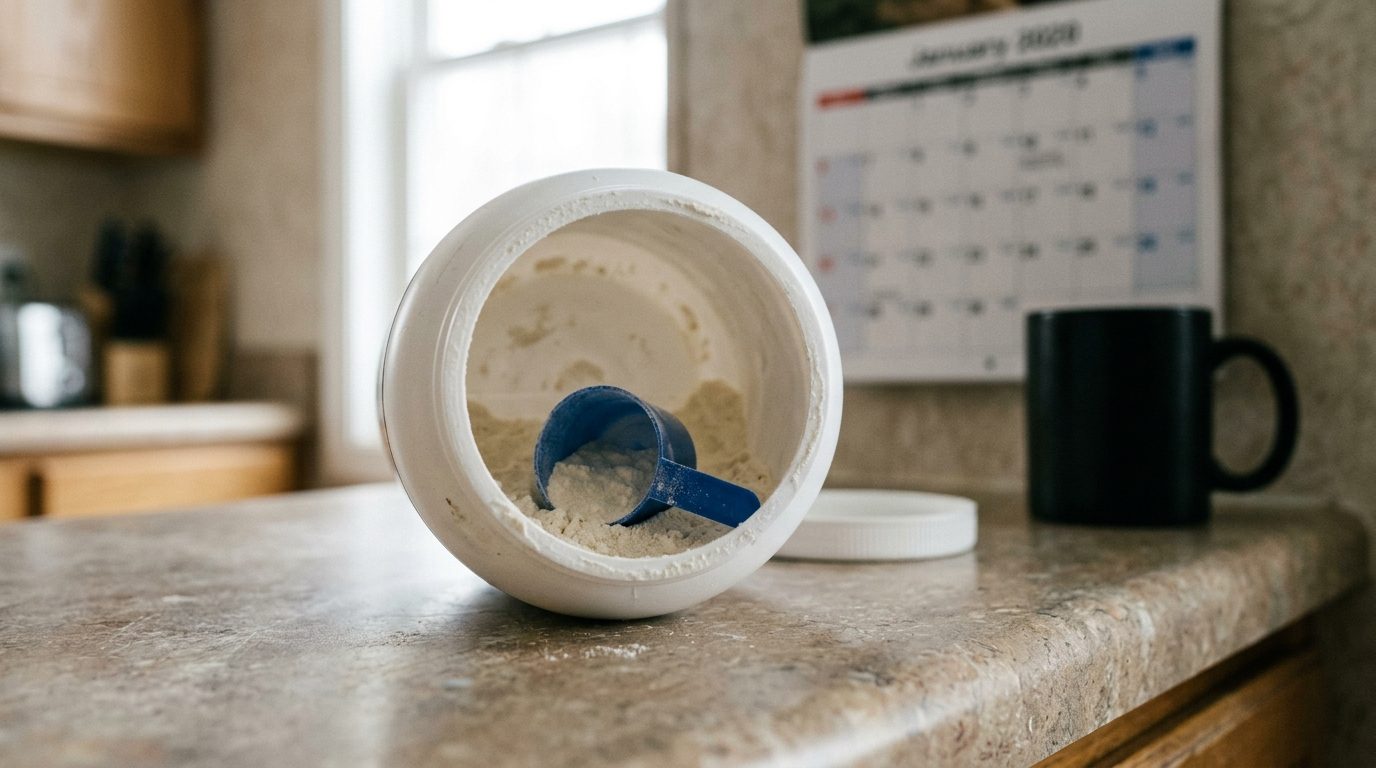 Every reorder text is timed off one number: the day the product runs out. A tub with 30 servings used once a day lasts 30 days, and used twice a day it lasts 15, so ask. A 60-day skincare set is closer to 45 days used morning and night. Cookware has no reorder, but the water filter cartridge does.
Write the cycle down against the customer: a contact tag per product, and a note with the order date and cycle length. The reorder text goes out at run-out minus seven days, enough to cover shipping and a day of thinking. With half the product left it reads as selling. With a week left it reads as paying attention.
Queue the reorder text the moment the sale closes, using the scheduled-send picker in the composer. Your scheduled messages list becomes your run-out calendar, and any entry can be edited or cancelled later.
Message one: the day-three check-in
Trigger: tracking shows delivered, plus three days. Send window: 6:00 to 7:30 p.m. customer local time, when the product is in front of her.
Hi [First name], it's [Your name]. Your [product] should have landed by now. Quick question so I can time things right: are you doing one scoop in the morning, or splitting it? I'll text you a few days before you run low so you never have a gap. If you'd rather I didn't, just say.
This confirms delivery, fixes the consumption cycle that sets every later date, and tells the customer plainly that a reorder text is coming and that she can decline it. That last line is the consent conversation, and day three is a far better place for it than run-out.
What a reply does. "One in the morning" confirms the 30-day cycle. "Two a day" halves it, so move the scheduled text forward. "Haven't opened it yet" is the most useful reply: she needs a reason to start, not a reminder to reorder, so send a usage tip or offer a two-minute call.
No reply. Nothing. The reorder text stays scheduled. Do not chase a check-in.
Message two: the reorder text
Trigger: run-out minus seven days, scheduled at the sale and adjusted after the check-in. Send window: 10:00 to 11:30 a.m.
Hi [First name], by my count you've got about a week left of [product]. Want me to put another [size] on for you? Reply YES and I'll set it up and confirm the total, or tell me if you'd rather hold off for a bit.
No benefit claim, no discount: it states the inventory position and asks a yes-or-no question. The sell was made at the first sale. The reorder text is logistics.
Replies sort into four buckets, each worth a quick reply shortcut:
- "Yes." Place the order or send the link, confirm the total and ship date in the same thread, and queue the next check-in and reorder text while you are there. Four minutes.
- "Not yet." Ask when she expects to run out, reschedule to that date minus seven, and reply with the date so she knows you heard.
- "I'm not sure it's doing anything." Not by text, and not with a claim. Offer a call. Whether she stays is a conversation about how she has been using it. The claims point is covered below.
- "Too expensive right now." Thank her, drop the schedule, and set one lapse check for three weeks out. No discount you cannot offer everyone.
No reply after five days triggers message three.
Message three: the last-day nudge
Trigger: no reply to the reorder text after five days, which puts it at run-out minus two. Send window: early evening.
No pressure, [First name], I just didn't want you to hit an empty [tub] on [weekday]. Shipping takes [3-4] days so today is the last day it can land in time. Reply YES or I'll leave it there.
The nudge is honest about why it exists: shipping time. It names the day the tub runs out, and it says what happens on silence, which is nothing. Mean it. "Yes" runs the same path as message two. No reply ends the schedule, with no third ask. Tag the customer as lapsed at run-out plus fourteen days.
Message four: the lapse check, three weeks later
Trigger: run-out plus 21 days with no order. Send window: mid-morning, any weekday except Monday.
Hi [First name], [Your name] here. You dropped off the [product] a few weeks back, which is completely fine. Can I ask what changed? If it was price, or it just wasn't for you, say so and I'll stop asking.
A question, not an offer, and it works because it is plainly not a broadcast. "I switched to something cheaper" is a lost customer: thank her and close the schedule. "I kept forgetting to take it" is a usage problem, and a routine tip plus a fresh reorder text wins some back. "I lost the link" is an order.
No reply closes the loop. She stays a contact on no schedule. The whole sequence contains two asks; everything else is a question or a confirmation.
A week in the inbox with 150 customers
 With 150 customers on 30-day cycles, about five reorder texts fire per day, seven or eight once check-ins and nudges are counted. Perhaps a third draw a reply: a handful of conversations a day, each one a quick reply and a schedule change.
- At the sale: tag the contact, note the date and cycle, schedule the check-in and the reorder text. Two minutes.
- Morning, ten minutes: work yesterday's replies top to bottom with quick replies for the YES confirmation and the run-out question. Reschedule anything a customer moved.
- Evening, five minutes: check tomorrow's scheduled list and pull any message for a customer who reordered early or asked you to stop.
- Sunday, twenty minutes: count the month so far (sent, replied, ordered, lapsed) in a spreadsheet. If every customer on one product replies "I still have some," your cycle for that product is wrong.
Because each reorder text was queued from its own order, there is never a "reorder day" when the whole list gets the same message, which is what keeps a 150-customer list feeling personal. Broadcasts are for real news, a new product or a price change, at most once a month and never as a reorder prompt.
Why the sender is you and not the company
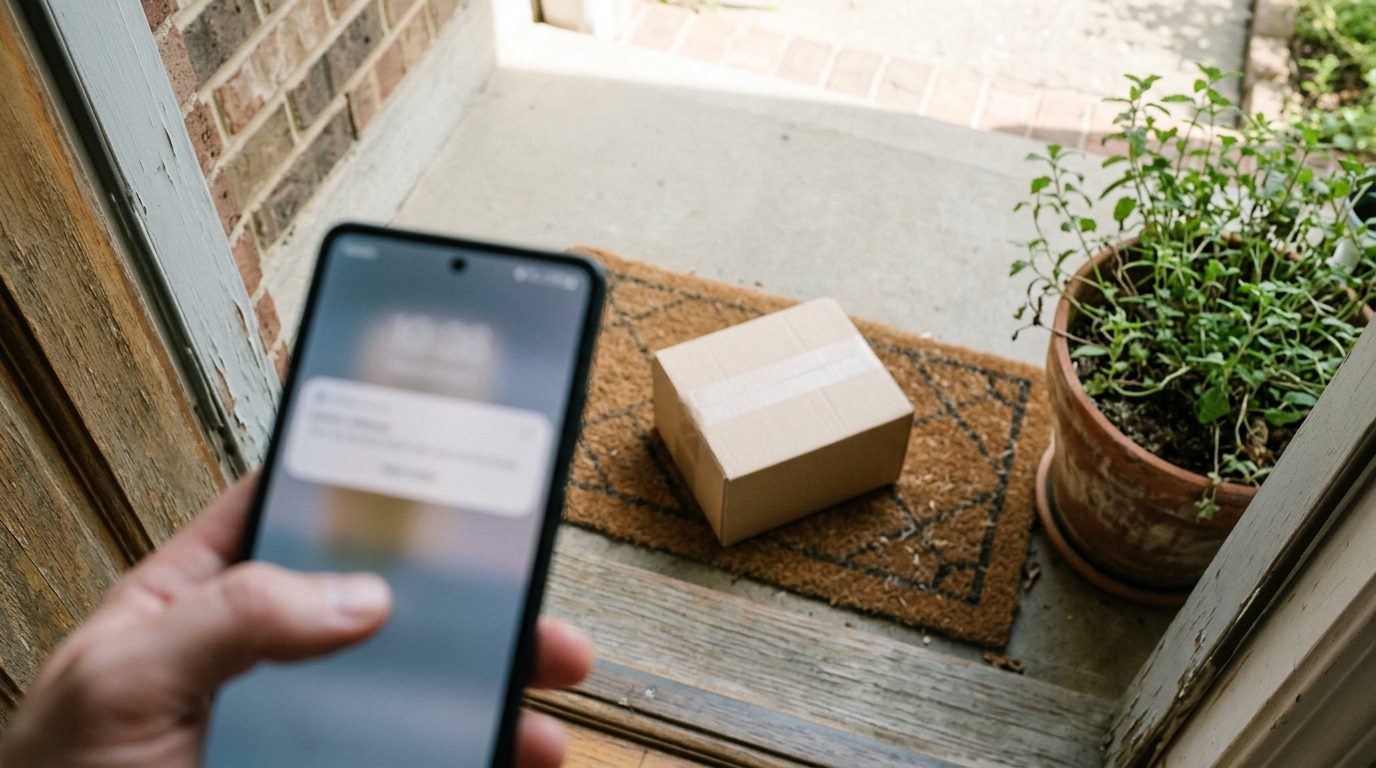 Most companies run an autoship program, and it belongs in the YES path. But autoship charges a card, and a reminder asks a person. Customers burned by a forgotten subscription will say yes to a text and no to autoship.
The reminder works because it comes from your number, with your name on it, to someone who bought from you. That is also why it has been hard to run through the usual texting platforms, which classify a distributor's texting as the company's campaign and treat multi-level marketing as a restricted category. The earlier post on what gets blocked for MLM texting covers the mechanics.
Android Texter sidesteps the classification rather than arguing with it. The app runs on your own Android handset, so texts leave your real number on your real carrier line as person-to-person SMS, while the dashboard supplies the scheduling, tags, quick replies and inbox. A company equipping a field of distributors gets the same thing: each distributor keeps their own number, and nobody registers a campaign naming the whole organisation. Only the source of the number changes. What you may send, and to whom, does not.
The rules that change what you send
None of this is new, and all of it is your responsibility. The channel does not reduce it.
Consent. A reorder reminder to a customer who gave you her number at purchase, and was told on day three that reminders were coming, is on solid ground. A promotional text to a prospect who gave her number for a sample is a different question, because the TCPA requires prior express consent for marketing texts. Our posts on what counts as a STOP and whether a business relationship covers texts have the detail.
Opt-out. A customer can revoke consent by any reasonable means, with stop, quit, cancel, end and unsubscribe counting automatically, and you must honor it within ten business days. One confirmation text is allowed if it carries no marketing and is the last message sent (47 CFR 64.1200(a)(10) and (a)(12)). The standard keywords are suppressed automatically on the platform. "I'm good, thanks, no more texts" is not a keyword, and it is still a revocation. Cancel the schedule by hand.
Claims. The FTC's business guidance on multi-level marketing says product claims must be truthful and substantiated when made, health claims need competent and reliable scientific evidence, and companies are liable for claims their participants make. The FTC has also put more than 1,100 businesses, MLMs among them, on notice that deceptive earnings claims can draw civil penalties of up to $43,792 per violation. None of the four templates mentions what the product does or what you earn. "About a week left" is an inventory fact. "Keep your immune system strong" is a health claim in writing, with a timestamp.
Wrong numbers. On October 9, 2026, a federal court in Wisconsin approved a $4.75 million settlement by Hy Cite Enterprises, the direct-selling company behind Royal Prestige cookware, in a TCPA class action over prerecorded calls to cell numbers that did not belong to its customers (Keith v. Hy Cite, W.D. Wis.). Those were calls, not texts, but the lesson transfers: a "wrong number" reply gets the schedule cancelled and the number suppressed the minute you read it.
Frequently Asked Questions
How far ahead of running out should the reorder text go?
Seven days before the run-out date, worked out from the product size and how the customer actually uses it. That covers shipping plus a day or two of deciding. Earlier reads as selling, because the tub is still half full. Later and she has already gone without, which is when she decides she did not need it.
What do I say when a customer replies that the product isn't working?
Not a claim, and not by text. Offer a short call and ask how she has been using it. Most "not working" replies are usage or expectation problems. Anything describing what the product does for her health is a claim the FTC holds both you and the company responsible for, and a text is a written record of it.
Can I run this from my personal number?
Yes, and that is the point. The reorder text works because it comes from the person who made the sale. Android Texter pairs your Android handset to a dashboard, so texts leave your own number while scheduling, tags and quick replies live in a browser. Consent and opt-out obligations are exactly what they would be if you typed each message by hand.
Run next month's reorders off a schedule
Pick your five best customers, work out their run-out dates, and queue the reorder text for each one tonight. Next week, add the day-three check-in to every new sale. Within one cycle you will know which product intervals are wrong and which customers were one reminder from lapsing.
Android Texter runs on the Android phone you already text customers from: scheduled sends, contact tags, quick replies and automatic STOP handling, from your own number, with no campaign registration and no aggregator deciding whether direct sales may text.