Someone started a loan application on your site at 7:40 last night. They got through their name, phone number and address, ticked the box agreeing to texts, and then stopped on the bank-details page. By the time your branch opens they'll have finished an application with someone else. You're trying to work out what to send them, when, and how many times before you let it go.
This playbook covers those 24 hours: four texts, how each changes with the step they stopped at, who answers the replies, and how to switch it all off the moment they finish. For the payment side, see the due-date reminder playbook.
Why the abandoned application is a different list
A partial application is neither a bought lead nor a borrower in collections. It's someone who wanted money in the last few hours, gave you their number, and hit something. Usually one of four things:
- The bank step. They didn't have their routing number to hand, or they balked at connecting an account.
- The income step. Pay stub not on the phone, or they weren't sure what to put for pay frequency.
- The document upload. The ID photo failed, the camera wouldn't open, the file was too large.
- Life. The kid woke up, the bus came, the battery died.
Only the last one is solved by a reminder. The other three need someone to explain the step, so this sequence is built around getting a reply, with the link secondary. Your form or loan origination system already records where the applicant stopped. Pass that field through and every message can name the actual problem.
The 24-hour sequence
 Four messages, all from the same number, all signed by a person. Every message after the first is conditional: it only sends if the application is still incomplete and the person hasn't replied.
| # | Trigger | Wait | Goal |
|---|---|---|---|
| 1 | Application saved incomplete, consent captured | 15 minutes | Name the step, open a reply |
| 2 | No reply, still incomplete | 3 hours | Offer help with the specific step |
| 3 | No reply, still incomplete | Next morning, 10 a.m. their time | Offer a call |
| 4 | No reply, still incomplete | 24 hours after message 1 | Close it out cleanly |
If message 1 would land after 8 p.m. in the applicant's time zone, hold it until 9 a.m.
Message 1: the 15-minute nudge
Hi {first_name}, it's Dana at Northside Cash on 4th St. Your application saved at the bank details step. You can pick up where you left off here: {resume_link}. Stuck on something? Just reply and I'll help. Reply STOP to opt out.
Name a person, the branch and the step. Leave out amounts, rates and approval language (the last section explains why).
Message 2: the help offer, three hours later
This one changes depending on the step. Write one version per step and let the step field pick it.
Bank step: {first_name}, quick one from Dana at Northside. A lot of people stop at the bank page because they don't have the routing number handy. It's printed at the bottom left of a check, or in your banking app under account details. Reply here if you'd rather I walk you through it.
Income step: {first_name}, Dana at Northside again. If the income page was the hold-up, you can use your most recent pay date and how often you're paid. You don't need the stub in front of you to get through it. Reply with any question.
Document step: {first_name}, it looks like your ID upload didn't go through. That's usually the photo size. Try again from this link on your phone's browser: {resume_link}. If it still fails, reply and I'll sort it.
Never ask anyone to text you their ID, a pay stub or a bank statement. Send them back to your secure upload.
Message 3: the call offer, next morning
A link has now been ignored twice, so change the ask.
Morning {first_name}. Your application with Northside is still saved. If it's easier to finish over the phone, reply CALL and I'll ring you within 15 minutes during branch hours.
A keyword reply can be automated, so CALL does real work (below).
Message 4: the close-out, 24 hours in
Last note from me on this, {first_name}. Your saved application stays open until tonight, and after that you'd need to start again. If you need anything later, this number comes straight to me.
Then stop. Don't move them onto a promo list or start a new ladder next week. Four helpful texts without an answer is an answer.
What a reply should do
 Set up a plan for each reply type before you switch the sequence on:
"CALL." Set an auto-reply rule on the keyword that confirms straight away ("Got it, calling you shortly from this number."), plus an SMS forwarding rule that sends the inbound to the loan officer's own phone or the branch's Telegram channel. Android Texter supports both kinds of rule.
A question about the step. This is where quick replies save the morning. Build a small set of slash shortcuts in the dashboard so the officer isn't typing the routing-number explanation for the fortieth time:
/routingfor where to find the routing and account number/payfreqfor what to put for pay frequency/uploadfor the ID upload fix, with the resume link/hoursfor branch hours and the address
The dashboard counts how often each quick reply is used, which tells you which form step to fix.
"How much can I get?" Answer by phone or inside the application, not in the thread (see below).
"Not interested," "wrong number," STOP, or anything like it. Confirm once and stop everything. See the next section, because this part is on you.
Wiring it: the form, the send and the cancel
- The trigger. When your form or loan origination system saves an incomplete application with consent ticked, it passes the phone number, first name, step and resume link to your script. Our TurnKey Lender walkthrough covers that system. If your form talks to Zapier, the Android Texter app's Send SMS action has a Schedule for later field, so no code is needed.
- The sends. Message 1 goes out through
POST /api/v1/messages/send. Messages 2 to 4 go through the same call with ascheduled_attimestamp in RFC 3339, worked out in the applicant's local time. Every request is authenticated with anatx_API key in theX-API-Keyheader. - The line. Set
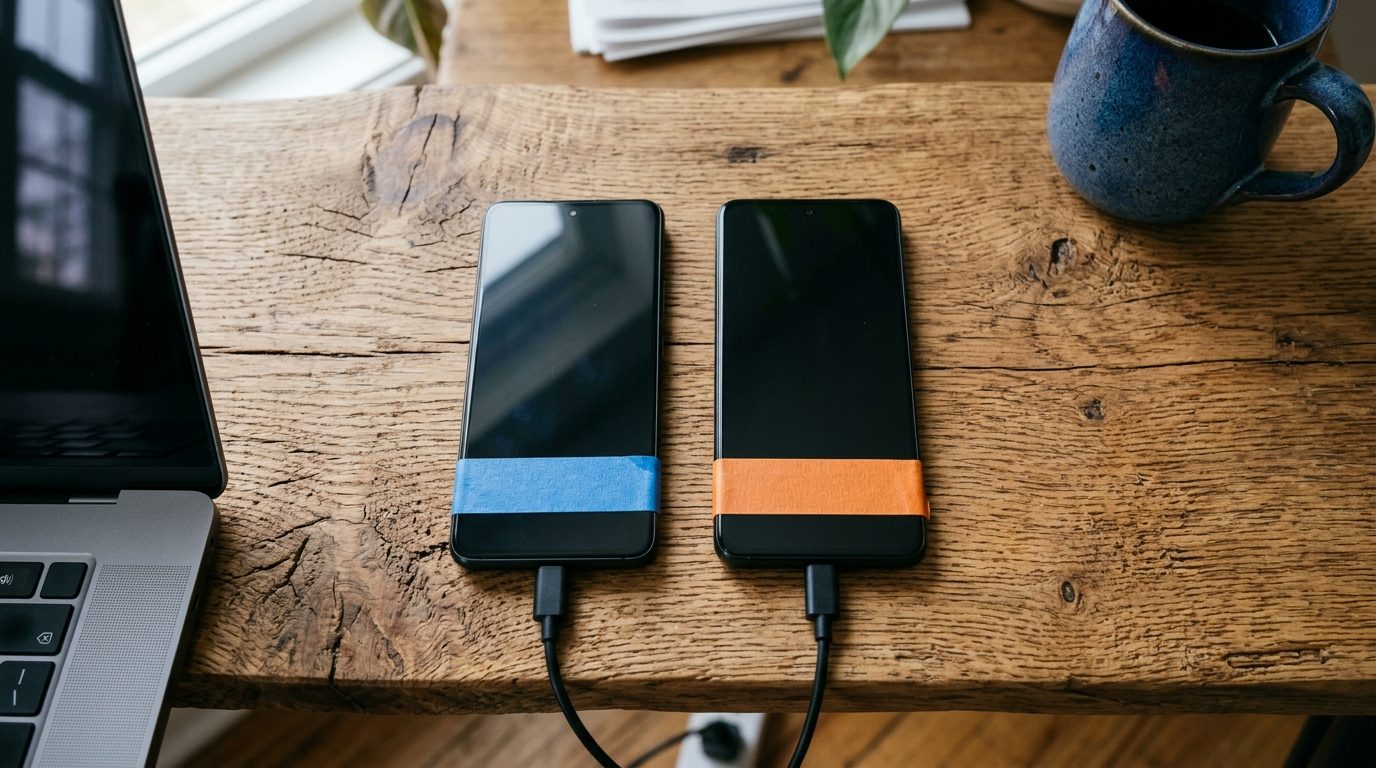
device_idto your origination handset. If you also collect by text, keep collections on a separately paired phone. One account can pair several Android phones, and the replies all land in the same inbox, but a borrower in collections never gets a message from your new-applicant number, and the reverse. - The cancel. This is the step people skip. When the application completes, or the applicant replies, your script deletes the scheduled messages it created for that number. The API supports full create, read, update and delete on scheduled messages, and you can also see and cancel them at
/dashboard/scheduled. Otherwise someone who finished at 9 p.m. gets "still stuck?" the next morning. - Replies back to the file. Register a webhook for
message.receivedso replies post to your system and get attached to the application. Use the signing secret you get when you register to verify each delivery.
Who owns the inbox, and how you know it's working
Give the abandonment number one named owner per shift, normally the officer who opens the branch. Their first half hour is the inbox: overnight replies, CALL callbacks, scheduled messages checked against completed applications, opt-outs noted.
Measure it by step, not overall. For each step, track:
- Completed applications within 24 hours of message 1
- Reply rate per message
- Opt-outs per message, which tells you which template people hate
- Quick reply usage, which tells you which form step is broken
If one step produces most of the abandonments and most of the /routing replies, fix the form first. That beats any text you can write.
The rules that change what you send
Four rules change the templates. The wider picture is in Payday Lender SMS Compliance, and we don't give legal advice, so get your templates reviewed by your own counsel.
- Consent comes before the first text. The sequence only fires if the applicant agreed to texts on the step where they entered their number. If your form collects the phone number before the consent language, the people who leave between those two fields aren't on this list. Android Texter moves messages as person-to-person SMS outside the A2P 10DLC carrier registration process. That has no effect on the TCPA, which applies in full, and consent records are yours to keep.
- Opt-outs are yours to enforce. Under the FCC's rules, consent can be revoked by any reasonable method and must be honored within ten business days, and you may send one confirmation text that contains no marketing. Android Texter doesn't keep a suppression list and doesn't block sends to a number that replied STOP. An auto-reply rule can send the confirmation, but deleting that number's scheduled messages and keeping it out of future sends is your script's job. More in our opt-out rules post.
- Sending hours. The federal rule bars telephone solicitations before 8 a.m. or after 9 p.m. in the recipient's local time, and some states are stricter. Florida, for example, sets an 8 p.m. cutoff for commercial telephone solicitation calls. That's why the sequence above stops at 8.
- No loan terms in the text. Under Regulation Z, an ad that states the number of payments, the amount of any payment or the amount of a finance charge triggers further disclosures, including the APR. A text can't carry those properly, so these templates contain none of those terms.
Frequently Asked Questions
How soon should I text an abandoned loan application?
Around 15 minutes after the application saves incomplete, provided it's within sending hours in the applicant's time zone. Any sooner and you catch people who only stepped away to find a card. Any later and they've often applied somewhere else. If the 15-minute mark lands after 8 p.m. their time, hold the first message until 9 the next morning.
How many follow-up texts are too many?
For this list, four within 24 hours is the ceiling, and every one after the first should be conditional on no reply and no completion. Watch opt-outs per message. If one template produces opt-outs and no completions, cut it. After message 4, stop completely. Don't move the applicant onto a promotional list.
Can I include the loan amount or rate in the text?
It's safer not to. Under Regulation Z, stating the number of payments, a payment amount or a finance charge in an advertisement triggers further disclosures, including the APR. Keep the texts about finishing the application, and answer pricing questions by phone or inside the application itself. Have your counsel review the templates.
Should collections and new applications use the same number?
No. Pair a separate Android phone for each. Android Texter puts both in one dashboard inbox, and you pick the sending line with device_id on each API call. New applicants never get messages from the number that chases late payments, so one kind of conversation doesn't shape how people treat the other.
Run the sequence from a phone you own
If your aggregator turned down your lending campaign, or approved it and then throttled it, Android Texter sends these four messages as ordinary texts from an Android handset on your own carrier line, using the same API, scheduling and inbox described above. Consent and opt-outs stay your responsibility, exactly as they'd be anywhere else. Pair a phone and send your first test message.