Your card is set by late morning: two sides and a total, each with a unit size and the line you got. Its value lives in the next few hours, because a pick on a line that has moved a point and a half is a different pick, and a pick that lands after tip-off is nothing. Nobody pays a capper for the website; the site is the archive, and the text is the product. You tried to put delivery on a texting platform and the campaign came back rejected, because "betting and sports picks" is on the list of things the aggregator will not carry. So the picks go out from a phone, run like a business and not a group chat. This is how a one- or two-person handicapping service runs its texting week.
The daily card text: one send window per sport
 One card per game day, in one window, not a trickle of plays as you find them, because a trickle trains the subscriber to ignore your number. Pick the window per sport once and tell subscribers what it is: late afternoon Eastern for NBA and NHL, after injury reports firm up; mid-morning for the NFL early window, with a second send only if there is a late-window play; morning for a college football Saturday; after lineups post for MLB.
Template 1, the card. Two SMS segments at most, which is the honest limit for a text someone reads standing in a kitchen.
ACE card Tue 11/18
- Celtics -4.5 (-110) 1u
- Knicks/Heat UNDER 219.5 (-110) 1u Lines as of 4:40pm ET. Shop your book. Reply STOP to end.
Three things there are deliberate. The timestamp is your defence against "that's not the number I got." The unit size is there because a pick without a stake is a tip, not a service. And "shop your book" is not laziness: your subscribers sit in states where different books are legal, and the map moves weekly. On November 13 a Louisiana judge issued a temporary restraining order against ten prediction market operators the same day the state sued them, while the CFTC sued Arkansas to stop that state's enforcement action against Kalshi. Name the line, not the book.
Write the card at noon and schedule it. In the Android Texter composer you pick a send time, and the message waits at /dashboard/scheduled where you can cancel it if a star is ruled out at 4 p.m. From your own software, the API's scheduled_at field takes an RFC 3339 timestamp and one call broadcasts to up to 500 phones.
The line-move and late-scratch update
The second message of the day earns the renewal, and it is the one most cappers send too often. Two triggers only: a player on your card is ruled out, or the line moves past the number at which you would no longer make the play. Write that threshold down before the season, not during a 6:55 p.m. injury report.
Template 2, the scratch.
UPDATE: Tatum OUT tonight. Celtics -4.5 is a PASS for us. Knicks/Heat under still live. Line is now -1.5, don't chase it. No reply needed.
Template 3, the line move.
Line check: Knicks/Heat total is down to 216.5. We played the under at 219.5. Below 217 it's a pass. Reply ? if you want the current number before you bet.
"No reply needed" matters, because without it a quarter of the list replies "ok" and you spend the pre-game hour clearing an inbox. The line-move text invites one specific reply instead, because the subscriber about to bet has a real question. This is also the one send that cannot be scheduled: the capper has to be on the inbox from an hour before the first game until tip-off, because the only acceptable answer to "is this still live?" is a decision.
The morning recap and the record
The recap is a retention message disguised as housekeeping. It goes out around 9 a.m. local every day there was a card, especially the bad ones.
Template 4, the recap.
Tue recap: 1-1, -0.1u (Celtics graded no action after the scratch). Week: 7-5, +1.6u. Season: 112-98. Wed card out around 4:30pm ET.
A season record in a text is an advertising claim, and the FTC's standard for small businesses is plain: advertising must be truthful and non-deceptive, and advertisers must have evidence to back up their claims. That means a graded log, kept from day one, that matches the texts you sent. If there was no card, the recap is one line ("No card tonight, back Thu"), because silence from a daily service reads as a dropped subscription.
Trial to paid: the first seven days
 The free week is where the list is built or wasted. Two rules: the first message confirms rather than sells, and the texts stop on the day you said they would. Sign-up is a keyword texted to your number or a form on your site; an auto-reply rule on the keyword answers within seconds, and that answer is where consent is captured.
Template 5, the welcome and confirm.
You're on the ACE free week. One card per game day around 4:30pm ET, plus a recap the next morning. 21+ only. Msg frequency varies. Reply YES to confirm you want these texts. Reply STOP any time to end.
Keep the YES. It costs a few sign-ups who never confirm, and it gives you a timestamped record of consent in the thread. Tag the contact trial with the start date in the notes.
Template 6, day six.
Your ACE free week ends tomorrow. Week: 7-5, +1.6u, every play graded at [your site]. To keep the card coming it's [price]/mo. Reply KEEP and I'll send the link, or do nothing and the texts stop Friday.
Then let the texts stop Friday. The no-reply path is one text on day eight ("Still grading daily at [site]. Reply KEEP to come back. Reply STOP to end.") and one about three weeks later after a notable week, then the number comes off the promotional list. Anyone who replies STOP comes off everything immediately.
Three tags carry the operation: trial, paid and lapsed. The card goes to paid only, the recap to paid and trial, the nudges to lapsed. If renewals live in a billing tool, the Android Texter Zapier app's Create or Update Contact action upserts on phone number and unions tags, so a payment can move a contact to paid without anyone retyping a number.
Running the week off one Android handset
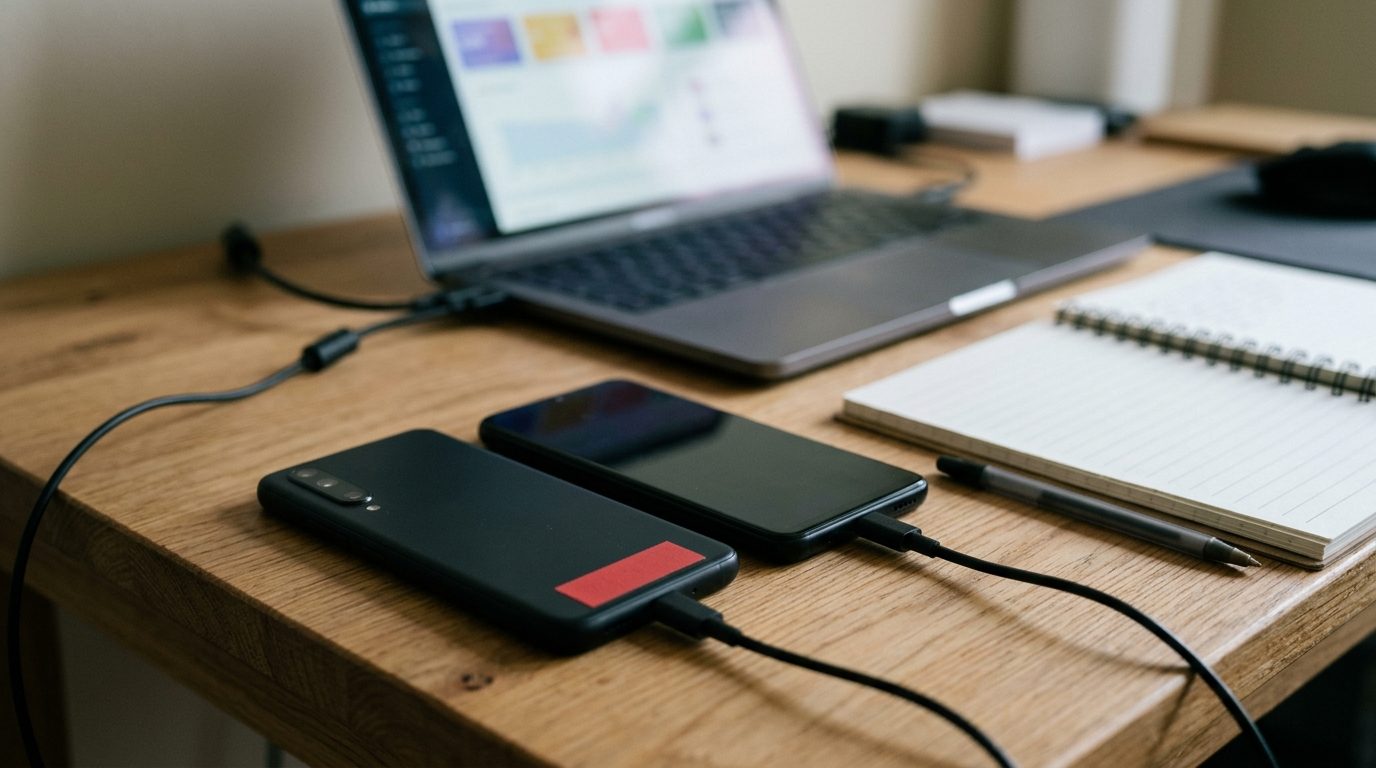 Android Texter routes your messages through an Android phone you own, so the carrier sees person-to-person SMS from a real ten-digit number rather than application traffic that needs a registered campaign. There is no use-case review, which for a picks service is the whole point, because the use-case review is the step that fails. The phone sits on a charger; the work happens in the web dashboard.
- Late morning: write the card and schedule it, to the
paidtag. - Pre-game hour: the capper has the inbox open. Quick replies carry the repeat answers:
/gradepoints to the archive,/paysends the renewal link. - Scratch or line move: one broadcast, immediately, from the composer.
- Next morning: the recap, written the night before and scheduled.
- Billing questions: owned by the partner, who gets them by forwarding inbound from the sales line to a Telegram channel they already watch.
Once the list passes a few hundred, pair a second Android to the same account and put trials and sales on it, with the paid card on the first, so the line carrying your paid product is not the one absorbing complaints from people who half-remember signing up. Both phones appear in one inbox, and a send can be pinned to either.
What the product does not do: it does not suppress a number that replied STOP. There is no suppression list in the send path. An auto-reply rule can acknowledge STOP, but removing that contact from paid and trial before the next card is your job, every time. Make the STOP check the first task of the pre-send routine.
Why the platform said no, and what still applies to you
If your campaign was rejected, the reason was categorical. Twilio's rejection notice for this category says gambling-related traffic is prohibited for SMS and MMS in the United States and Canada, lists "casino apps, gambling websites, sweepstakes, 50/50 raffles, or betting and sports picks" as examples, and notes that rejections for Messaging Policy violations cannot be resubmitted. It applies when "your actual business or use case is gambling-related," so rewording the sample messages does not get you through. The big services run on carrier-approved short codes instead (Doc's Sports signs you up by texting a keyword to a short code), a review a one-capper shop will not get. All of this is carrier and aggregator policy under A2P 10DLC, not a law; the wider list is in our piece on which industries are blocked from SMS marketing.
Person-to-person SMS from your own handset sits outside that regime. The law does not. The TCPA requires prior express consent before marketing texts to a mobile number, with statutory damages of $500 per violation and up to $1,500 if wilful, and it applies in full to a picks service texting from a phone. The confirm message above is your consent record; what counts as a STOP is in our guide to TCPA SMS opt-out rules. Do not text a purchased list of "sports bettors"; our article on consent proof for purchased leads explains why. Keep the list 21+ and say so at sign-up. Android Texter removes the campaign-approval gate; it does not touch the law.
How you know it is working
SMS gives you no open rate, so measure what you can see: time from card send to first reply; how often "which number?" comes back; trial-to-paid conversion at day seven; renewal rate at the first billing date, the only honest measure of the recap; and STOP replies per hundred sends by list. Rising on trial and flat on paid means the sign-up form is attracting the wrong people, not that the picks are bad.
Frequently Asked Questions
Should I deliver picks by text or in a Discord or Telegram group?
Both, for different jobs. The group is where the discussion and write-ups live. The text is the alarm that reaches the subscriber who is not watching a channel at 4:40 p.m. Send the card by text, point to the group for detail, and forward inbound texts into that channel so the team sees questions in one place.
Can I name a sportsbook or include a betting link in the text?
You can, but it is fragile. Subscribers are in different states with different legal books, and in November 2026 the legal map for prediction markets is changing weekly. Name the line and the price and tell them to shop their own book. An affiliate deal belongs on the site, not in the card.
What do I do when a subscriber replies STOP mid-week?
Remove them from every list before the next send, acknowledge once, and do not re-add them when their paid term ends. Android Texter will not block the send for you; there is no automatic suppression, so the STOP check is the first step of the pre-send routine. Refund questions go through billing, not another text.
Why was my 10DLC campaign for a picks service rejected?
Because sports picks are a named example in the gambling category aggregators prohibit for US SMS, and the policy applies to the business, not the wording of the sample messages. Rejections in this category cannot be resubmitted. That is carrier policy, not law. Delivery from a handset you own is not subject to it; the TCPA still applies in full.
Run the card from your own phone
If the platform rejected your picks service, the fix is not a better-worded application. Pair an Android handset to Android Texter, build the paid and trial lists with a confirm message you can point to later, schedule the card, and keep the pre-game hour for the replies that matter. The record has to be true, the consent has to be yours, and the opt-outs are yours to honor. The rest is routine, which is what a subscription business runs on.