
It is Friday. You have 140 accounts due this week, and by Monday a third of them will be late. The collections manager spends Monday dialing numbers that go to voicemail, and the customers who pick up say they forgot, or got paid Thursday and the money is already gone.
Most of that is a timing problem, and a text fixes timing better than a phone call. Here is the text sequence a buy here pay here lot can run from one Android phone: what goes out, when, what a reply triggers, and who answers it.
Time the text to the payday, not the due date
A BHPH payment schedule is usually built around the customer's paycheck, and the reminder should follow it. A text that lands two days before payday gets forgotten. A text that lands the evening the paycheck clears gets paid.
So the first job is tagging every account with its pay rhythm. In the Android Texter dashboard, contacts carry tags, so a simple set works: weekly-fri, biweekly-1-15, biweekly-alt-fri, monthly. Each tag becomes a send group, and each send group gets its own schedule.
The second job is picking one person who owns the replies, before the first text goes out, because it will produce replies within minutes.
The payment-week sequence
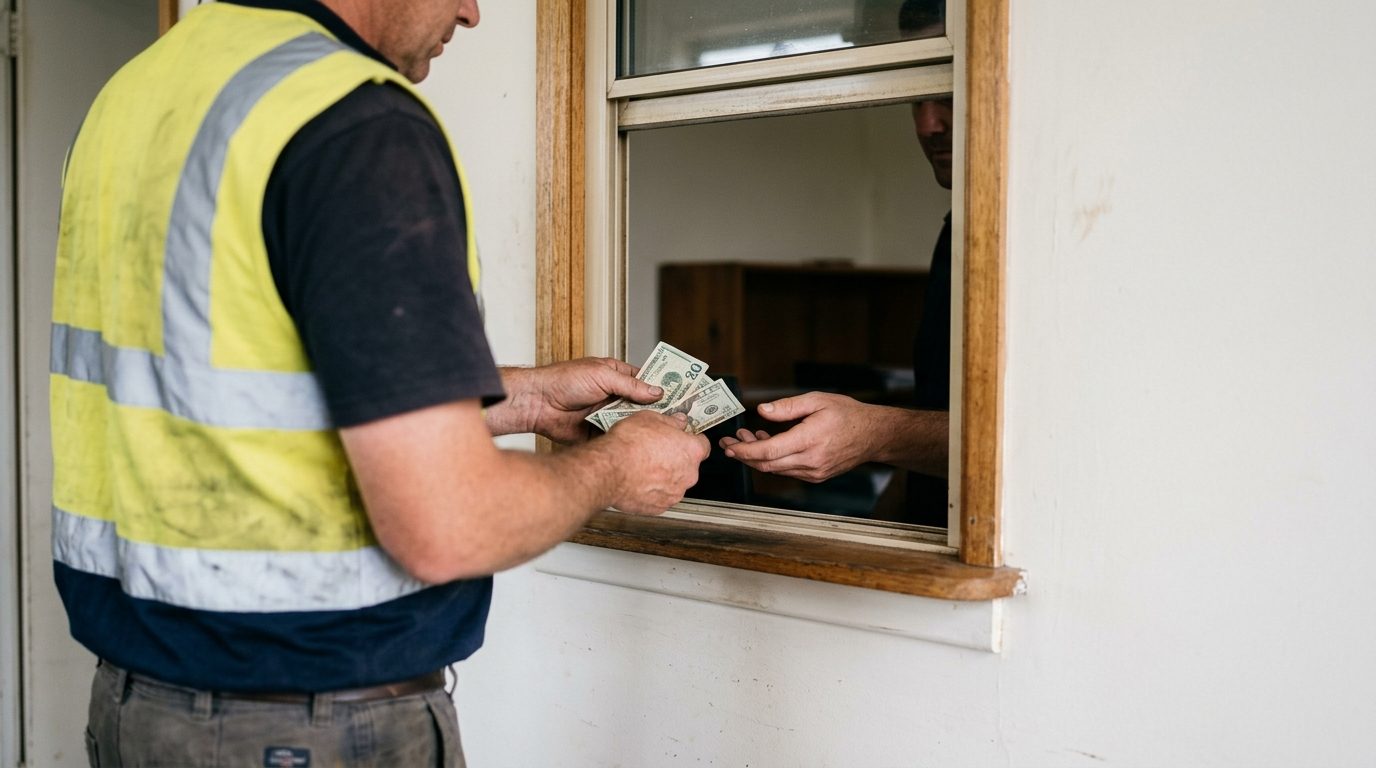 Three messages cover most of the week. Keep them short, name the dealership, and leave the balance out, because phones get shared.
Message 1: the payday evening reminder. Trigger: the evening the customer's paycheck lands, usually between 5 and 7 pm local time. Wait before the next step: until the due date.
Hi Marcus, it's Dana at Route 9 Auto. Your car payment is due tomorrow. You can pay at the lot until 6 or by card over the phone. Reply PAID if you've already taken care of it.
The "Reply PAID" line stops a customer who already paid from feeling chased and gives your inbox a clean signal.
Message 2: the morning of the due date. Trigger: 8 to 9 am on the due date, only to accounts that have not paid or replied PAID. Wait: until close of business.
Morning Marcus, Dana at Route 9 Auto. Just a heads up your payment is due today. If today's tight, text me back and we'll work out a day that works.
That last line invites the customer to tell you about a problem before it becomes a missed payment.
Message 3: the day after a miss. Trigger: first thing the morning after the due date, to anyone still unpaid. Wait: 24 hours, then hand to a phone call.
Marcus, it's Dana at Route 9 Auto. We didn't see your payment come in yesterday. What day can you get it to us? Just reply with the day.
It asks a question with a one-word answer. "What day" gets replied to. "Please contact our office" does not.
On no reply to message 3: the account comes off the text sequence and goes to a phone call from the person who owns it. A fourth and fifth text into silence teaches the customer to ignore your number, and you need that number working for the rest of the contract.
Promise to pay: turn a reply into a date
When a customer replies "Tuesday," you have a promise to pay. The usual failure is that Tuesday comes, nobody remembers, and the promise becomes another late account. First, confirm it right away:
Got it, Tuesday works. I'll send you a reminder that morning. Thanks Marcus.
Then schedule the Tuesday reminder while the thread is open. Android Texter's composer has a scheduled send picker, and anything queued shows up at /dashboard/scheduled, where it can be cancelled if the customer pays early.
Morning Marcus, Dana at Route 9 Auto. Today's the day we talked about for your payment. See you at the lot or give me a call.
If Tuesday passes without payment, that is a broken promise, and it goes to a phone call the same afternoon.
Who owns the inbox on the lot
 Payment-day replies belong to whoever owns collections, not whoever is at the front desk. A few things make that job manageable:
- Quick replies for the answers you give 30 times a week. Android Texter lets you define slash shortcuts that expand into full messages, like
/hoursfor lot hours and payment methods,/gotitfor the promise confirmation above, or/paidfor "Thanks, we've got it. You're all set for this week." The dashboard tracks how often each one is used. - Two lines, two jobs. If your sales staff text prospects from the same number your collections manager uses for payment reminders, a customer who is three weeks late gets a "just got in a clean Tahoe" text from the same thread. Multi-device pairing lets one account run a collections phone and a sales phone side by side in one inbox, each with its own number, so the conversations stay separate and the customer always knows who is texting.
- After-hours coverage. A forwarding rule can send inbound messages to the owner's phone or a Telegram group, so an 8 pm "can I pay tomorrow" does not sit overnight.
- Auto-reply for PAID. A keyword auto-reply can answer PAID with a short thank-you immediately, which clears most of the Thursday night traffic without a person touching it. Check the payment actually posted the next morning before you mark the account.
Beyond the payment: insurance, service and the payoff
 The payment sequence is most of the volume, but three other messages protect the account.
Insurance check. If your contract requires the buyer to keep physical damage coverage with you as loss payee, a lapse puts your collateral at risk. Trigger: when a lapse or cancellation notice reaches you. Wait: 3 business days, then a call.
Hi Marcus, Dana at Route 9 Auto. We got a notice your car insurance may have lapsed. Can you reply with your insurance company's name so we can update your file?
Service due. A car that breaks down stops making payments. If you run a service bay or have a partner shop, a reminder is cheap retention. Trigger: every 3 to 4 months, or your own service interval. Wait: none; one message.
Hi Marcus, it's Route 9 Auto. You're about due for an oil change. Want us to set you up for Saturday morning? Reply YES and we'll text a time.
Payoff and next vehicle. A customer near payoff is your best prospect for the next sale, because you know their payment history. This one is marketing, so send it only where consent covers marketing texts, and from the sales line. Trigger: 3 payments before payoff. Wait: 30 days, then once more at payoff.
Marcus, it's Jay at Route 9 Auto. You're almost paid off on the Malibu, nice work. If you're thinking about your next car, text me and I'll show you what we can do with your trade.
Setting it up without a developer
A lot with a few hundred accounts can run all of this from the dashboard: tag contacts by pay rhythm, schedule the payment-week messages per tag, and work replies in the inbox. If your servicing software can export a due list or call a webhook, the Android Texter REST API can take over the scheduling. POST /api/v1/messages/send accepts an RFC 3339 timestamp for a scheduled send, a device_id to pin the message to the collections phone, and up to 500 recipients per call. A message.received webhook can push replies back into your account notes.
When an A2P provider is the better answer
Unlike payday lenders or third-party collectors, a BHPH dealer sending account notifications can often get an A2P 10DLC campaign approved. If you run several rooftops, send thousands of reminders a day, and have someone to manage registration, a registered A2P platform is the right tool, and our Twilio comparison says the same.
The case for a phone is the other end: one lot, a few hundred accounts, a collections manager who already texts customers from their own cell. A handset keeps the number customers recognise, skips registration and campaign fees, and puts every conversation in a shared inbox instead of one employee's pocket. Each handset still has carrier limits on how fast it can send, which our post on sending limits per phone number covers.
Consent, STOP and what changes on your lot
The Telephone Consumer Protection Act applies to a text from a phone exactly as it does to one from Twilio. Collect consent to text at signing, keep it on file, and treat payment reminders and sales offers as separate permissions. Three specifics change what you send:
- Under the FCC's rules, a customer can revoke consent in any reasonable manner, including replying STOP, QUIT, END, REVOKE, OPT OUT, CANCEL or UNSUBSCRIBE, and you must honor it within ten business days. One confirmation text is allowed if it contains no marketing. Android Texter suppresses the standard opt-out keywords automatically, but a reply like "quit texting me" is still a revocation, so your inbox owner needs to catch it by hand. Our post on TCPA SMS opt-out rules walks through it.
- The FCC rule that makes a STOP on one type of message apply to all your unrelated messages has been waived until January 31, 2027. Plan as if it already applies: a customer who texts STOP to the payoff offer may also be telling you to stop the payment reminders. We covered that in does a STOP revoke call consent.
- A dealer collecting its own accounts in its own name generally falls outside the Fair Debt Collection Practices Act's definition of a debt collector. That changes if you text under a different name or hand accounts to a collection agency, so sign every message with the dealership's real name.
This is not legal advice. Your state may add its own collection and repossession rules, so have your attorney review the templates.
Frequently Asked Questions
How many days before the due date should a BHPH payment reminder go out?
Send it the evening the customer gets paid, which for most weekly accounts is the day before the due date. Earlier than that the money is not in the account yet, so the reminder gets read and forgotten. Follow it with a short message the morning of the due date and a "what day can you pay" text the morning after a miss.
Should the text include the amount the customer owes?
Leave it out. Phones are shared and lock screens show previews, so a payment amount is information the customer may not want other people seeing. Name the dealership, say a payment is due, and give them a way to reply or pay. If they ask for the amount, answer in the thread.
Can we text customers about a trade-in while they still owe us money?
You can, if their consent covers marketing texts and not only account notifications. Send it from the sales line so it does not land in the same thread as payment reminders, and time it for a customer who is current and close to payoff. An upgrade offer to a customer who is three weeks late reads badly and rarely converts.
What should happen when a customer never replies?
After the day-after-miss text, stop texting and call. More unanswered texts teach the customer to ignore your number for the rest of the contract. Log the no-reply on the account so the next person who touches it knows the text sequence already ran.
Run your collections line from the phone you already have
Android Texter turns an Android phone into a shared SMS line with an inbox, quick replies, scheduled sends and a second paired phone for sales. Set up the payment-week sequence above on your lot's own number at androidtexter.com.