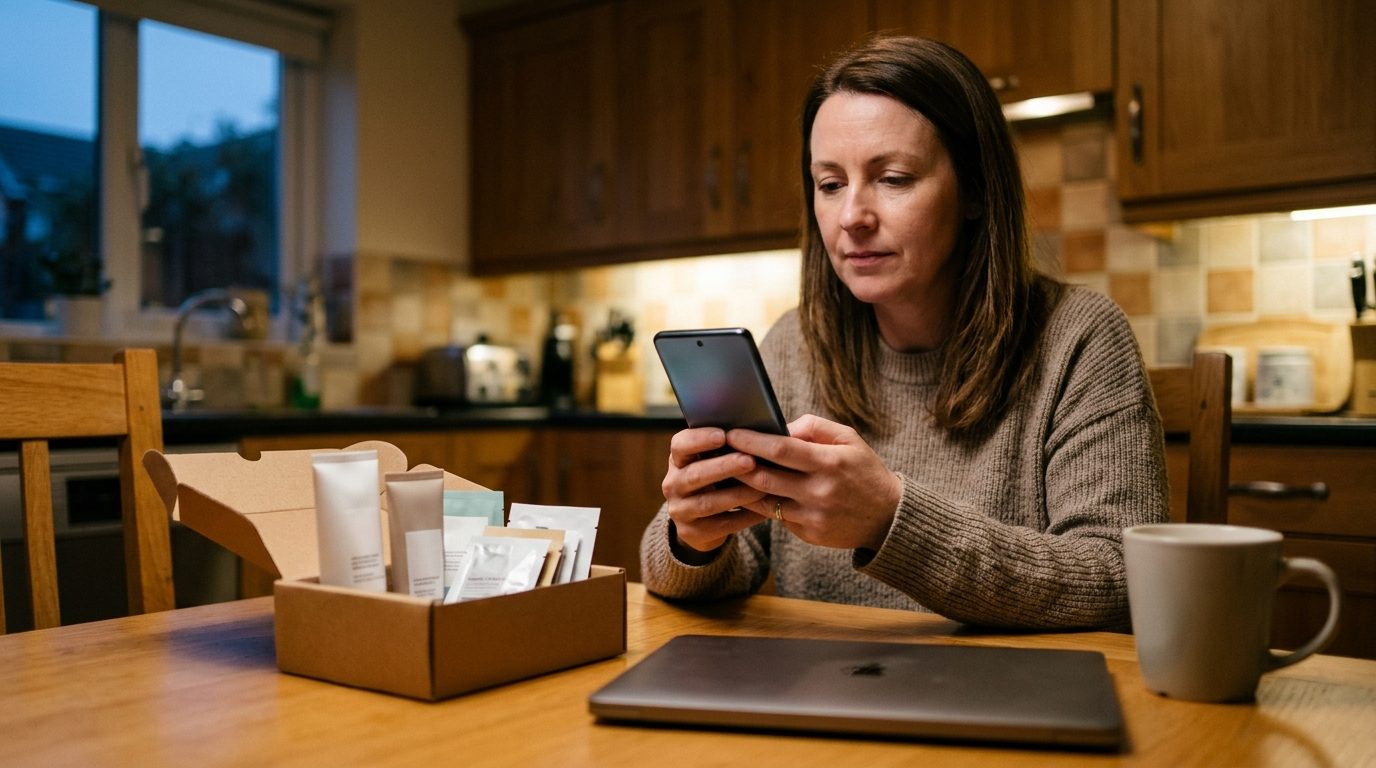
You had eleven good conversations this week. Four at the Saturday market table, three after the online party, a few referrals. It is now Wednesday, you have texted three of them, and you cannot remember which of the others wanted the sample and which one asked about joining.
That gap is where most network marketing businesses leak. The conversations happen and the follow-up does not, or it arrives nine days late as "hey girl, just checking in!" This playbook is a fixed week of prospect follow-up texts: what goes out, on which day, what each reply triggers, and when to stop.
Why prospect follow-up dies by Wednesday
The usual explanation is discipline. The real cause is mechanical. Prospect conversations sit in your personal message list, mixed in with your sister, the group chat and the pharmacy. Nothing there tells you who is owed a message today, so follow-up runs on memory, and every message gets composed from scratch while you are doing something else.
The fix has two parts. Decide the sequence once, so you already know what each day's message is. Then schedule it the same evening as the conversation, so sending no longer depends on remembering.
Sort every new contact into one of three piles first
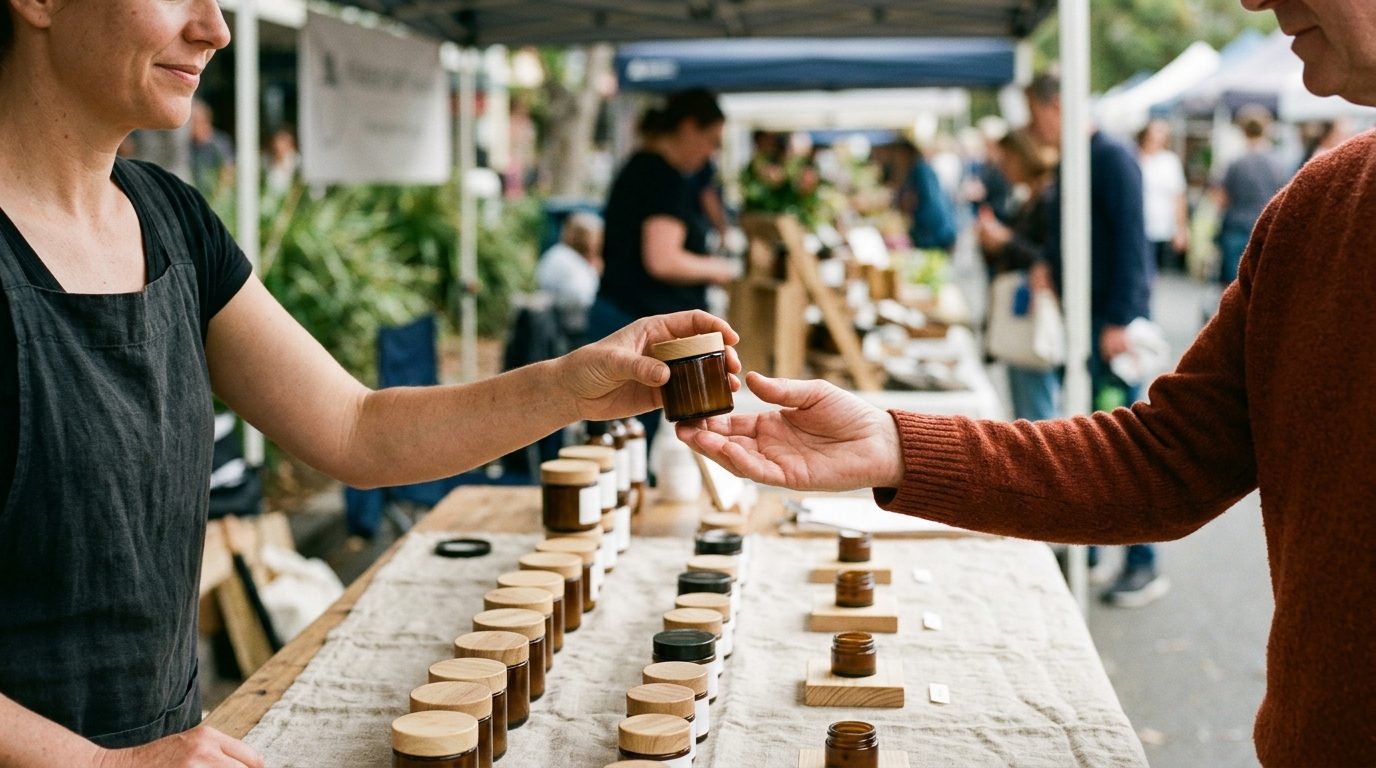 The pile decides which version of the sequence a person gets. Someone who wanted a moisturiser does not want to hear about your team.
- Product-curious. They tried it, asked the price, or took a sample. Most of your list belongs here.
- Business-curious. They asked how it works for you or what it costs to join. A small pile, and the only one that should ever hear about the opportunity.
- Polite. They were kind at the table and gave you a number because you asked. They get the first message and nothing more unless they reply.
Tag each contact the same night. In Android Texter that is a tag on the contact record (prospect-product, prospect-biz, polite), plus a second tag for where you met (market-nov21, party-jen). The source tag is how you will remember her in six weeks, and it is your note of where she gave you her number.
The five-touch week, message by message
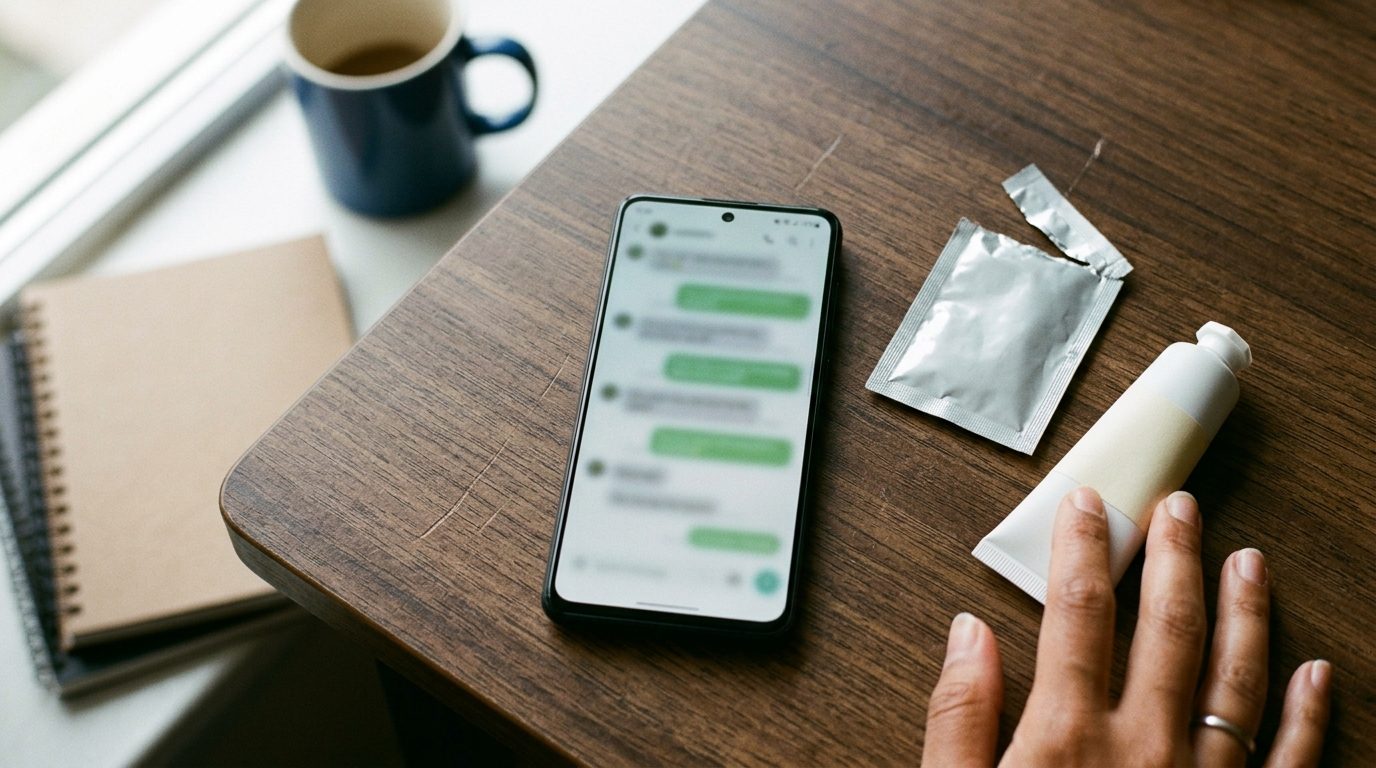 Five messages over fourteen days, then a long pause. Send the first by hand and schedule the rest that same evening. The moment the person replies, cancel whatever is still queued, because a scheduled message landing in the middle of a live conversation reads badly.
Touch 1: the same evening. Asks for nothing.
Trigger: a real conversation where they gave you their number and said yes to hearing from you. Send within a few hours.
Hi Dana, it's Marcy from the market table this morning (the one with the peppermint foot cream). Lovely to meet you. This is my number, so save it in case you have questions about the sample. No need to reply!
It names you, the place and the product, so it cannot be mistaken for spam. Its only job is to turn your number into a known contact in their phone.
Touch 2: day 2. One easy question.
Trigger: none needed. Wait two days, long enough for them to have opened the sample.
Hi Dana, Marcy here. Did you get a chance to try the foot cream yet? Curious what you thought of the scent, people seem to either love the peppermint or want the unscented one.
One question, answerable in three words.
Touch 3: day 4 or 5. Something useful, no ask.
Trigger: silence after Touch 2.
One tip I forgot on Saturday: it works best right after a shower, with socks on for twenty minutes. Most people use too much, a pea-sized bit per foot is plenty.
Keep it factual. "Works best after a shower" is a usage tip. "Fixes cracked heels in a week" is a product claim, and it needs evidence you probably do not have.
Touch 4: day 7. The direct ask.
Trigger: silence, or a friendly reply that never reached an order.
Hi Dana, I'm putting my order in on Thursday. Want me to add a full-size foot cream for you? It's $24 and I can drop it off or bring it to the market on the 5th. Totally fine if not, just say so and I'll leave you be.
A real deadline, a real price, a real handover, and an explicit exit. Offering the "no" is what gets you an answer either way. For the business-curious pile, Touch 4 invites a conversation instead:
Hi Sam, you asked on Saturday how I got started. Happy to walk you through it honestly, including what it cost me and what a normal month looks like. Would a 15-minute call Thursday evening suit?
Notice what is missing: any earnings figure, any lifestyle talk.
Touch 5: day 14. Close the loop.
Trigger: still nothing after Touch 4.
Hi Dana, I won't keep texting, I know life is busy. If you ever want to reorder or try something else, this is my number and I'm at the market the first Saturday of every month. Take care!
Then stop. Tag the contact parked with the date and leave them alone for 90 days. A closing message often gets a reply where the others did not, because it removes the pressure that was keeping the person quiet.
What each kind of reply should trigger
Decide your response to each reply type now and you will answer in a minute.
| Reply | What you do | Tag |
|---|---|---|
| "Yes, add one for me" | Confirm price, handover and payment in one message. Cancel the remaining touches. | customer |
| A question | Answer the same day, then ask one question back. | keep pile tag |
| "Not right now" | Thank them, ask if a check-in in three months is OK, schedule it if yes. | parked |
| Silence through Touch 5 | Nothing for 90 days. | parked |
| "Stop", "no thanks", "please don't text me" | One short confirmation, then never again. | do-not-text |
The first two rows cover most of your typing, so build them as quick replies. In the Android Texter inbox a quick reply is a slash shortcut that expands into a saved message: /order for the confirmation with your payment details, /drop for the drop-off arrangement. Edit the name and product before sending.
A new customer leaves this sequence and moves to a reorder cadence, covered in the direct sales reorder playbook.
The week on a calendar
 The system runs on two habits.
The evening block (20 to 30 minutes, on any day you met new people). Add each contact with a name and two tags. Send Touch 1 by hand. Then queue Touches 2 to 5 for each person with the scheduled-send picker in the composer, changing the name and product. Eleven people is forty-four scheduled messages, and you will not have to think about any of them again unless someone replies.
The reply window (10 to 15 minutes, twice a day). Pick two fixed times, say 12:30 and 8:00 in the evening. Answer everything that came in. When someone has replied, open the scheduled messages page and cancel their remaining touches.
On Sunday evening, look through your parked contacts. Anyone past 90 days gets one message that refers back to where you met.
Keeping it personal past a few hundred names
The sequence is deliberately one to one. A prospect text that could have been sent to anyone reads that way. Three things keep it workable as the list grows:
- Never broadcast to prospects. Broadcast suits customers who know you: the monthly order deadline, the market date. Prospects get their name, their product and the place you met.
- Put the business on its own line. A second Android handset with its own SIM, paired to the same Android Texter account, gives you a business number in the same dashboard inbox while your personal phone stays personal.
- Work from the browser. Typing forty-four scheduled messages with your thumbs is why people give up. The web dashboard gives you a keyboard and search across every conversation.
Most texting platforms are a poor fit here, because MLM is a restricted category on the mainstream business texting route and the restriction tends to land on the distributor as much as the company. We covered the mechanics in MLM Text Message Compliance: What Actually Gets Blocked. Android Texter sends through your own handset and carrier line, so each message is a person-to-person text from your number, with no campaign to register.
Three rules that change what you type
Sending from your own phone does not change the law that applies to the message. None of this is legal advice.
Consent. Only people who gave you their number and agreed to hear from you belong in the sequence. FCC rules under the Telephone Consumer Protection Act, at 47 CFR 64.1200, govern marketing texts to mobile numbers, and consent is your responsibility on every platform, this one included. A bought list is not a pile of prospects.
Opt-outs. When someone says stop in any wording, stop. The FCC's 2024 consent revocation order set the outer limit for honouring a request at ten business days, and the Commission revised that framework again in October 2026 (summary from Mintz). In practice, do it the same day. Android Texter does not block future sends to a number that opted out. The do-not-text tag, and checking it before you schedule anything, is your job.
Claims. The FTC's Business Guidance Concerning Multi-Level Marketing covers what participants say "in one-on-one conversations, or in any other medium," which includes a text. Earnings claims need a reasonable basis, lifestyle talk counts as an implied earnings claim, and health claims need competent and reliable scientific evidence. That is why the templates above contain no income figures and no health promises.
Frequently Asked Questions
How many times should I follow up with a network marketing prospect?
Five touches across two weeks is a workable ceiling: a same-day hello, a question on day 2, a useful tip around day 4, a direct ask on day 7 and a closing message on day 14. After that, park the contact for 90 days. Texting past that point without a reply costs you the relationship.
What should the first follow-up text to a prospect say?
Your name, where you met, the product they looked at, and nothing that needs an answer. The first text exists so your number becomes a saved, recognised contact. Asking for an order or a call in the first message is a common reason the later ones get ignored.
Should I text prospects about the business opportunity?
Only the ones who asked about it. Keep them in a separate pile from product prospects and invite them to a conversation in place of a pitch by text. Leave out income figures and lifestyle talk. The FTC treats those as earnings claims that need evidence, wherever they are made.
Can I schedule follow-up texts in advance from my own number?
Yes. Android Texter's composer has a scheduled-send picker, and messages go out through your own Android phone and carrier line at the time you set. You can view, edit and cancel anything queued from the scheduled messages page, which you will need whenever a prospect replies mid-sequence.
Run next week off it
Sort this week's conversations into piles, send the first message tonight, and schedule the other four before bed. To run the queue, the tags and the inbox on your own number, Android Texter pairs with the Android phone you already own.