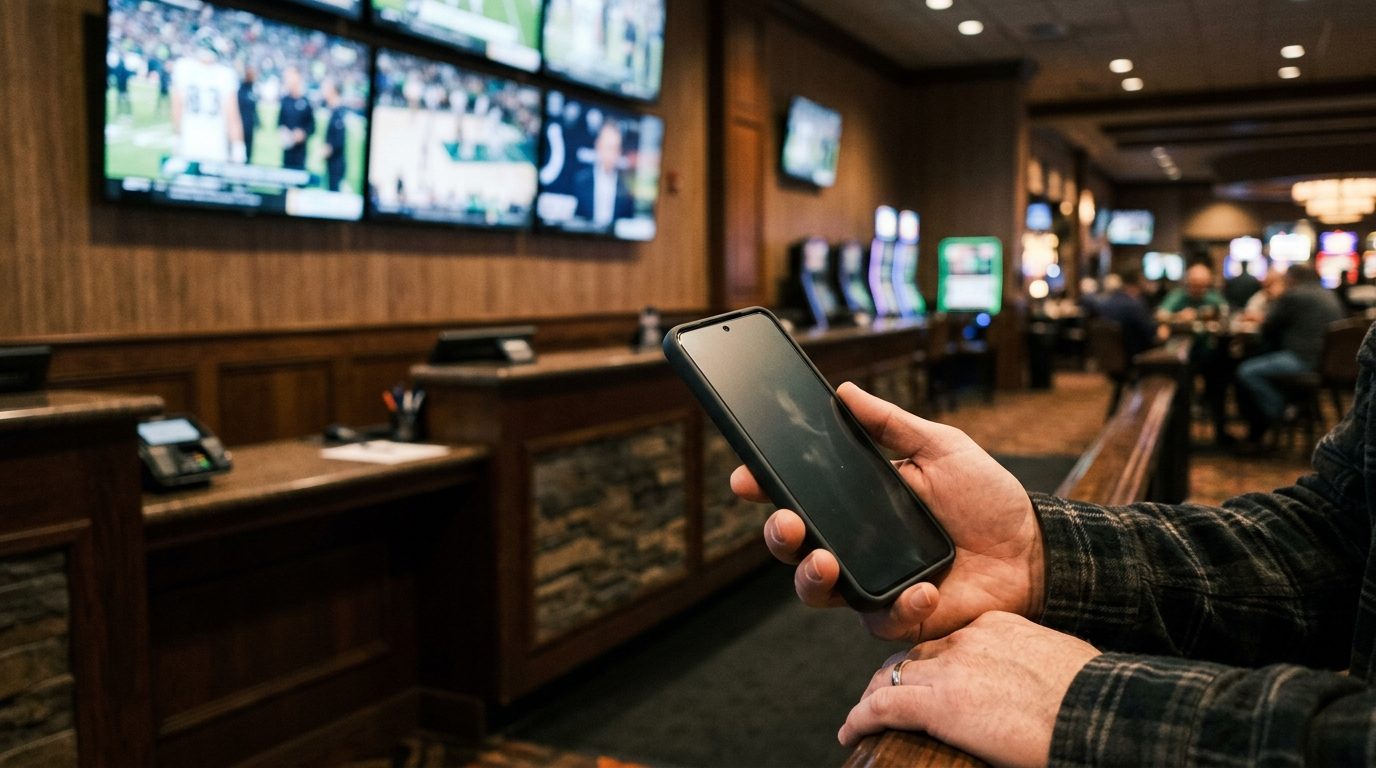
This Sunday, October 11, the Eagles play the Jaguars in London at 9:30 a.m. Eastern. If your book texts its regulars an hour before kickoff, that message goes out at 8:30 a.m. in Philadelphia, 7:30 a.m. in Chicago and 5:30 a.m. in Los Angeles. Two of those three are a problem, and that is the whole job in miniature: the text is worth the most in a narrow window before the game, and the window moves with every recipient's clock.
This is the game-day playbook for a sportsbook, a retail book inside a casino, or a host working a book of regulars by text: what goes out, when, who answers, and what to do when someone goes quiet.
Who this is written for
A handset-based channel fits a list measured in hundreds or low thousands: a retail sportsbook's opted-in regulars, a tribal or regional casino's book, a host's personal players. If you are a national app with a few hundred thousand opted-in bettors, push notifications and a registered high-volume SMS program are the better tools, and you should use them.
The smaller operator's problem is that carriers and aggregators restrict gambling content, and approval, where granted, does not move at the speed of a weekly game calendar. A text from a real phone is also what a regular already expects from the people at their book.
Why the hour before kickoff beats the day before
A Saturday text about Sunday's game competes with everything else in their Saturday. The same message 60 to 90 minutes before kickoff lands when they are already thinking about the game and the injury news has settled.
After kickoff, the value collapses. A pre-game message that arrives in the second quarter reads as noise and trains people to ignore you. So the schedule has a hard back edge: if a send cannot finish before kickoff in a given time zone, it does not go to that time zone.
The game-day send schedule
 Work backwards from kickoff, per time zone, and check every send against the calling-hour rules before it goes into the scheduler.
| When | What goes out | Who gets it |
|---|---|---|
| Day before | Nothing, unless they asked for it | n/a |
| Kickoff minus 90 to 45 minutes | The main game-day text | Opted-in regulars tagged for that sport |
| Kickoff minus 30 minutes | Nothing new. Staff work replies only | n/a |
| During the game | Nothing outbound | n/a |
| Next morning, after 10 a.m. local | The thank-you and next-game note | Anyone who replied or visited |
Two clock problems catch operators every season.
Morning games. The federal rule bars telephone solicitations before 8 a.m. or after 9 p.m. at the called party's location. For a 9:30 a.m. Eastern London kickoff, your Eastern list can get its text at 8:30. Central can get it no earlier than 8:00 local, half an hour before kickoff. Mountain and Pacific cannot get anything before kickoff at all, so skip them. Four more international games run at 9:30 a.m. Eastern this season, through November 15.
Night games. A pregame send for an 8:15 p.m. Eastern kickoff is fine, but nothing goes to Eastern numbers after 9 p.m., so there is no halftime text. In Florida the cutoff is earlier: the state's telephone solicitation statute bars these calls and texts after 8 p.m. local time.
In Android Texter, each of these becomes a scheduled message with an RFC 3339 timestamp, set from the composer's scheduled-send picker or the API's scheduled_at field. Tag contacts by time zone and sport, build one scheduled batch per zone, and check the queue at /dashboard/scheduled before the morning. If a game moves, cancel the batch there.
Sizing the send to your handsets
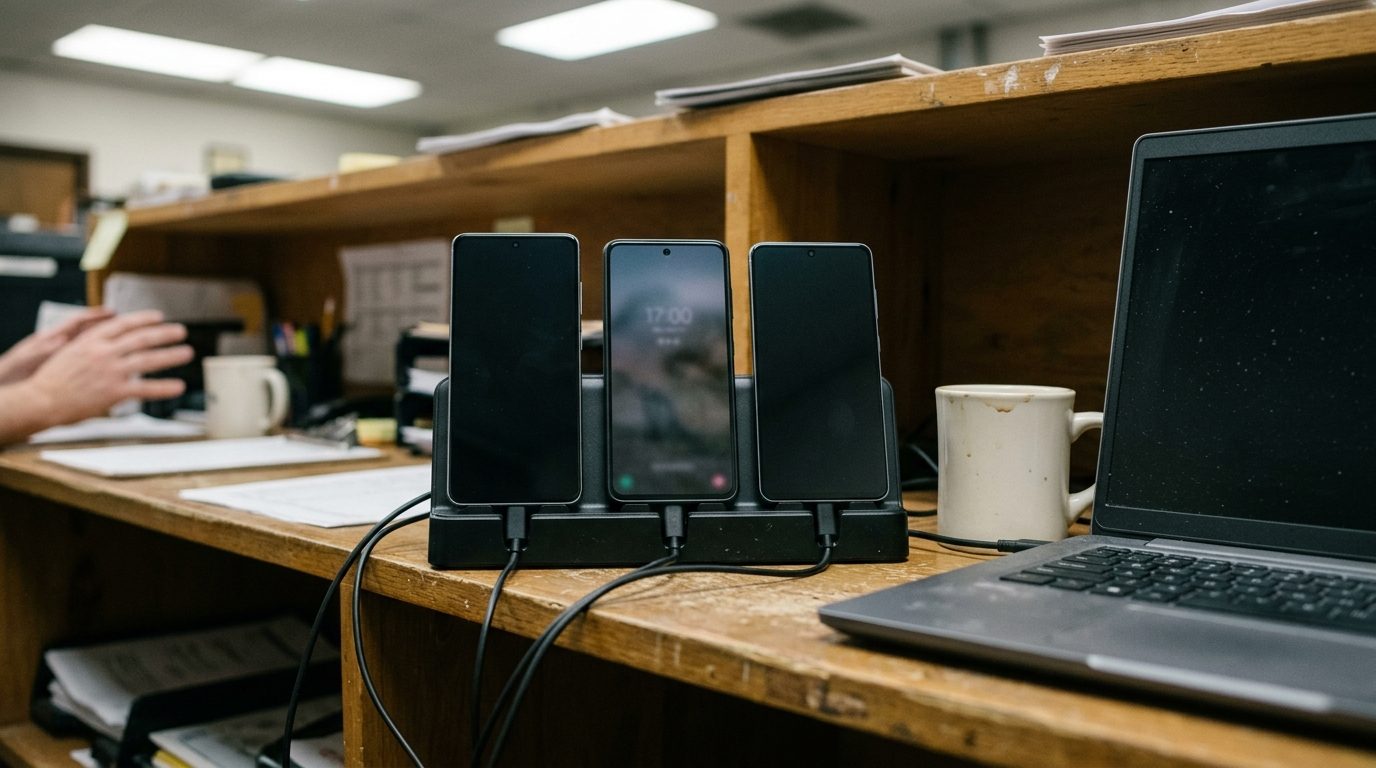 Carriers judge a handset line by how it behaves, and a phone that fires 600 identical texts in four minutes does not look like a person. The planning figure we give real estate operators is roughly 100 to 200 sends per handset per day. A game-day list therefore sets your device count, not the other way round.
If your Sunday list is 450 regulars, that is three paired phones, each carrying about 150 messages spread across the 45-minute window. Pin each segment to a phone with device_id on the send call, so the same regular always hears from the same number. A player who gets the Week 3 text from one number and the Week 4 text from another stops recognising it as yours.
The API will accept a broadcast of up to 500 numbers in one call. On game day, resist that. Several smaller scheduled batches per device, a few minutes apart, look like a host working their phone, which is what this is meant to be.
Five templates you can send this week
Every template below identifies the book, says 21+, carries a responsible gaming line with a helpline, and offers an opt-out. Fill the helpline placeholder with the number your state regulator requires (more on that below). None of them takes a bet: the text points to the app or the window, and wagers go through your licensed platform with its own age and location checks.
1. The main game-day text (kickoff minus 90 to 45 minutes, opted-in regulars tagged for the sport)
Hi Dana, it's Marcus at [Book]. Eagles-Jaguars kicks off 9:30 ET from London. Today's lines and the Sunday boost are up in the app. 21+. Gambling problem? Call [helpline]. Reply STOP to opt out.
On no reply: nothing. One message per game. Silence on game day is normal.
2. The retail window text (for a book inside a casino, sent the morning of a full slate)
[Book] at [Casino]: windows open at 11 for the 1:00 games, kiosks are up by the main bar. Bring a valid ID, 21+. Gambling problem? Call [helpline]. Reply STOP to opt out.
On no reply: nothing. This one is information.
3. The reply-handling quick reply (saved as /line, used when someone texts back asking for a line or trying to place a bet)
Thanks! Lines for that game are in the app under Football. I can't take a bet by text, but I'm happy to help with your account or anything at the window.
4. The next-morning note (after 10 a.m. local, to anyone who replied or came in)
Thanks for coming in Sunday, [first name]. Thursday's game is on the big screens from 7. You can set deposit or time limits anytime in the app. 21+. Gambling problem? Call [helpline]. Reply STOP to opt out.
Do not mention results, losses or a "make it back" angle. The next-morning note is about the next visit, nothing more.
5. The quiet-player check-in (after three game weeks with no reply and no visit, sent once)
Hi [first name], Marcus at [Book]. Haven't seen you this season, no pressure. If you'd rather hear from us less, reply LESS and I'll switch you to a monthly note. Reply STOP to opt out. 21+. [helpline]
Set an auto-reply rule on LESS that confirms the change, then move that contact's tag from weekly to monthly. If this check-in gets no reply either, they stay on the monthly tag. They do not get a fourth weekly text.
Who owns the inbox on game day
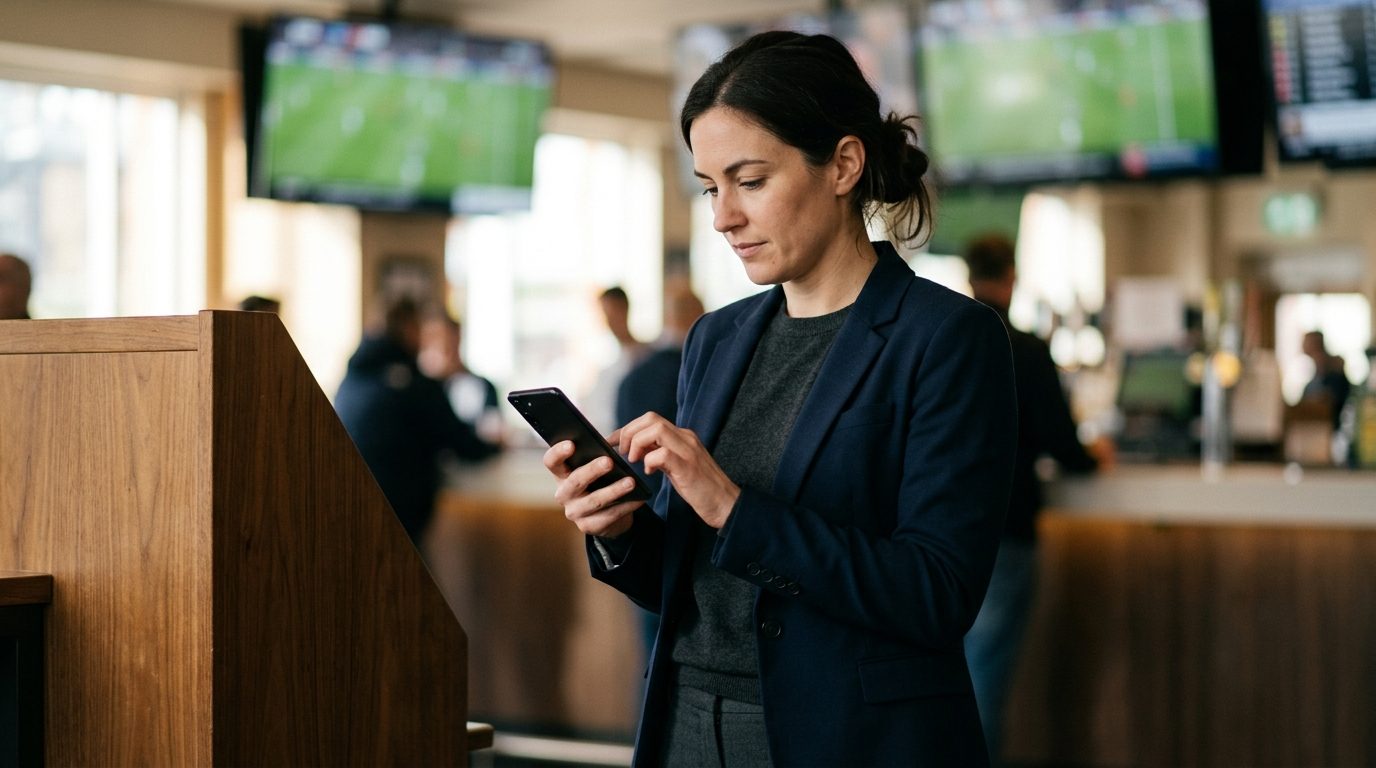 Replies cluster between the main send and kickoff. Someone has to be on the inbox for that 45 minutes, and it should be the host or the counter lead whose name is in the message, not whoever is free.
Build a short quick reply set before the season: /line (template 3), /hours for window and kiosk times, /acct pointing account questions to the cage or support, and /help with the responsible gaming resources. Android Texter tracks usage counts on quick replies, so you will see which ones staff actually use.
Two things are machine jobs, not staff jobs. STOP and the other opt-out keywords are handled by auto-reply rules that confirm and suppress automatically. And if your host team already talks in Telegram, a forwarding rule can mirror inbound game-day texts into that channel, so a reply that arrives while the host is on the floor still gets seen.
What to measure
Track replies, opt-outs and replies that needed a human for each send, and set them beside what your own systems show, such as app logins in the window or retail foot traffic. Opt-outs matter most. If one sport or time slot produces most of them, cut frequency there before you touch the copy.
The rules that change what you send
Each item here changes a template above.
- Self-exclusion comes first. Scrub every send against your state's self-exclusion list and your own internal exclusions, every week, before the batch is scheduled.
- The AGA code covers texts. The American Gaming Association's Responsible Marketing Code for Sports Wagering applies to "commercial marketing emails or text messages," requires an opt-out in each one, asks for a responsible gaming message with a toll-free helpline where practical, and bans "risk free" language. Check whether a newer revision has been published since the March 2023 version.
- The helpline number has changed. The National Council on Problem Gambling adopted 1-800-MY-RESET as the national helpline in January 2026, after a court returned 1-800-GAMBLER to the New Jersey council. New Jersey's own standards require 1-800-GAMBLER in its ads. Use what your regulator specifies, and recheck it rather than copying it from last season's template.
- Consent and opt-out are yours. A2P registration is a carrier gate that person-to-person traffic from a handset is not subject to. The TCPA applies in full, regardless of channel. Our posts on what counts as a STOP and on which industries are blocked from SMS marketing cover the background. For the host side of the book, see the sportsbook and casino VIP playbook.
Frequently Asked Questions
What time should a sportsbook send game-day texts?
Between 90 and 45 minutes before kickoff, in the recipient's local time, and only if that time falls inside the federal 8 a.m. to 9 p.m. window (8 p.m. in Florida). Schedule one batch per time zone. If a zone's window closes before kickoff, as Pacific does for a 9:30 a.m. Eastern London game, skip that zone rather than sending late or early.
Can customers place a bet by replying to a text?
No, and your staff should say so plainly. A text reply cannot run the age verification and geolocation checks a licensed platform performs before accepting a wager. The text should point to the app or the window. Keep a saved quick reply that redirects bet requests, so nobody improvises on a busy Sunday.
How many game-day texts are too many?
One per game per player is the ceiling for most books, plus a next-morning note to people who engaged. If someone ignores three straight game weeks, send a single check-in offering a monthly option and move them to it. Watch opt-outs by sport and time slot. A rising rate in one segment means you are texting it too often.
Do sportsbook texts need a responsible gaming message?
The AGA code asks for a responsible gaming message and a toll-free helpline in each message where practical, plus an opt-out in every text. Many states set their own requirements, including which helpline number must appear. Check your regulator's current advertising rules, because the national helpline number changed in 2026 and some states still require their own.
Run game day from the phones you already have
If your list is in the hundreds, the channel can be the host's own number on a handset you control. Android Texter pairs your Android phones to that dashboard so Sunday's batches are queued by Saturday night.