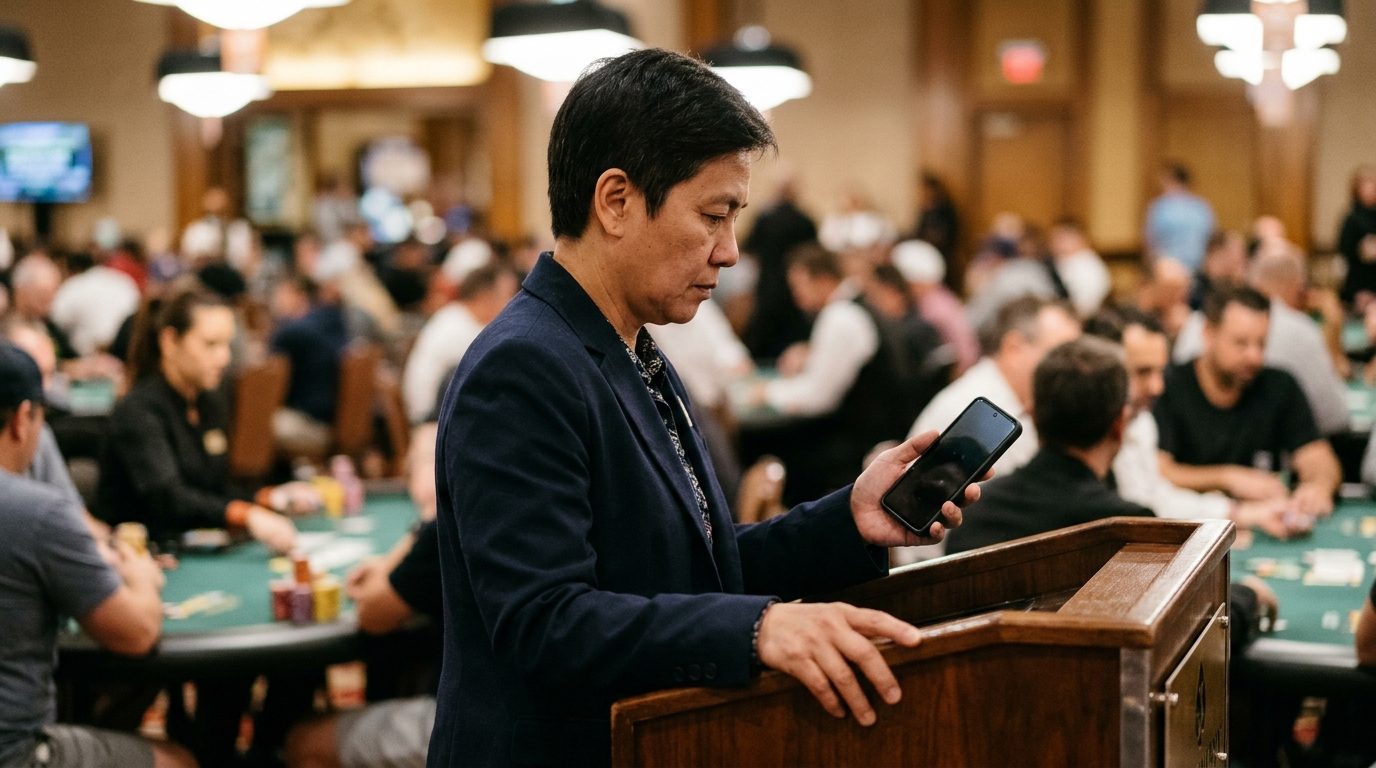
It is 11:40 on Saturday morning. The $20,000 guarantee starts at 2, the buy-in puts $200 a head into the prize pool, and the clerk has 58 entries. You need 100 to cover it, and every seat short of that comes out of the room's pocket as overlay. Meanwhile the 2/5 PLO interest list from Thursday has five names on it and never became a game.
Both are the same problem: the players exist, they are twenty minutes away, and they do not know the room needs them right now. A text from the poker room's own line fixes that faster than a phone tree or a Facebook post. Here is how to run that line: what gets a text, what each message says, when it goes, who answers, and how to tell whether it moved entries.
Give the poker room line three jobs and no more
The poker room line fills tournaments, starts cash games that are a few players short, and answers questions from players before they drive in. Seat-open pings stay where they already live: if your waitlist system texts a player when a table spot opens, leave that alone.
Before the first send, sort the list. In the Android Texter dashboard, contacts carry tags, and the tags are what keep a PLO player from getting no-limit tournament texts all month. A starting set:
tourney-majors: wants to hear about guarantees and series eventstourney-daily: plays the weekday dailiesplo,mixed,big-game: cash game interest lists, one tag per game that is hard to startlocals: lives close enough to act on a same-day text
Ask at the podium when a player joins the list: "Tournaments, cash, or both, and which games?" Then set the ceiling and write it down. One tournament text a week to anyone on a tournament tag, plus a same-day message only to players who are local. Game-start texts go only to that game's tag, and no more than two a week.
The tournament week: three sends, each with a job
 A guarantee gets three messages. A regular daily gets at most the same-day one when the count is soft.
Send 1: the announcement. Trigger: the structure sheet is final. Timing: five or six days out, late morning. Audience: tourney-majors.
Template 1: "[Room] Poker: $20K Guaranteed this Saturday at 2pm. $230 buy-in, 20K starting stack, 30-min levels, late reg through level 8. Reply IN and we'll send a reminder, or STRUCTURE for the full sheet. Reply STOP to opt out."
The "Reply IN" is the point of the message. Nobody is being registered by text, and buy-ins still happen at the cage. You are building a short list of players who intend to play, tagging each one in-sat as the replies arrive. That tag is the audience for the next message.
Send 2: the day-before reminder. Trigger: Friday, late afternoon. Audience: in-sat only.
Template 2: "[Room] Poker: see you tomorrow, {first name}. Cards in the air at 2pm, registration opens at noon, and the cage line is shortest before 1:30. Reply here if you have questions. Reply STOP to opt out."
Send 3: the same-day count. Trigger: two hours before start, entries are behind where they need to be. Audience: locals on a tournament tag who are not already registered. If the count is healthy, skip it.
Template 3: "[Room] Poker: $20K Guaranteed starts at 2pm today. Seats open now, late reg until about 5pm. Reply here if you want anything checked before you drive in. Reply STOP to opt out."
Two hours is not a guess. In an old Mobile Commerce Daily case study, bestbet Jacksonville texted a list of about 500 opted-in players roughly two hours before a $50,000 guarantee and reported 25 additional sign-ups within an hour. The numbers are the room's own and the piece is more than a decade old, so treat it as a shape and not a forecast. A local can act on two hours' notice. They cannot act on twenty minutes, and they forget a message from the night before.
On no reply: nothing. Clear the in-sat tag on Sunday so it does not leak into next week.
Starting a cash game that is three players short
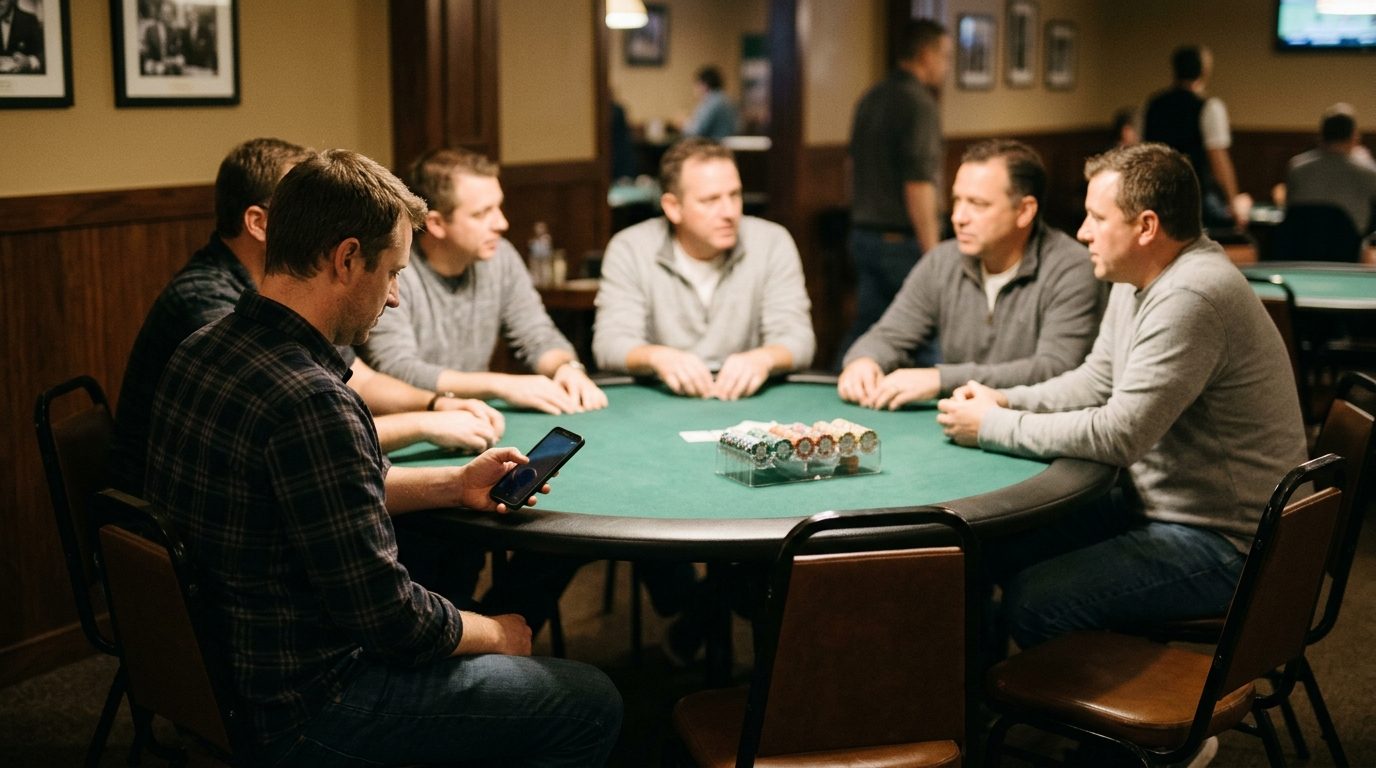 Trigger: an interest list for a hard-to-start game has at least half a table of names in the room or committed. Audience: that game's tag, locals only. Who sends: the floor supervisor, not marketing.
Template 4: "[Room] Poker: we have 5 for 2/5 PLO tonight and need 3 more to start at 7pm. Reply IN to lock a seat and we'll put your name on the list. Reply STOP to opt out."
Give it twenty to thirty minutes. Add each IN to the interest list in the order the replies arrived, and answer every one so the player knows the seat is real.
Then send the message most rooms skip. Everyone who replied IN gets the outcome:
Template 5 (game on): "[Room] Poker: PLO is a go. 8 locked for 7pm, your seat is held until 7:15. See you tonight."
Template 6 (game off): "[Room] Poker: we came up short for PLO tonight, so no game. Thanks for raising your hand, {first name}. We'll try again Thursday."
Template 6 protects the list. A player who drives forty minutes to a game that never started stops answering game-start texts. A room that reliably reports "no game" gets believed the next time it says "game on."
Who holds the phone, and what they say all day
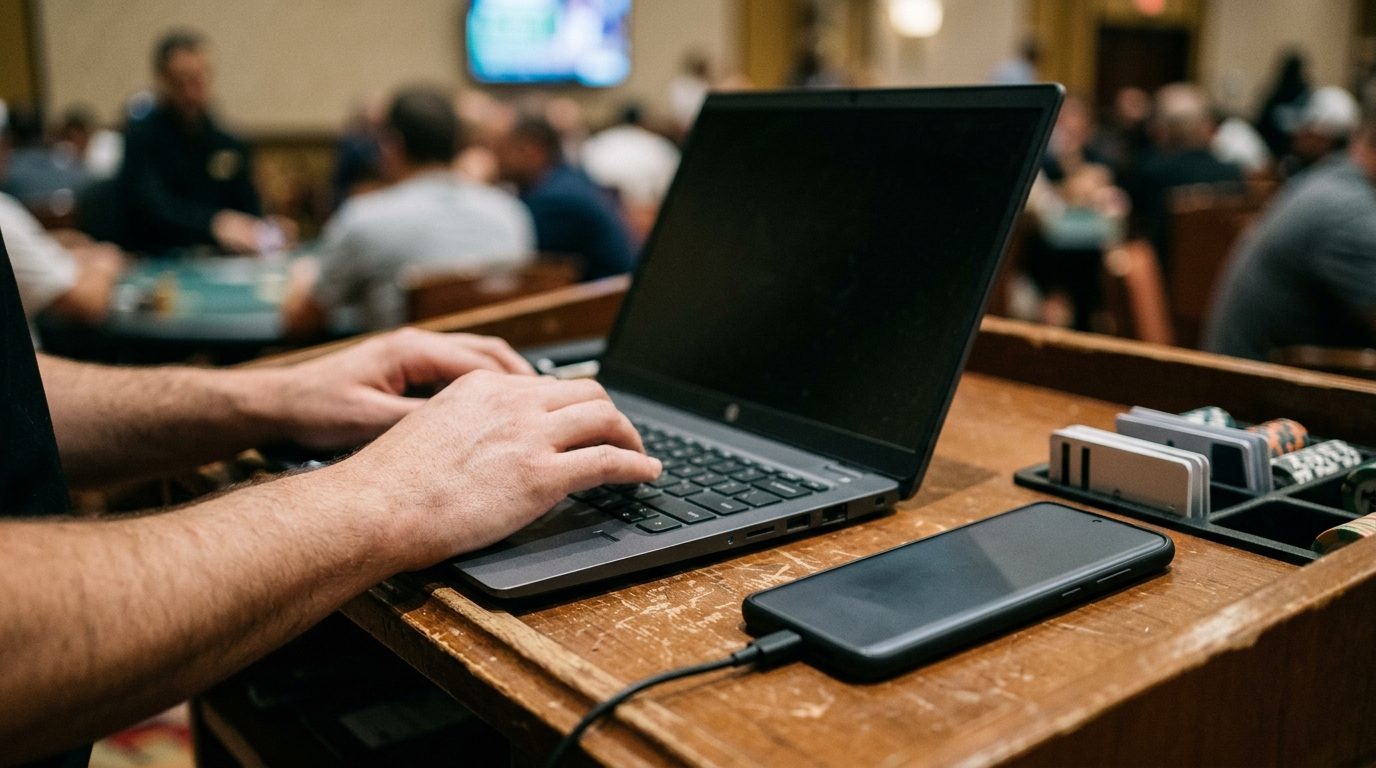 One named person per shift owns the inbox, and it should be someone at the podium: the floor supervisor or the brush. Marketing can write the announcement, but cannot answer "is there a 1/3 seat right now." The handset can sit on a charger: the work happens in Android Texter's web dashboard on the podium computer, where every reply lands in one threaded inbox.
Most replies are the same five questions, which is what quick replies are for. A slash shortcut in the composer expands to a saved answer:
/structure: link to the structure sheet/latereg: when late registration closes and the re-entry rule/games: what is running now (edit it at the start of each shift)/list: how to get on a list by phone, and how long a called-in name is held/in: "Got you down, {first name}. See you then."
Usage is counted per quick reply. If /latereg tops the list every week, the announcement is not stating it clearly enough.
Two keyword auto-reply rules take load off the podium. An inbound "STRUCTURE" returns the structure link with no human involved. A second answers STOP and its relatives with a confirmation (the last section covers what that rule does not do). A forwarding rule can also mirror inbound messages to the tournament director's phone or a Telegram channel during a major.
Escalate the same shift: a dispute about a seat that was promised by text, a complaint about a floor ruling, and anything that reads like a request to stop receiving offers because the player wants to stop gambling. That last one goes to the shift manager immediately and is never answered with a quick reply.
Pacing the send across the day
A handset has to send like a person does. Our working guidance is roughly 100 to 200 sends per phone per day before one line starts to look like a burst to a carrier's velocity filters. The reasoning is in SMS sending limits per phone number.
A tourney-majors tag of 350 players is two days on one phone or one day on two. Android Texter pairs several Android phones to one account, each with its own number, and a send can be pinned to a specific device or routed automatically. The Monday announcement can be scheduled ahead in the composer.
A handset is the wrong tool for a large property with a six-figure database and a carrier-approved short code program, which should use that program. For everyone else, aggregator policy is the wall: one provider's published list says messaging related to gambling is "generally not supported" across 10DLC, toll-free and short code, with possible exceptions only for short code programs that have prior carrier approval. A standalone card room with a few hundred regulars is unlikely to get that on a tournament director's timeline.
Measuring whether the texts filled seats
SMS gives you no open rate worth trusting, so count at the cage and the podium.
- Entries at two hours out against final entries. Log both every week. Compare weeks with a same-day text against weeks without one.
- IN replies that registered. Of the players tagged
in-sat, how many are on the entry list? - Overlay dollars. Track it per guarantee, before and after.
- Games started from a text. Keep a tally by game type and stop texting for the ones that never make.
- STOPs per send. A rising count means the tags are wrong or the ceiling is being ignored.
Consent, STOP and the exclusion list
Consent is yours to collect and prove. A player who gave a number for the waitlist has not necessarily agreed to tournament marketing. Ask separately at sign-up and keep the record. The TCPA applies to these messages exactly as it would through any other provider, and sending from a handset does not reduce that exposure in any way. Keep promotional sends inside the 8 a.m. to 9 p.m. local window in 47 CFR 64.1200(c)(1).
STOP is manual. The same rule, at paragraph (a)(10), treats a reply of stop, quit, end, revoke, opt out, cancel or unsubscribe as a valid revocation, to be honored within ten business days at the outside. Android Texter does not suppress those numbers for you. The auto-reply rule only sends a confirmation. Keeping the suppression list and checking it before each send is the room's job. Our post on why ignoring STOP replies wrecks delivery covers the practical side.
Scrub exclusions before every send. Pennsylvania's rule is a good example of how these are written: licensees must have procedures to ensure self-excluded persons do not receive "targeted mailings, telemarketing promotions, player club materials or other promotional materials". Check your own jurisdiction's rule, its minimum age and any required responsible gaming language, and add that language to the templates above. For the wider picture of why gambling is refused at the aggregator, see which industries are blocked from SMS marketing.
Frequently Asked Questions
When should a poker room text players about a tournament?
Three times for a guarantee: an announcement five or six days out, a day-before reminder to players who replied IN, and a same-day message about two hours before start to local players who have not registered. Regular dailies usually need no text unless the count is soft that morning.
How do you use text messages to start a poker cash game?
Text only the players tagged for that game once you have about half a table committed. Say how many you have, how many you need and the start time, and ask for a reply of IN. Then tell every player who replied whether the game made, including when it did not.
Does texting from an Android phone change a card room's TCPA obligations?
No. Sending from the room's own handset means there is no aggregator campaign to get approved, but the TCPA, state gaming rules and self-exclusion obligations all apply in full. Consent records, send hours and opt-out suppression remain the room's responsibility.
Put the room's line on the podium
If your tournament texts keep getting refused by an aggregator, or your list is a size one floor supervisor can actually talk to, Android Texter lets you send every message above from Android phones the room owns, with tags, scheduled sends, quick replies and one shared inbox. Pair a phone this week and send the Saturday announcement from it.