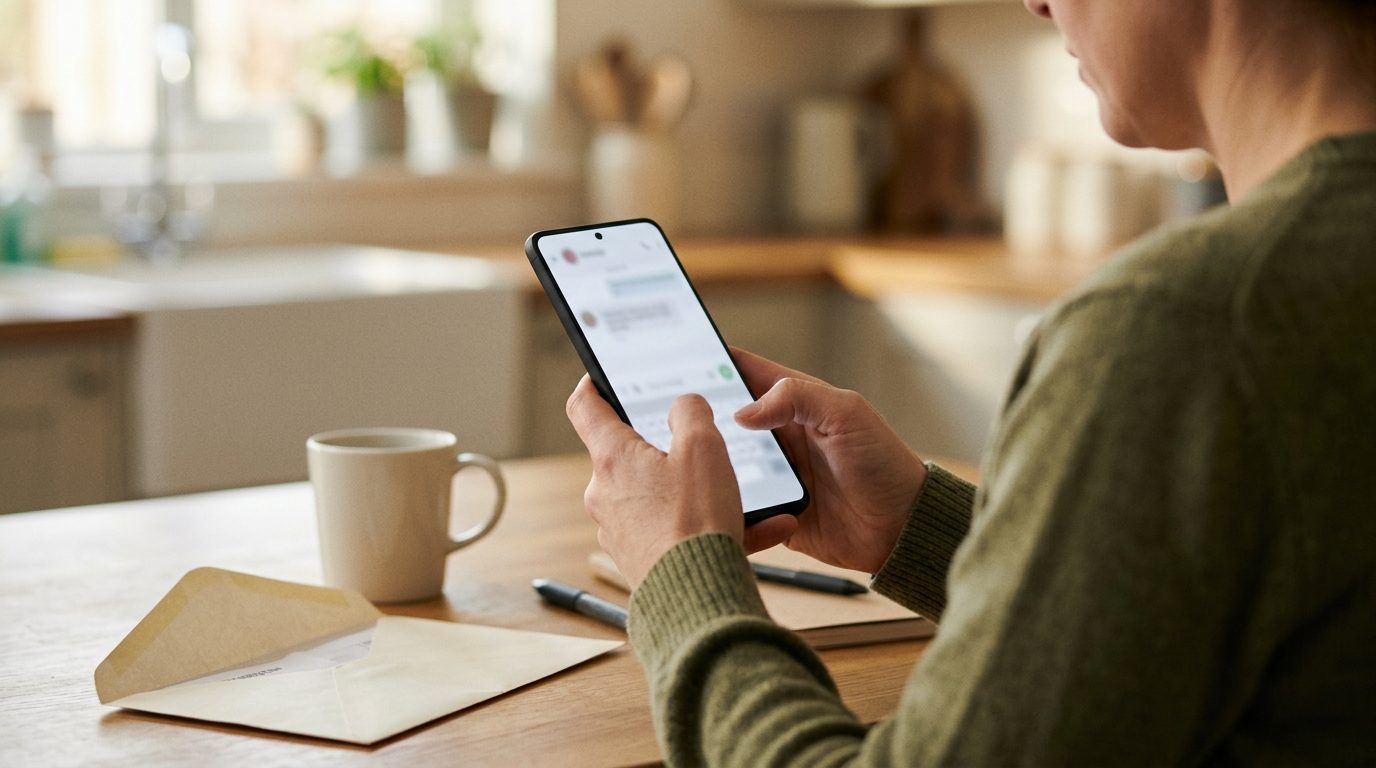
The auto-reply already went out. The lead replied "yes" to your solar client's form eleven minutes ago, and now a human has to work out whether this is a homeowner with a real electric bill or a renter who tapped an ad on the bus. Your client either pays per qualified lead or pays a retainer and complains every Friday about junk. Either way, the qualifying conversation is where a lead generation agency earns its fee, and nobody writes it down.
The auto-reply and delivering the finished lead are already covered. This article is the middle: the sequence, the no-reply ladder, who answers, and how the lead gets handed over.
Agree on "qualified" with the client before you write a text
Every dispute about lead quality traces back to a definition nobody wrote down. Before the first setter sends a message, get three or four criteria into the client agreement, each one answerable in a single text reply. For a residential solar client that might be: owns the home, monthly electric bill above the client's floor, wants to move within about 90 days.
Three rules follow:
- Ask the disqualifier first. A renter should cost you a single text, not four.
- One question per message. Two questions in one text get one answer, usually the easier one.
- Every question maps to a field the client's rep will see. If the answer does not change the call, stop asking it.
The qualifying sequence: five messages
Message zero is the auto-reply, fired by an auto-reply rule the second the form lands, and its only job is to say a human is coming and roughly when. Everything below is sent by a person, from the handset dedicated to that client.
Message 1, the disqualifier. Trigger: the lead replied to the auto-reply, or five minutes have passed in business hours without a reply. Wait after sending: 20 minutes.
Hi [Name], this is Dana with [Client]'s team. Quick one so I don't waste your time: do you own the home at the address you entered, or rent?
Message 2, the sizing question. Trigger: a qualifying answer to message 1. Send it within a minute or two, while they are still holding the phone.
Got it, thanks. Roughly what's your electric bill in a normal month? A ballpark is fine: $100, $200, $300 and up.
Message 3, the timeline. Trigger: an answer to message 2. The wording should make "just looking" a safe answer, because a lead who says it is still a lead.
Last one. Are you hoping to get this done in the next couple of months, or just starting to look? Either is fine, it just changes who I connect you with.
Message 4, the handoff. Trigger: every criterion met. Name the client's rep, say when they will reach out, and ask one question so the lead stays in the conversation.
Perfect, you qualify for [Client]'s program. Marcus covers your area and will call you from this number between 2 and 4 today. Does that window work, or is evening better?
The close for a disqualified lead. Trigger: a failing answer at any step. Send it every time, because the client's name is on the thread.
Thanks for answering. [Client] only installs on owner-occupied homes, so I won't book a call. If that changes, text me here and I'll pick it straight up.
Most qualified leads move through all five in under ten minutes of elapsed time when the setter is at the desk. A sequence that stalls an hour between questions hands the lead to whichever competitor they also filled a form with.
The no-reply ladder
Silence after message 1 is the most common outcome, so the ladder has to exist before the first lead arrives. Each rung is a scheduled message, queued when the previous one goes out and cancelled if the lead replies.
- Plus 20 minutes, business hours only.
No rush, [Name]. I just need a yes or no on whether you own the home and I can get you to the right person.
- Next morning, 9 to 10 in the lead's time zone.
Morning [Name]. Still happy to get you a quote from [Client]. Own or rent?
- Day 3, a different angle. Stop asking the question and offer an exit that keeps the door open.
Hi [Name], Dana again. If now's a bad time I can hold your spot and check back next week. Want me to do that?
- Day 7, the close-out.
Closing out your request with [Client] for now. If you still want the quote, reply YES any time and I'll reopen it.
A lead who goes quiet after answering message 1 or 2 gets a shorter ladder: one nudge the same day, one the next morning, then the day 7 close.
One reply that behaves like silence is "who is this?" Identify yourself and anchor to the thing they did, never with a pitch.
Dana with [Client]. You asked for a solar quote on [website] on Tuesday evening. Want me to go ahead, or cancel the request?
If they say cancel, cancel it, tag the contact and record the date. If they say they never filled out a form, close the thread and flag the lead source to the client.
Who owns the inbox
The setter owns every qualifying thread, start to finish. The client's rep does not see a lead, and does not text one, until message 4 has gone out. Two people texting the same lead from two numbers is how a warm lead goes quiet.
One handset per client. Each client gets a paired Android phone with its own number, so one client's list cannot damage another's reputation, and the setter sees which client a thread belongs to from the device name in the shared inbox. The setup is in our multi-client agency playbook.
Build the sequence as quick replies. Each message above becomes a slash shortcut in the composer, so every setter sends the same wording. Android Texter counts how often each quick reply is used, which shows you after a month which rungs of the ladder the setters skip.
Give the client a window, not a keyboard. An SMS forwarding rule can route inbound from a client's handset into a Telegram channel. Put the client's rep in that channel and they watch the handoff live without being able to text the lead themselves. A business-hours auto-reply rule covers the evening, so nobody is texting at 10 p.m.
Handoff: three outcomes and what each one triggers
Every thread ends in one of three states, each a tag on the contact.
Qualified. Deliver the lead with a four-line summary: name, the three answers, preferred callback window, as a text from the client line or into the client's CRM. On the automation side, a webhook on message.received, or the Zapier app's inbound trigger, can feed a Create or Update Contact step that tags the lead and pushes it to the client's CRM.
Disqualified. Send the close, tag the contact, do not deliver. Report the count to the client monthly, because a client who sees how many leads you filtered out stops arguing about the ones you sent.
Parked. No reply by the day 7 close. Tag the contact with the month. These reopen only with a reason, such as a new offer from the client, and only within the scope of the consent the lead gave on the form.
The week, and the four numbers to track
Monday morning, the weekend's form fills are in the inbox with the auto-reply already sent, and the setter runs message 1 across all of them before 9:30 in the lead's time zone. Every weekday after that, scheduled nudges fire on their own, new leads get message 1 as they land, and the day 3 and day 7 steps go out in the afternoon.
Track four numbers per client, per week:
- Reply rate to message 1. Low means the wording, the send time, or the form's phone field is the problem.
- Qualification rate, qualified divided by replied. High reply and low qualification is a targeting problem on the client's ads, and that is a conversation with the client.
- Form-to-handoff time, from submission to message 4. Thread timestamps in the inbox, or the conversation history endpoints on the API, give you this without manual notes.
- Client acceptance, the share of delivered leads the client did not dispute. If it slips, the criteria have drifted.
Consent, hours, and a ruling from Texas
This sequence is built for people who submitted a form with a texting disclosure on it. What counts as proof of that consent, and why it has to be per client, is in our article on TCPA consent for purchased leads.
Hours. Federal rules bar telephone solicitation to a residential subscriber before 8 a.m. or after 9 p.m. at the called party's location, and several states draw the window tighter. The next-morning nudge is scheduled in the lead's time zone for that reason.
STOP. Android Texter can match STOP with an auto-reply rule and send a confirmation, but it does not keep a suppression list and nothing in the send path checks for a prior opt-out. The agency builds and honours that list, per client. Why ignoring STOP wrecks delivery covers how.
Texts are calls, at least in Texas. On November 16, 2026, a federal court in the Western District of Texas refused to dismiss a TCPA suit against the insurer The General over marketing texts allegedly sent without consent, declining to depart from the district's position that a text message is a call for Do Not Call purposes. For an agency the line is simple: message 1 to a number the lead typed into your form is a reply to a request. The same message to a number you bought is a solicitation. This is not legal advice, and the channel you send on does not change it.
Where Android Texter fits
Lead generation sits in the soft-restricted tier under A2P 10DLC, so an agency can wait on campaign vetting for every new client, and one bad list can hurt a shared sender. Android Texter routes messages through a paired Android handset as person-to-person SMS, so there is no campaign to register per client, and everything in this playbook is a feature it ships with: auto-reply rules, quick replies, scheduled messages, forwarding to Telegram, webhooks and the Zapier app. Where it is the wrong tool: a large agency with registered brands and six-figure monthly volume should stay on an A2P provider, because a handset sends what a person sends in a day. The TCPA applies in full either way.
Frequently Asked Questions
How many qualifying questions should a text sequence ask?
Three, occasionally four, and never more than one per message. Put the question most likely to disqualify the lead first, so a bad lead costs one text. Every question should map to a field the client's rep will use on the call, and if the answer does not change what happens next, cut it.
What do I do when a lead answers "who is this?"
Identify yourself and anchor to what they did: the client name, the website, the day they submitted. Then ask whether to proceed or cancel, and do not pitch. If they never filled out a form, close the thread and flag the lead source to the client.
Should the client's sales rep text the lead during qualification?
No. The setter owns the thread until the handoff message has gone out, because two people texting one lead from two numbers is how leads go quiet. Give the rep visibility by mirroring the client's line into a Telegram channel, then hand off with a summary.
If the carrier gate is what stands between your agency and a working text channel, Android Texter gives each client its own handset and one inbox to run them from. Pair a phone, build the quick replies above, and run next week's leads off it.