
Your wallet infrastructure is going down for an upgrade on Thursday at 2:30 a.m. You already know what Friday's support queue will look like if customers find out the hard way: "where is my deposit," forty times, from people who sent funds at 2:40. The status page has had the notice up for a week. Almost nobody read it.
This playbook is for the ops or support lead at a small exchange, OTC desk, or wallet service who wants planned downtime to pass quietly. It covers who gets a text, the four sends, the reply inbox, and what to count afterwards. Unplanned outages and breaches are a different job, and we wrote that one separately in the security incident playbook.
Why the status page alone doesn't cover you
A status page is a pull channel. The customer about to send a deposit at midnight is not thinking about your infrastructure calendar.
The stakes are specific to crypto. When Binance.US scheduled wallet maintenance for March 19, 2026, the notice said deposits and withdrawals would go offline at about 2:25 a.m. EST for roughly 30 minutes across all assets and networks, that trading would stay available, and, in capitals, that deposits made or in progress during the upgrade "will NOT be credited."
Your own rules for in-flight deposits may be gentler. Whatever they are, they are the one fact a customer needs before the window, and a text is the channel most likely to deliver it in time. Larger venues already treat SMS as part of the stack: Gemini's status page offers text notifications whenever it creates or resolves an incident.
Decide who gets the text before you write it
Most maintenance touches one thing: a single network's wallets, fiat rails, or the API. Text only the people it affects.
- Tag contacts by what they use. Network or asset (BTC, ETH, SOL), fiat rails, API.
- Tag by time zone. Every send below is timed to the customer's waking hours, so you need to know when those are.
- Keep a short VIP or OTC tag. They get the same notice from a named person and a fast human reply.
Atlassian's Statuspage team puts the risk plainly in its guide to maintenance messages: "it's easy to become the boy who cried wolf with maintenance announcements." If the work has no customer-visible effect, post it on the status page and send nothing. Text when deposits, withdrawals, trading or logins will be unavailable.
The four-message sequence
 The same Atlassian guide says larger impacts call for longer lead time and a reminder closer to the window. For a deposit and withdrawal pause, that translates into four sends.
1. The announcement, three days before. Send late morning in the customer's time zone. It names the window, what pauses and what keeps working.
[Desk name] service notice: wallet maintenance Thu Mar 19, 2:30 to 3:00 AM ET. Deposits and withdrawals pause for all assets. Trading stays open. Nothing to do right now. We'll remind you Wednesday. Reply STOP to opt out.
2. The reminder, the afternoon before. This is the one that prevents tickets, because it carries the instruction. Fill the last sentence with your real policy and nothing softer.
[Desk name] reminder: deposits and withdrawals pause tonight at 2:25 AM ET for about 30 minutes. Sending funds in? Do it before midnight ET or wait for our all-clear text. Deposits that arrive during the window [are credited once it closes / will not be credited]. Questions: reply here.
Status-page tools often offer a reminder an hour before the window. For overnight work, don't copy that. The last reminder goes out the evening before, no later than about 8 p.m. local, and the status page carries the live start notice.
3. The all-clear, the next morning. Schedule nothing for this one. A person sends it after engineering confirms deposits and withdrawals are processing, at 8 or 9 a.m. in the customer's time zone.
[Desk name]: maintenance is finished. Deposits and withdrawals have been open since 3:10 AM ET. If you sent a deposit overnight and don't see it by noon ET, reply with the asset and amount and a person will check.
4. The overrun notice, only if you need it. If the window is still open when customers wake up, say so before they discover it. Give a time for the next update and keep to it.
[Desk name]: last night's maintenance is running long. Deposits and withdrawals are still paused. Trading and balances are not affected. Next update from us by 11 AM ET. Reply here if you have a transfer in progress.
Silence after any of these means nothing is wrong, so don't chase a non-reply. The only follow-up goes to someone who asked a question and hasn't had an answer.
Write it so it can't be mistaken for phishing
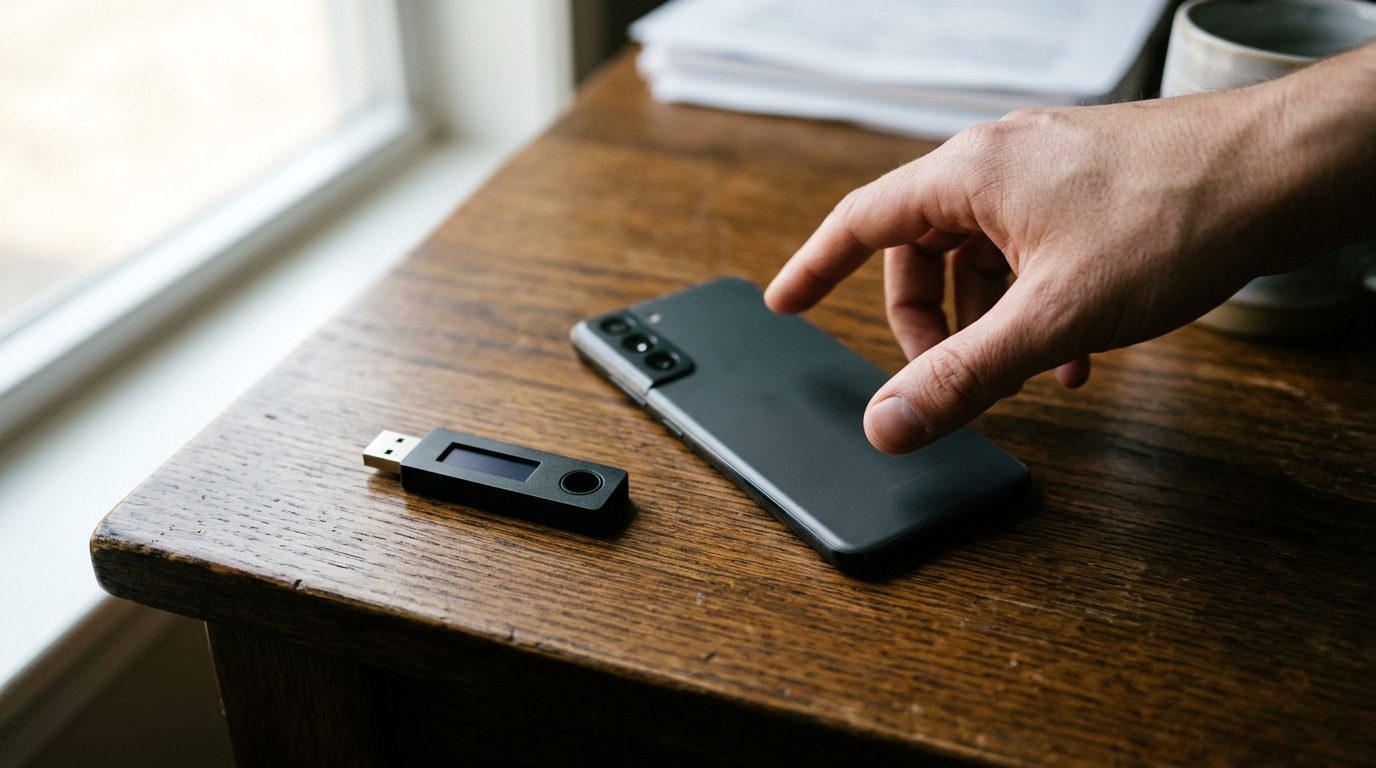 Crypto customers distrust texts about their accounts, with reason. The FTC reported that consumers lost $470 million in 2024 to scams that began with a text message, five times the 2020 figure. In March 2025 the Australian Federal Police, the National Anti-Scam Centre and Binance Australia warned more than 130 people about texts impersonating the exchange, some of which appeared inside the existing, legitimate message thread.
So a maintenance text has to look nothing like one of those:
- No links. Name the status page and let customers type it or use their bookmark. A link next to the words "your withdrawals" is exactly what a scam looks like.
- Ask for nothing. A maintenance notice never needs a login, a code, a wallet "verification," or a transfer. If your text requests any action beyond "wait," rewrite it.
- One number, announced in advance. Tell customers at sign-up which number service texts come from and what you will never ask for by text.
Keep a reply ready for the customer who asks whether the message is real:
Yes, this is [Desk name]. We don't put links in service texts, and we will never ask for a password, a code or a seed phrase. To confirm any notice, type our status page address into your browser yourself.
Who owns the replies during the window
 These texts invite replies on purpose. A question answered at 6 p.m. is a ticket that never gets opened at 3 a.m.
Name one owner per shift for the inbox, from the reminder until noon the day after. Give them canned answers for the window times, the in-flight deposit policy, and the "is this real" question. In Android Texter these are quick replies: slash shortcuts such as /window that expand to the full text in the composer.
If your support team actually lives in Telegram, a forwarding rule can mirror inbound texts into a team channel. We covered the setup in forwarding SMS to Telegram.
Scheduling it without being awake for it
The first two messages can be loaded the day the window is approved. Scheduled sends work from the dashboard composer or through the API's scheduled_at field, and queued messages can be viewed, edited or cancelled from the scheduled list. Windows slip, so if engineering moves the date, cancel the queued reminder first.
Volume is the constraint to plan around. Android Texter sends through a real Android handset on a normal carrier line, and a personal line has velocity limits. Our planning figure is roughly 100-200 sends per day per phone, explained in SMS sending limits per phone number. A 500-customer segment therefore wants about three paired handsets. The API accepts a broadcast of up to 500 phones per call.
If your affected segment is tens of thousands of users, push notifications, email and a registered channel will do this better. This approach fits a desk whose list runs to hundreds or a few thousand, or the VIP slice of a larger one.
There is also a reason crypto operators end up on their own hardware. Twilio's US SMS guidelines list cryptocurrency under high-risk financial services in the toll-free use case restrictions, and it has a dedicated error code, 30464, for a toll-free verification rejected as "Disallowed: Cryptocurrency." The week after you get dropped covers that scenario.
Consent and opt-outs for service notices
Text only customers who gave you their number and agreed to receive service messages on it, and keep the record. The FCC's rule at 47 CFR 64.1200 sets a higher bar, prior express written consent, for messages that advertise. Keep promotions out of maintenance notices entirely.
Honor opt-outs. As that rule currently reads, a reply of stop, quit, end, revoke, opt out, cancel or unsubscribe is a valid revocation, to be honored within a reasonable time not exceeding ten business days. An amendment was published in October 2026 (91 FR 67219), so read the current text or ask counsel. Android Texter does not suppress opted-out numbers for you. An auto-reply rule can confirm a STOP, but removing that contact from every future send is your job, and this post explains why skipping it also hurts delivery.
Using a handset removes the A2P 10DLC carrier gate. The TCPA applies in full, and consent remains your responsibility. This is not legal advice.
What to measure after the window
Four numbers, written down the same day:
- Deposit tickets opened during and just after the window, compared with the last window you ran without texts.
- Replies per send. A spike on the reminder means the message was unclear.
- Opt-outs per send. A jump means your segments are too broad or you are notifying too often.
- Delivery spot check. Put a staff phone on each major carrier in every segment and confirm each message arrived.
Then update the canned replies with whatever customers actually asked.
Frequently Asked Questions
How far in advance should a crypto exchange text customers about maintenance?
For a pause in deposits or withdrawals, three days ahead for the announcement and the afternoon before for the reminder works well. Atlassian's Statuspage guidance is that bigger impacts need longer lead time, and that anything announced more than a week out needs a reminder closer to the window.
Should a maintenance text include a link to the status page?
No. Name the status page and let customers reach it through their own bookmark or by typing the address. Text scams aimed at crypto users lean on links and urgency, so a service notice with no link and no request is easier to trust and harder to imitate convincingly.
What should the text say about deposits sent during the window?
Exactly what your systems will do, in one sentence. Some venues credit in-flight deposits after the window closes. Binance.US told users in March 2026 that deposits made during its upgrade would not be credited. Customers need your version of that sentence before they send funds.
Can I send maintenance notices at night when the work starts?
You can, but you shouldn't. A 1:30 a.m. text wakes customers and drives opt-outs. Send the last reminder the evening before, let the status page carry the live start notice, and send the all-clear in the morning once deposits and withdrawals are confirmed working.
Does sending from an Android phone change my TCPA obligations?
No. Routing through your own handset means the message is not subject to A2P 10DLC registration and campaign vetting, which is a carrier process. The TCPA still applies in full. Consent, records and honoring opt-outs remain the operator's responsibility on any channel.
Run the next window on a channel you own
If your next maintenance window is already on the calendar, the announcement and reminder can be queued today. Android Texter sends them from your own Android phone and number, with scheduled sends, quick replies and a shared inbox for the questions that come back.